Saturday, 12 August 2017

The Saturday List #142 - My Top Ten comic characters


Last weeks list was my top ten books. After I'd compiled the list, it occurred to me that, the list was perhaps a tad misleading. Whilst it is deffo my top ten book list, it doesn't accurately reflect my reading habits. I don't know if it is because I'm dyslexic or some other reason, but I've always been an avid reader of comics. People unfamiliar with the genre, often think "comics are for kids", however I totally disagree. The success of the genre of comic heroes at the box office sees to validate this, although I feel that very few films do the genre justice. As with the book list, this is semi chronological, in as much as they are ordered roughly by when they came into my life, rather than when they came into existence. There are two different medium, comics and newspaper strips, that for me are both equally important, so I've tried to cover the best of both worlds. Of course there are many great ones I couldn't include here.


Image result for Roger The Dodger
Roger The dodger

1. Roger The Dodger. I guess that his cool name was the reason I took to this particular character. I also associated with his love of trying to get out of doing anything, by deploying cunning dodges. Like many cartoon characters, Roger is anarchic, but not malicious. He's a bit of an outsider, unlike the Bash Street gang. I suppose as a dyslexic, this was a persona I could associate with. I thought Roger was the orignal punk rocker. his style was deffo punk!
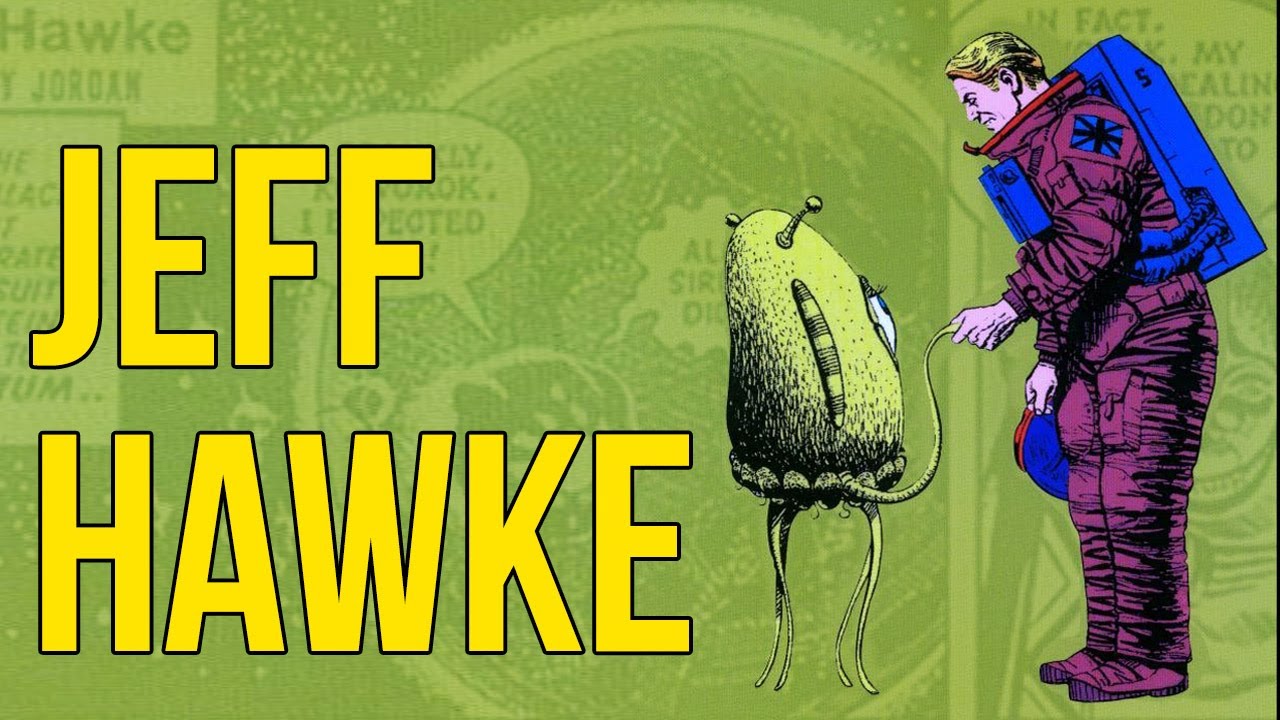

Image result for Jeff Hawke
Jeff Hawke
   
2.  Jeff Hawke. Hawke was the star of a comic strip in the Daily Express, and the work of the great Sydney Jordan. Hawke was a British astronaut involved in  dealing with contact with alien races. My parents bought the Express and the Jeff Hawke column fascinated me. Hawke was a complex character and whilst most sci fi and cartoon characters viewed aliens as inherently dangerous or threatening, Hawke tended to view them as interesting and requiring understanding. He tended to take the view that if they had made it to earth, they were probably more intelligent than us. The stories have been reprinted as collections and are well worth a read.

Image result for judge dredd
Judge Dredd
3. Judge Dredd. Dredd is the flagship character of 200AD. He hit the streets in 1977. Set in a future megacity, on the Eastern seaboard of the USA, where democracy has been replaced with a fascistic system of judges, who dispense instant justice. Dredd is the toughest street judge. The strip emerged at the height of punk rock and the society depicted is was in many ways very 1977 punk. Over the 40 years of his existence, Dredd has been amazingly consistent. A brilliant character. The second film (don't mention the first) is IMHO the best depiction of a comic character ever.

SELENEx.png
Selene
4. Selene. Selene's a character in the X-Men series, who first appeared in 1983. I'm not a massive fan of US comics, however, I was working with a friend who set out to re-educate me around that time. Selene was a mysterious and highly dangerous figure. She'd seduce men at singles bar, the bigger and stronger the better and drain their life force, in a  matter of seconds, regarding them simply as food. She was also capable of enslaving them and bending them to her will. I don't think the character developed in a very interesting way (as is the want of US comics), but when she first showed up, she was probably the scariest of all comic creations. Maybe the scariest thing for me is that she looks rather like my missus, therefore she's clearly someone I'd find rather fanciable! (although my missus doesn't usually wonder round in bondage gear with a whip, just to clarify that).
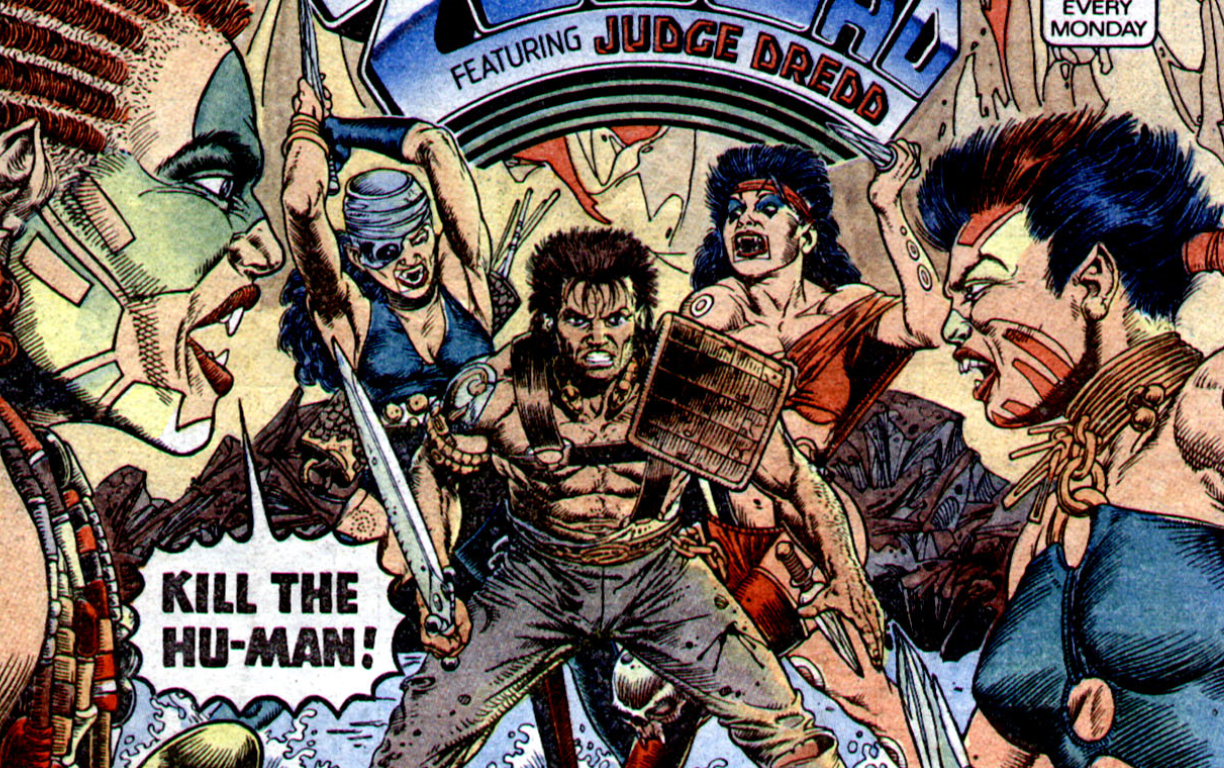

Image result for slaine
Slaine
5. Sláine. Pat Mills Celtic berserker, erstwhile King of Ireland, with his axe Brainbiter. Of all the characters who should have had a film or a TV series, this is the one. A tweet from Mills stated that a producer had turned it down because it was "too like Game of Thrones". What an idiot. Slaine is an outcast, who wanders the emerald isle, forever fighting for the virtue of the earth and the earth Goddess. He has a tragic romance with Naimh and is accompanied by a dwarf called Ukko, who he regularly beats. PC he is not!

Image result for the fat slags
The Fat Slags


6. The Fat slags. A creation of VIZ. Two rather large young ladies living in Nottinghamshire (Fulchester) who's two main interests are eating (usually chips) and casual sex. They made it onto the small screen in a channel 4 animated series and a full length film. A running gag is that the Slags will accuse any men unwilling to sleep with them of being homosexuals and/or having small penises, and many other women of being unattractive and overweight, even when they are quite clearly far prettier and thinner than our heroines themselves. Like many cartoons, the translation from print to film was problematic. What worked really well in print, where it was clear that it was paordying the views of many people as much as the behaviour itself of the characters, becomes very difficult to capture in a film. It's rally rather a shame, because I think the film should have been great.

Image result for "Accident man" toxic
Accident man
7. Accident Man. Another Mills creation, from the short lived TOXIC comic. Mike Fallon was a High end hitman, who's speciality was making his hits look like accidents. Another deeply scary character. A new level of complexity was added to his character, when his girflriend, a greepeace activist, was murdered and he went on a mission of revenge. According to wikipedia, the story has been picked up and made into a film. I think that it could be rather good, Mike Fallon as a sort of James Bond gone bad character won't work, but if they pick up the revenge story, it could be a damn fine film. As with all Mills creations there is a whole depth of character there waiting to be fleshed out. Hollywood productions tend to remove all subtlty with the comic genre, I hope that this does not happen here.

Arthur Ranson.jpeg
Judge Anderson
8.  Judge Cassandra Anderson. Imagine my joy when I went to China and found that Arthur Ransom, my favourite Judge Anderson illustrator was also on the tour. It would be up there with finding John Lydon was on the trip for me. Ransom had just illustrated the iconic Shambala story. I loved Ransoms artwork and was fascinated when he explained that, unlike a few 2000AD artists, he'd not drawn her as sexy, as she's a Judge. As a psychic, who solves crime using her abilities, shes a very complex character, one who, like Dredd, has seen no dips in the stories she's featured in. Often though provoking. There is a dark side to Anderson, that is occasionally hinted at.
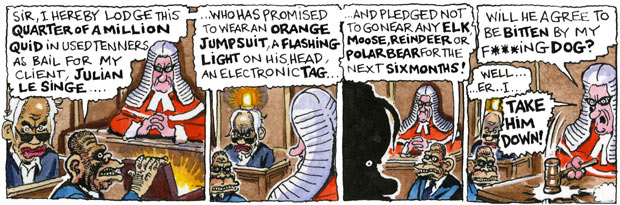
Image result for Steve bell john the Monkey
John The Monkey
9. John The Monkey.I simply had to get a mention of Steve Bell in here. Steve Bell is by far the best British political satire cartoon artist, and I believe that John the Monkey is his greatest creation. A totally amoral character, who started his life in the pursuit of bananas by nefarious means, if my memory serves me correctly, as the sidekick of James Anderton, chief of Manchester Police, in Bells fictional world. Sadly his appearances are few and far between in Bell's Guardian column.

Image result for dilbert
Dilbert
10. Dilbert. As someone who has worked as an IT consultant at various times, this is a column that I find brilliantly observed. The work of  Scott Adams. There are so many scenarios that Adams  chronicles that mirror things I've seen, that I have started to get paranoid that Adams may actually be stalking me. Dilbert features in both The Daily Mail and The Daily Express and in both is probably the only reason to pick up the papers! It is good to see that there are still brilliant newspaper comic strip writers coming through. It is a fantastic medium and I hope that it survives the huge shock that the digital age has been brought to the printed press business.

------

And finally....

I simply felt I had to give a mention to Rupert The Bear in the Daily Express. Not because it was one of my favourites, but when my eldest daughter was 2 years old, every day, we'd cut out the Rupert the Bear strip from the Daily  Express, read it and then she'd colour it in and sick it in her scrapbook. It is funny to look at now, as you can see how over the course of six months, her colouring got better and more refined. Sadly, the Express started to print Rupert in colour around that time, so we stopped, but she's now doing a fine art degree, so Rupert The Bear, I salute you!
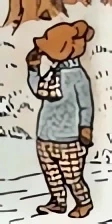
Image result for Rupert The Bear
Rupert The Bear

Friday, 11 August 2017

The Friday Joke - 11/08/2017

I thought this picture and headline from the Barnet Times was a pure gem. Council leader Richard Cornelius and Roads chief Councillor Schmuckus McMuckus have just collected the keys to a state of the art, brand new pot hole repairing machine! Look at it's new paint glisten in the sun.  Luckily there was a photographer on site to record this happy purchase for posterity! (yes this is a genuine Barnet Times story).  I wonder if they bought it in the car park behind the pub, from a man with a dog!

http://www.times-series.co.uk/news/15458126.Council_unveils_new_machine_to_help_fix_potholes/


The Hendon Young Conservatives, being a very worldly wise and astute bunch  of earnest young people are clearly impressed. They clearly believe this super duper machine is the answer to all our pothole problems, but of course only if the Tories win the Council elections in 2018 and kick out the current incompetent administration, who have allowed our roads to go to rack and ruin!

Oh hang on a minute, we've just found out that the Conservatives have actually been in power in the Borough of Barnet since 2002. A plague of Socialism must have descended on the Borough to craftily install these naughty potholes, lead by Jeremy "The Terrorist" Corbyn on his bicycle? There can be no other explanation.

I do recommend that you follow the Hendon Young Conservatives account. I don't know if it is really a spoof account drenched in superb irony. Check this tweet!


They've clearly never heard of Lynton Crosby. Here's a nice tweet about how he ran the Tories mavellously successful, positive general election campaign


I suspect that whoever runs the Hendon YC Twitter account has a very bright future in PR in front of them! They certainly know how to cheer up a cynical old git like me!

Thursday, 10 August 2017

RIP Glen Campbell, 22 April 1936 - 8 August 2017


Allen Ashley
Gone Glen by Allen Ashley   

 Why is it that the death of musicians – generally those not personally known to us – seems to hit us harder than, say, the death of novelists or painters or dancers? Maybe what Walter Pater said is correct: “All art constantly aspires towards the condition of music.” And perhaps this is because it remains true that music touches us on more levels than most other art forms; with perhaps the exception of its cousin poetry. Even the sad songs written in A minor or E minor that really ought to depress our lives instead stir us to feel a deep, individual connection with both the song and the singer.


Glen Campbell was, initially, a self-taught guitarist of astonishing virtuosity. As a member of the Los Angeles session band The Wrecking Crew, he played on loads of successful and significant records from the Phil Spector Wall of Sound – including “You’ve Lost That Loving Feeling” – as well as hits by Elvis, Sinatra, The Monkees and others. Possessed of a bell-clear voice, a mop of sandy hair and all-American boy good looks, as well as the ability to wear a brightly decorated rhinestone cowboy shirt like nobody else bar Gram Parsons, it was perhaps inevitable that he would eventually have a glittering solo career. He recorded all his great work for Capitol Records in the late sixties to mid-seventies and hit big with several songs including “Gentle on my Mind”, the semi-spoken “Honey Come Back” and the narrative paean “By The Time I Get To Phoenix”. This latter song, including cover versions, was named the third most performed song from the period between 1940 and 1990, by Broadcast Music, Inc. (BMI). That’s a lot of leaving! 

For me growing up in the sixties and seventies, Glen Campbell was mum and dad music. I suppose I thought of him as a good old country boy who crossed over to the pop charts with easy listening ballads or story songs. I had much the same view of his predecessor in terms of bridging the country-pop gap, Johnny Cash. I was young, keen on music, but still with so much to learn. Campbell was the poor son of a sharecropper (British equivalent – tenant farmer in hock to the landlord); Cash and his family picked cotton. They both maintained the sheen of a uniquely American, almost mythic country background. Cash left us many years ago; although his and wife June’s song “Ring of Fire” gets played by the supporters’ band at every England football match. He’s got male appeal. Campbell, at least during his peak years, seemed softer. Until he hit the buffers with drink and drugs and divorce around the end of the seventies.
Campbell was old school, likely to politely address an interviewer as “Sir”. Sure, he was mates with John Wayne, a confirmed “born again” Christian and a lifelong Republican. Maybe he seems to be some distance from my beliefs and lifestyle. But the key factor in Campbell’s history is his association with songwriter Jimmy Webb. Webb gave him many of his biggest hits, including “Phoenix” and “Galveston”. This latter had an accompanying film promo (proto video) of an American serviceman doing what it says in the lyric, cleaning his gun and thinking of home. Campbell interpreted it as supportive of the troops in Vietnam; Webb was clear that it was an anti-war piece because the soldier is afraid of dying and should be back at home on the beach with his girlfriend. Ah, the gap betwixt cup and lip.
Jimmy Webb is the songwriters’ songwriter. In a catalogue that contains “MacArthur Park”, “Highwayman” and “P F Sloan”, one song – and one performance – stands head and shoulders above everything else. If Glen Campbell had never recorded anything else, he would be immortal for his reading of “Wichita Lineman”. This has to be firmly in the ten best pop songs of all-time. Legendary bassist Carol Kaye brings the song in and we are treated to lush strings that speak of the wide open prairie or semi-desert landscape, its arid featurelessness broken only by the telegraph poles bordering the highway. Glen Campbell inhabits our narrator, a lineman (which sounds much more romantic than Telecom engineer!) climbing these fake but vital trees and repairing any faults as part of his solitary existence. In the first verse we hear of his work, with intimations of the mystical (“I hear you singing in the wires”); in the second verse we enter his soul as he shares his loneliness and longing, conjuring his own thoughts or, in modern terms, spin upon the conversations passed along the wires. Is it his voice alone that speaks of love and loss or is he the vessel for all the heartache carried by the telegraph? The song contains some of the most achingly beautiful lyrics ever put to music, lines that make all of us say heck, I wish I’d written that:
“And I need you more than want you,
And I want you for all time.
And the Wichita lineman
Is still on the line.”

This song creates its own 3 minute universe, its own timeless infinity. It’s an epic performance that can never die.
In passing, one might note that when the Foo Fighters released their anthemic single “Everlong”, the heart of which deals with similar themes of love and longing, the picture sleeve was of a row of telegraph poles on the highway.
If Glen Campbell gets to his Christian heaven, I hope the angels serenade him with “Wichita Lineman”. Despite the Alzheimer’s that blighted his final years, overall one would have to say that he had a good and fulfilled life in many ways. But it is what he gave to our lives that is significant and for which we both celebrate and mourn him.

- Allen Ashley, London, 10 August 2017
---------------------------------------------------------------------------------------------------------
Allen Ashley is a writer, poet, teacher and the lead singer of The False Dots. Guest blogs are always welcome at The Barnet Eye. Many thanks to Allen for writing this blog.

So how much is that doggy in the window?

When I was a young child, this was my favourite song


Sadly, as I've learned more about the world, I've realised the song actually glamourises a very nasty business indeed. Many pet stores get livestock from puppy farms, where dogs are bred for money in squalid conditions with no care given to their welfare. Often the puppies are sold with congenital problems. We need to have a proper grown up debate about pet ownership. We have a dog, which we got from a rescue centre. He's now six, when we got him at a year old, he had all manner of psychological issues. As he's large, he can be a real handful. What is sad is that he has a lovely nature, but if someone approaches him with a stick, even an old lady with a walking stick he goes ballistic. As such, he needs a lot of management. It is pretty clear to me that his previous owners were unfit to own a dog. I believe all dogs should be chipped and licences. Owners who mistreat dogs should be banned from ownership. I would like to see all breeders licences and certified. And I see no reason why a decent dog owner would object to any of this

Wednesday, 9 August 2017

The Wednesday Poem #25 - Love is the most cruel thing

Last night I dreamed we were together,
I dreamed that we were happy,
then I awoke, 
You weren't there,
You'll never be there again,
Love is the most cruel thing.  

Copyright 1983 - Roger Tichborne

Guest Poems are always welcome at the Barnet Eye.
Todays blog is dedicated to a friend of mine who is having a bad time. I wrote this in 1983. Things get better again with time.

Monday, 7 August 2017

A society with the wrong priorities

Who are the most important people in the country? I'll give you a choice of a few. is it Doctors, Nurses, Fund managers, Estate Agents, Insurance executives, Teachers or Social workers? You all may have different opinions. If your wife has just been abducted, you may think the policeman. If your mother is dying of cancer, maybe the nurse in the hospice, if your daughter has broken her arm, maybe the doctor in A&E who treated you. If your kids are going to school, maybe the teacher who is responsible for their education. I've not heard too many people make the case for Estate Agents, Fund managers and Insurance executives. Maybe this is a bit unfair, as our pensions require competant fund managers, when we get burgled, we rely on competent Insurance executives to ensure we get compensated to continue our lives and when we have to move house, it could be very hard without estate agents and if we get dishonest ones, it can cost us a fortune. So  yes we should appreciate the efforts of these sometimes more maligned professions as well. Society functions best when we all do our bit and we all receive fair compensation for our efforts. Every profssion from the gravedigger to the locksmith, to the personel manager to the public to the tycoon all have a role to play in the modern world. The sum of all of their efforts make our lives better. It's called society, a thing Margaret Thatcher famously dismissed.

The current bogeymen have for a few years, since the banking crisis been the bankers. But banks play a central role in our lives in modern society. Bank cards mean we can access our money 24 x 7, if an unexpected crisis hits. Mortgages mean that we can own our own homes and live in comfort. Finance for cars means we can transport ourselves.  Have you ever left your bank cards at home, then gone to buy something and found yourself embarrassed at the checkout. That is the difference technolgy has made to our lives via banking. I've bought beds, carpets, cars and cupboards on finance. Without a banker, I'd have had to sleep on the floor and taking my bands equipment to gigs would have been impossible. So I do not believe in even bashing bankers.

I suspect that when you read the title of this blog, you didn't expect this to be the drift of the blog? But it is important to make the case I make in a calm and rational way and to explain that it is not the politics of envy which I am advocating. I am advocating fairness. Whichever one of the jobs you feel is most important, one thing is clear. For the UK PLC to flourish, we need an educated population. All of the most important jobs require an education. Which, to my mind, puts teachers near the top of the pile. So how much do we pay teachers. I did a quick google and the first Barnet teaching job I found had a  starting salary of around £26,000 per annum. This was for a science teacher at Oak Hill School. The cheapest property to buy with an EN4 (ie local to the job) postcode I could find was a shared ownership flat at £154,000, but that was only for 35% of the equity. The cheapest outright sale was £254,000, for a one bedroom flat. This means that the cost is over nine times the salary of a teacher on the starting salary. What does this tell us about how much we value teachers? It is interesting to note that on the website for the estate agent, there is a school checker, which shows how good the schools locally are.  It seems that the estate agent actually understands the value of the teachers efforts. There is a debate as to whether our public sector workers deserve a pay rise. The argument against it is that "we can't afford it". But why can't we? a quick search on jobs for investment managers threw one up in Harrow. The Salary Range - £45,000- £100,000 with a bonus up to 20%. Now as I said, people need fund managers, we rely on them to administer our pensions etc. But is there worth to society really 2-3 times that of a teacher? Don't we want the best and the brightest to educate the next generation of our workforce. Don';t we want teachers who can afford to live locally and have a decent home? Driving miles to work adds to pollution, which is another evil.

Let me tell you one interesting thing. During the second world war, all the aces with the most kills were German fighter pilots. This wasn't because Germans were better pilots. It was because the Germans thought the best place for their aces was flying fighter planes. The Allies had a different strategy. When pilots proved their competence, they were moved to other roles, as pilot trainers or elsewhere. The idea  was that they share their knowledge and pass their tricks on.  This meant that whilst their were less kills for the aces, the pilot gene pool was stronger. It also meant that there were less elite cliques and a better teamworking environment. In short, when it really mattered education was valued.

Sadly, the Thatcher years saw the denigation of professions. The loads of money, spiv based economy where cash is king has dominated our thinking. We want great schools for our kids, but we don't want to pay the taxes to give teachers a decent standard of living.  It's the same with doctors, nurses and social workers. These vital roles are suffering a pay freeze, whilst executives vote themselves ever greater pay rises, whilst voting for the party which offers the lowest tax. The net result is that our society has become disfunctional. A time will come soon, when the workforce required to run a city will be priced out of it. This will ultimately punish our children, our grandparents and our vulnerable friends. At the weekend, a well to do friend stated that his children would always do well because he'd paid for the best education for them. This makes the assumption that they will always be healthy, always be able to find a plumber when their drains block, always be able to drive to a hospital and never need an ambulance, a  policeman or a fireman.

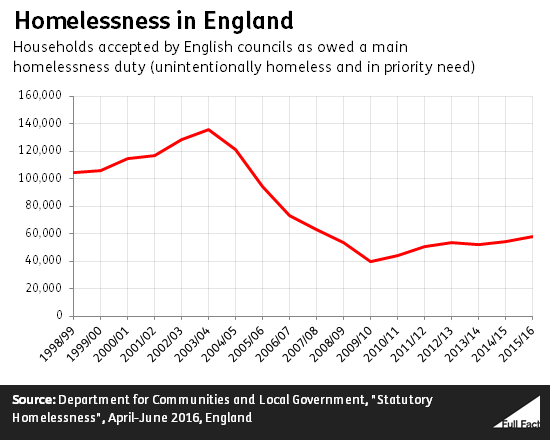
Homelessness on the rise again
Sadly I suspect we are starting to live in a spivocracy. You can have anything so long as you have cash, no questions asked. At the weekend, we saw the season finale of Poldark. In this we saw a greedy landowner happy to let people starve rather to see a bigger profit. It seems to me that such viewpoints are coming back into fashion. The Grenfell Tower disaster graphically showed how little care was shown over work undertaken on social housing. Costcutting and shoddy work were the cause of the disaster. All done in the name of keeping taxes low. I am not an idiot and I am as selfish as the next person. I groan when I get my self assessment bill. We simply don't associate paying the bill with the services we get. I worked out how much my cancer treatment has cost me so far. I reckon around £30,000.  A drop in the ocean of tax I've paid in my life. However, if I got a bill for that tomorrow it would be a serious problem. Even more so if I had to pay for insurance, as I'm now uninsurable. The great thing about the UK is that I get the same treatment as a someone on benefits, who has never paid a penny in tax. That is called humanity. It is also something that some on the right want to see ended. Why, so a few Spivs can pay a bit less tax. Thirty years ago, I never expected to see the levels of homeless on the streets of London we see today (note : A kind reader reminded me that homelessness was higher under Thatcher. The Labour govt got it down, but it is once again on the rise). I shudder to think what surprises await us in the next 30 years, unless we start accepting that we need to pay more tax if we want a fair and just society. This isn't a party political rant, it is a plea for justice across the board, so we can all sleep at night.

Nine years of the Barnet Blogs

I missed an aniversary, I apologise. Last week was the 27th July. Last week something important happened. Can you guess what it was? Here's a few clues.

Welcome to Not The Barnet Times 

"From a plain English point of view, it is an awful document"

Lack of sports facilities for young people in the Borough?

Neeeeeeeigh-bours ... ev'ry body needs good neeeeeeighbours ..

Economics not politics is my crusade

Here's another clue.

On the 27th July 2009, Don't Call Me Dave launched the  "Not The Barnet Times" blog. That was the date when Barnet officially had a blogging scene. Prior to that, it was just me writing a blog on the local paper. Then the local Tories put pressure on the editor to pull a blog and hey presto, a local Tory, David Miller, took umbrage and started writing his own blog. Whilst I was commtted to what I was doing, having a bit of competition, especially from a Tory was fantastic. In my opinion, Miller was the best of all the Barnet bloggers. I don't mean this as a slur on the rest of us, but Davids writing is conscise, to the point, well informed and usually bang on. I used to describe him as Barnet's most sensible Tory. David saw through the mess that Mike Freer, then leader of the council was in the process of building. Wheras Freer could dismiss my criticisms as politically motivated, this didn'y work with Miller. Sadly, despite Miller winning every argument, none of his former Barnet Tory colleagues listened. That is why we have dire OFSTED reports, CHAOS at the audit committee, and failings services. That is why Mr Reasonable highlights overspend after overspend. So far the chickens haven't come home to roost with Council tax hikes, but that day is surel coming, probably after the next council elections in 2018, strangley 10 years after the blogging scene started.

The early days were quite heady. It had not occurred to me when I started blogging for the Barnet Times that anyone would be interested in my opinions. Even less that the leaders of Barnet Council and our GLA representative would care. When Phil Crowther, editor of The Times told me that Brian Colemans press officer, Robert Rams was phoning him on a neatly daily basis, ranting about my latest comments I was stunned. At the time I'd never heard of Rams. I suppose that it is the job of a press officer to do such things, but I found it strange. Even stranger, to me at least, was that Rams didn't ring up and try and establish a friendly line of communication. I'd done much Music promotion and the first thing I always advised bands to do if they got a bad review was to try and meet up with the reviewer, have a beer, and try and get something good. I also advised that all publicity was good publicity. I also advised that feuds were good for sales. They generated exposure. I assumed these maxims were universal, but Barnet politics was different. There would be no friendly back channels and no cost cups of coffee. I assumed the Tories had a well thought out agenda or good justification of their actions and policies and would only be too keen to use this new channel to put their case across. Instead Freer insulted myself and David Miller, calling us 'One Handed Bloggers' (i.e. wankers) in an official interview. He used his blog to attack. 'Armchair critics cosseted by family wealth' the week after my mother died, a clear implication that I was in for a few quid inheritance. I complained to Crowther about this. Freer had got blogs I wrote removed, so Surely such an insult should go. Freer told Crowther his comments were aimed at no one in particular. Freers comments remain on line.

At the time I'd regularly chat to David. We'd coordinate blogs and try and ensure a good perspective from right and left. Vicky Morris then joined in. She realised that people were taking notice of Barnet blogs. 2008 ended with Barnet blogs firmly on the map. It never occurred to me that nine years later I'd still be writing one. I was pleased in 2009 and 2010 when the other bloggers joined in. Sadly David and Vicky moved away. Although we've done much, I doubt that would have happened without them.

Next year will be the tenth anniversary. I am working on a book and a film about it. I think the Barnet blogs is a fascinating story. As I've been re-reading old blogs it is scary just how many warnings we made were proven spot on. Never forget. The truth is a wolf, it will hunt you down.


Sunday, 6 August 2017

The Tweets of The week in the London Borough of Barnet - 06/08/2017

Once again it's time for our most popular weekly feature. The world through the eyes of the Twitteratti of our little corner of North West London. Don't forget to follow any of our local twits who tickle your fancy! If you see a tweet that you think should be included here, tag us into it and we'll have a look.


1.Finchley Carnival would have been 100 years old this year


2. This tweet from Barnet Rebel made us snigger!


3. Fancy a little bit of cricket in aid of a good cause? Mark the date


4. Denise Batt is pretty pleased with her pond. We think it looks in pretty good shape too!


5.Graphic Tweet from the MPS in Barnet showing why we really shouldn't drink and drive


6. Did you know Doctor who was born in Mill Hill? You do now!


7. Bram Stoker's ashes lie in Golders Green crematorium. Don't tell Dracula!


8. Seems like the new Asian foodhall in Colindale is attracting some very esteemed fans!


9. 29 years ago a brave young man died in a bomb attack in Mill Hill "they will be remembered"


10. We love a good piccie of an iconic vintage guitar. This one is a Fender Coronado II


That's all folks!


Saturday, 5 August 2017

The Saturday list #141 - My top ten book list

I'm not the worlds greatest reader. Being dyslexic, it was something I didn't excel at at school. I didn't read any childrens books. The first book I actually read was 1984 by George Orwell when I was eleven or twelve. My sister Caroline told me it was a brilliant book and outlined the story. I was fascinated. It may seem a bit strange going from never reading to George Orwell, but that was how it was. my brother Laurie was into science fiction, so I had a phase of loving sci fi, but I sort of grew out of that. Now I tend to like books on history. This was a hard list go compile, I've tried to have some sort of chronology.

1. 1984 - George Orwell. This was where my reading career started. Orwell is a brilliant writer and a very astute observer. In some ways the book is rather prophetic. It seems to me that the age of newspeak is upon us.

2. Stormbringer  - Michael Moorcock. A tale of sword and sorcery. I loved the alternative reality Moorcock weaves. This is one of a series, detailing the battle between chaos and order. In Moorcock's world, everything is a battle between chaos and order. As a teenage punk rocker, I felt I was on the side of the forces of chaos. The ultimate lesson though was that you need a balance between the two. Too much order and there is sterility, too much chaos and nothing works. Perhaps this has shaped my view of the world just a little too much.

3. Behold the Man - Michael Moorcock. When I started putting this list together, my intention was to have one book per author, but I couldn't choose between Stormbringer or Behold the Man. Behold the Man is the story of a Jesus obsessed Christian time traveller, who is determined to meet Jesus. He knows the gospels inside out. When he arrives, he is shocked to find that nothing is as it was told in the gospels. So he realises the only way that history can be fulfilled is if he takes on the role. He has technology and manages to ensure that history is fulfilled, at great cost to him, as he dies on the cross. I had a huge argument with my Dad,w ho considered it blasphemious. I pointed out (as I do with Life of Brian), that it is a work of fiction and a great book.

4. UBIK - Phillip K. Dick. Dick is best known for "Do Androids Dream of Electric Sheep" (or Blade Runner as it is more commonly known. I think UBIK is a better book, more thought provoking and perhaps the scariest "alternative world" scenario ever. Not because it is ful of aliens, but because the subjects of the story are simply stuck in a reality created by themselves.

5. Britain and her Army - Corellu Barnett. A history of the British Army. I got very interested in military history. This book is a definitive study of how the modern British army evolved. It should be part of the history syllabus (if it isn't already). I think that it is impossible to understand the 20th century British experience without understanding the evolution of the British armed forces.

6. Anger is an energy - John Lydon. The story of the Sex Pistols/PIL frontman.  A brilliant read. Lydon is a complicated character. The description of his growing up as a sickly child in a London Irish family is as interesting as the chapters on music. A fascinating piece of social history.

7. It's Dicey Flying Wimpeys Around Italian Skies - Maurice Lihou.  The author flew in teh same bomber squadron as my Dad. His book documents his wartime experience. For me it was a way to understand what my father went through. It is also a fine, well written book.

8. Wild Swans by Jung Chiang. A book about three generations of women in China in the 20th century. Like 1984, a warning about totalitarian regimes gone mad. The sad thing is that this one is not a work of imagination or fiction. It also has a female perspective on important historical events that are not often heard and perhaps should be.

9. Anti cancer - A new way of life - David Servan. For me a life chaning book. Another one I'd put on the national curriculuum, given that one in four of us will be affected by cancer. Simply the best self help book. Written by a medically qualified doctor, it is not new age mumbo jumbo, but sensible practical advice for dealing with the issues.

10. The Emperor of All Maladies: A Biography of Cancer by Siddhartha Mukherjee. This book details the history of the treatment of cancer, from pre-medieval times to the current day. How treatments evolved and how many blind alleys researchers have gone down. If, like me, you are livingw ith cancer, this is a great book to help you understand why you are going through what you are going through. I believe that to fight anything, you need to understand your enemy. This is the best book for detailing this. 

So that's my top ten, what are yours.