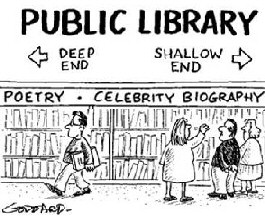
The Barnet Eye likes to cover the issues that other blogs refuse to go near. Today, our subject is one of great importance to us all. We all know the feeling, a guest visits your house and when they depart, you find a surprise in the toilet, one you did not want.
We are taught many things at school, but it seems that there is little training in considerate use of the loo. Here is our guide to being a considerate loo user. We have formulated this code of conduct for our studios, where we have constant issues with blockages and bad toilet protocol. We also advise parents to ensure their children are versed in these matters, to ensure they will always be welcome visitors.
1. Only put bodily emissions and loo paper down the loo. Please don't put large items that block the drain down, especially wipes, nappies and sanitary towels. These block drains.
2. After you've used the toilet, flush the chain. Ensure that everything has been taken on its journey. There is nothing more yucky than going to the loo and finding that the previous user has not flushed their doings away.
3. The toilet seat is for sitting on. Please make sure it is spotless before you leave it for the next person. When people need the loo in a hurry, it is inconsiderate making them wipe it first.
4. If you leave smears on the side of the bowl, a brush is conveniently placed for you to remove these. If you have not been trained in such matters, this works best in conjunction with flushing. Make sure you lift the lid and seat before using the brush.
5. If you use and excessive amount of toilet paper, for instance, to line the seat, please put excess paper in the bin provided and not down the toilet as this blocks the loo.
6. If, for any reason, you have an issue using the toilet, please tell your hosts, rather than letting them have a surprise when they might be in a desperate hurry.
7. Follow the accepted lid protocol. Leave the seat and lid in the same position as you found it, unless the person before has not been versed in the good toilet protocol.
I can assure you that you will always be a far more welcome guest if you follow these simple rules.
Yesterday the Chancellor, Rishi Sunak was asked by ITV News about the struggles faced by musicians in the current Covid climate. His response was that they should consider retraining.
The chancellor has since stated that this was advice for people in all sectors facing problems, but having reviewed the clip, we think it is clear what his message was. We can only conclude that the Chancellor really doesn't understand the UK Music Industry and the benefits that this generates for the wider economy.
Faced with a backlash, he issued a 'clarification' and the story on the ITV website was updated.
The government needs to do more to ensure musicians and arts professionals are properly supported in these times.
Rishi Sunak suggesting people retrain, undermines the creative industries’ importance as an integral part of our economy and wider society.https://t.co/mZ4hMn1m9H
We urge the Chancellor to have a long, hard think about the music industry. The industry generates £4billion per annum for the economy (in normal times). It is one of the few areas where the UK still leads the world. The indirect benefit to the economy is many times larger. Tourism is driven by interest in our music venues, theatres, films and festivals. All of these rely on the UK music industry and UK musicians., not to forget the technicians and back office staff also involved.
Musicians are amongst the most highly trained area of the work force. Many children start taking music grades at the age of six or seven. To get to a Grade 8 qualification will take a period of years and a significant cost in tuition. The time put in practicing is unprecedented in any area of work. The cost of professional quality instruments is another part of this investment. Many musicians already have second jobs to help meet the bills. Any rational policy for post covid rebuilding of the economy should have music and the creative industries at the heart of the plan. There is no evidence of this which should be a worry to us all.
The Save London Music Campaign was originally founded by a group of recording/rehearsal studios, grassroots venues, small festival organisers and working musicians. All of these have been massively impacted by the current situation. Around 30% of the studios who signed up to support the campaign have closed. The people who have run these studios for years and sometimes decades have simply no faith in the governments strategy. The musicians who have had no live work for over six months are now reaching tipping point. We know of musicians working for funeral directors, supermarkets and delivery firms to make ends meet. Whilst the campaign fully accepts that we all have to make sacrifices, if musicians are made destitute by these circumstances, they will be extremely cautious about resuming their careers when the situation improves.
Without a live music scene, our cities will lose much of their attraction for the night time economy. This won't only hurt musicians and those technicians and other people who support the shows. It will mean less people in restaurants, less people using public transport, less people in pubs for pre show drinks. Of course the Save London Music Campaign is primarily focussing on London's music scene, but every major UK city will face the same issues and we stand with them.
The Music Venues Trust has been doing a great job campaigning nationally on the subject of support for venues, but we need positive action NOW from the government to support the musicians that give the venues their reason for existence. It is our opinion that the Chancellor should view support for the professional and semi pro music sector as a national investment. Our suggestions for supporting musicians include.
1. A pay to practice grant.
The government should reimburse musicians all costs for rehearsals, and pay them 1.5 times the national minimum wage for any time spent in rehearsals. This would help studios and venues, as closed venues could rent out closed space for rehearsals. This would incentivise musicians to practice and maintain their skill levels.
2. A new music grant.
The government should be encouraging artists to be creative. There is a fantastic BBC Introducing site that allows artists to submit music. We would like the government to support this with payments for submissions. We would like to see musicians register and be able to submit up to four pieces a month and receive a minimum £200 payment per piece. This should be funded by the government and not via the BBC license. This would be a huge incentive for musicians to be creative. We would like to see all of this music being made available to the public. Musicians would also get a click through bonus. This could be supported by advertising revenue along the lines of Youtube etc.
3. Paid training schemes for music back up staff.
Back in the 1980's, the UK government set up the Training Opportunities Program, that provided training for people having difficulty getting jobs. Sound technicians, lighting technicians, etc should be offered training to brush up their skills. This would mean that when the situation abates, they would have better skills and the grant would support them through the difficult times. Musical Equipment manufacturers should be encouraged to set up training schemes to be supported by the Government.
4. Pay promoters for empty seats in socially distanced gigs.
The economics of putting on shows doesn't work with social distancing in most venues. The government should provide an empty seat payments to make up for these seats. The condition should be that the venue has a full complement of staff. It would be far cheaper and better for the government to pay people to work at venues running at a sixth capacity than it would to pay them to be on the benefits and see the venues lost.
UK Musicians are a resilient lot, but we need help at this time. This should be considered an investment in the future of the UK, not a handout.
Since last Monday, we've been on holiday in Madeira, chilling with friends. During this period, I've had a mini social media detox. Apart from the odd look in the hotel, where there is broadband, I've not really looked at Twitter or Facebook. I made an exception on Sunday, to post the Tweets of the week. This gave me a little chance to catch up on the local news. The TV here has CNN and BBC News, which is a bit dry and is really only watchable for 15 minutes. We found a bar in Calheta that shows the Premier League, so I was able to enjoy the weekend football, which went from the sublime to the ridiculous. The friends who we went with are Liverpool and Manchester United fans. They had the joy of sniggering at me, when Manchester City drew with Leeds on Saturday. Karma repaid the debt as their teams fell apart on Sunday. I resisted the chance to go on Facebook and post messages to all of my friends who shared their grief, I'd made a decision to avoid social media, so I think it was the good Lords way of making it a true penance.
The only break from this happened on Wednesday when I was contacted by a local elderly resident of Mill Hill who wanted to discuss street lighting. I'd been helping her with a problem with the new lighting affecting her sleep. She called to say Barnet Council had been sorted. I felt it was important to share the information, just in case anyone else had been affected by similar issues. I don't really enjoy writing about the council or local news. It has always been a bit of a chore, but I love writing most of the other stuff, the review of Viv Albertines book, the Wednesday Poem, the lists, the dyslexia blog etc. The blogs I write about cancer I find very cathartic and have helped me focus my mind through a difficult period. This year has been unprecedented. The period of lockdown, which coincided with us having all of our grown up children back at home was a very strange period. We did a lot of walking dogs through Totteridge fields, a lot of sunbathing in the back garden. If you had asked me before the period started, I would have said I'd be very creative musically, but the lockdown killed any musical creativity. I ended up doing a lot of practicing on the guitar, learning songs and practicing scales. My playing improved, but there has been no outlet. I look at some of the blogs I wrote, April, in the middle of lockdown was one of my least productive months ever. Some of the blogs were a little odd, to say the least. Quite readable, but rather odd. In June, when the studio reopened, I became hellishly busy, preparing the studios, getting them covid compliant, manning the desk (the economics made more sense for me to do the work than bring the staff back from furlough). With about 5% of our normal customers coming when we first reopened, those that did for solo practice, it was a strange experience. The first couple of weeks, people were booking just to get out of the house. One guy came and drummed for 7 hours a day for two weeks.
By the end of September, we'd reached the point where I could take some time out. I am extremely lucky to be blessed with extraordinarily good friends. When we had the opportunity to join them in Madeira, it was an offer too good to refuse. We've been eating, drinking, walking and chilling. I've been reading books and taking pictures. My dyslexia means that I love images. I tend to think pictorially. Visualisation is a big part of how I deal with things. I'm not a linear thinker, I tend to think of problems as pictures. If something is not right, I try and look at the picture from a different angle.
Which brings me to the nub of this blog. It has been a difficult time, but in many ways, I realise it has been a time of spiritual renewal for me. This may sound strange, the churches have been shut. It is hard to see good in such global unhappiness. I try and see a reason for everything. I do however think many good things will come out of this period. I think we have become more aware of our surroundings. The hours exercise a day introduced many to walking and cycling. For me, it meant we got to talk to people we met on walks. This was nice and you realise that meeting nice people and passing the time of day with them is actually very pleasant. I spent a lot of time making Spotify play lists, digging out songs from the past I'd not listened to for a very long time. Why do we forget music we love? The reboot gave me a chance to revisit these. I also had the time and inclination to learn to really improve my cooking. My Sunday roasts are now infinitely better. I have found the secret of perfect roast potatoes. I have also found the perfect roast beef. You need the best quality beef and it is a bit painstaking, but it really is good. We don't really eat much meat at home, so when we do, it should be good.
But there is a deeper change. My experiences at school as a dyslexic scarred me. I have always had an aaversion to formal learning. When I was reading Viv Albertines book, something struck me. She talks about how she decided to become a film maker. She decided to do it properly and work hard. She enrolled in a film making course. I've made many small films for youtube, as well as collaborating with talented film makers such as Han Foo Qune, Charles Honderick and even calling on the services of my nephew, BAFTA winner Chris Tichborne, to make pop videos etc. The stuff I've done, I've always wanted it to look locally produced, to inspire other people, but I've realised that I've actually being doing people a disservice. I could make far better films. I have something to say. I am seriously considering enrolling in a course. I'm now 58, but I have something to say (I'm sure you have noticed). I want to say it properly. I did a songwriting course in 1984, it made me a million times better song writer. Why did I not apply this logic to my films? In truth, the reason is that I never took my film making seriously, but I noticed the Youtube film I made with Mark Amies of Edgware has now had almost 4,000 hits, all generated organically. Don't I owe it to the people who watch them to do it a bit better? I am proud of the film and think it is pretty good for an amatuer production, but I aspire to better.
I have no expectation of winning BAFTA's but I've always wanted to be proud of my work, which means investing in myself. So when I get back, this will be my mission. Get a better camera, do some online courses and see if it is something I really love. If I do, maybe take the next step. Viv Albertine talked about "the year of saying yes" where you say yes to anything which is positive rather than be cautious and prevaricate. That will be my resolution for 2021. If it works, then 2020 may well have actually been a very useful year.
I don't read a too many books. Being frantically busy, being dyslexic and writing this blog make it difficult. But when I go on holiday, I always take time out to read. As someone who writes, it is something I should do a bit more of. In truth, most of the books I read I find a bit uninspiring and dull, that's why this review is almost unique. That doesn't mean I don't enjoy them, but most books, especially biographies and autobiographies, I can almost taste the things that are left out. It is human nature to put a nice spin on ourselves, to leave out the bits that are interesting and give a true insight into the character of the author. I've given up reading biographies that are not autobiographies. The last one of these I read was Mick Rock's book about Lou Reed. I realised I have no interest in a chronological list of events, through the eyes of someone else.
I've read all manner of autobiographies. Until I read this book, I'd say the best were the ones by John Lydon and footballer Paul McGrath. Lydons fascinated me, as he was raised in North London and the early chapters have many echoes of the lives of myself and my friends. Like Lydon, I was raised in a North London Catholic family and attended schools run by nuns. Although there were not that many parallels in some ways, I got the sense of alienation and being an outsider. Lydon's life was changed by meningitis, mine blighted by dyslexia. I felt a kinship with Lydon, even though I'd never met him. I sort of thought that it would be hard to feel the same about another artists autobiography.
A while back, I was listening to the Jo Good show on BBC Radio London. Viv Albertine, former guitarist of punk band, The Slits was on. I can't remember what she was talking about, but Jo happened to mention that her autobiography was brilliant. I mentioned to Clare that I'd quite like to read it. She bought it for my birthday back in August. It went onto the shelf awaiting a holiday. We finally made it away to Madeira last week. I finally had time on my hands. I brought two books, Patti Smith and Viv Albertine. I decided to read Viv's first. In all honesty, Patti Smith was perhaps a character I was far more interested in. I saw the Slits a few times back in the day. I loved the attitude, but didn't quite get their music. It was a bit too out there for me. I wanted my punk to sound like The Damned, The Pistols and The Ramones. I liked what the Slits did, but they were simply one of many bands I found interesting, without being really into it. I felt what Smith, The Slits and Poly Styrene did was massively important. They were female artists who weren't trading on selling phoney sexuality. The punk era was perhaps the only era where female artists could truly express themselves. I was proud that I was part of a movement where Poly Styrene could release a single such as 'Oh Bondage Up Yours'.
When I first heard 'grapevine' by The Slits I was a bit bemused. I couldn't really understand why they'd done a cover. I liked the song, but it just felt a bit wrong. As a 16 year old punk, I was hellishly judgemental and it just felt like totally alien to me. Over the intervening 40 years, I've softened my views and I came to realise how good their material was and how interesting Grapevine was. Given Jo Good's comments about the biography, I thought it would be a fun read. I thought that there would be some good stories about the early days of punk. I thought it might be a bit lighter than the Patti Smith book, so a better start to the holiday. What I got, I was not expecting at all. The first chapter is entitled "Masturbation". The first two sentences are "Never did it. Never wanted to". That got my attention. The book didn't lose my attention until the last sentence "I still believe in love".
The early recollections of life in Muswell Hill were interesting. I love recollections of London in the 1960's and '70's through the eyes of people who lived it. I couldn't really associate with many of the tales of family life, my upbringing was a bit different, but the tales of school, youth clubs etc was a poignant reminder of a very different world. Viv talks of two scallies turning up at her Catholic primary school and how they were paraded on stage at assembly. The Catholic sense of inverse superiority "We'll take anyone!" It reminded me of St Vincents, who would take anyone and do their best to make their lives as miserable as possible. The discovery of music through records listened to at friends homes was another theme that I got. I'm younger than Viv, but her discovery of the Beatles reminded me of my own sister taking me around to her friend Linda Finlays, to listen to the world premier of Penny Lane on the Radio. I can remember the debate was to whether it was up to scratch. I seem to recall my sister being disappointed that it wasn't a love song and was a bit strange. A couple of years later she discovered the joys of smoking pot and changed her mind. It all came back.
Then there was the story of Viv trying to get a band together. The Flowers of Romance with Sid Vicious. It brought back the early days of the False Dots. My empathy with Viv started to get stronger at this point. I realised that in many ways, her relationship with Sid was like the one I had with the co founder of the Dots, Pete Conway. The dynamic was similar. Out there characters, who we'd never have started anything without, but who disappeared before anything really happened, Mercurial figures who leave carnage wherever they went, but out of the ashes the Phoenix grew. The recollection of early band meetings, discussions about the band name. Then there was the relationship with other bands. The Slits were getting it together as bands like The Clash and The Pistols were getting deals. These bands were their friends, so there was a great mutual support network. Anyone who has been in a band, where there is a scene will recognise this.
For the Slits, the fact that they were a female band was both a blessing and a curse. I had imagined that they'd been far less likely to be on the receiving end of violence in the skirmishes between Teds and Punks (whatever happened to the Teds?). Viv put that misconception to bed. Ari Up was stabbed twice. Who stabs a 15 year old girl for her tribal affiliations. I'd actually forgotten how bad things were. Was there something in the water then that made us all violent psycho's? Of course we have gangs and drugs and guns, far worse than then, but the concept of getting stabbed for wearing the wrong dress? Any trip into the centre of town was running a gauntlet of fear. Get on the tube and you'd suddenly find a gang of skinheads getting on at the next stop and you'd get a good kicking. I suppressed those memories. I always figured that it was the price for living at the centre of the musical multiverse. Viv alluded to that as well.
Then there is the sex. Viv talks about how naïve we all were. Fumbling, snogging, cheating, betrayal. She talks about how Steve Jones and Joe Strummer tried it on with her, even though she was Mick Jones girlfriend. I'd forgotten how loose morals were a central part of the punk ethos. Doorways in Soho and telephone boxes were the places where liaisons took place. There and the loos at seedy clubs. It was almost imperative that you had your wicked way with the girlfriends of your rival bands members. This was something that seemed important. That and 'not wanting to be in a relationship'. Viv talks about how challenging it was when she realised she was in a relationship with someone she loved.
The chapters on the collapse of the band are also fascinating. The way that in a few months the gang can fall apart and fragment. You end up hating each other, whereas six months earlier you'd been inseparable. Then the feeling of emptiness when its over and you realise that it ain't coming back.
The second volume of the book is perhaps even more interesting. Usually the early years in Rock biogs is the good bit, then it gets dull. But Viv's battle with cancer, her challenges with motherhood and the suppression of her art is something that rings true. The need to compromise in a relationship where there are kids. Also the bitter alienation of being in a relationship with someone who doesn't really get why you need to do the things you do. I guess I am a bit luckier than Viv in that respect, but I find it challenging that people do not understand what you are doing.
The insights Viv gives as a human being are brutally honest and insightful. I've been working on my own autobiography and Viv's book has made me realise I need to reassess certain aspects and be a bit more honest. The hardest bits in Viv's book are the bits that make it compelling. The observations such as "One day, when a friend asks who I would like to be able to sing like and I answer 'Karen Carpenter,' husband guffaws with derision, spraying a mouthful of coffee across the table", you feel the pain.
These observations are insights not just into Viv's life but into the human condition. A relationship where one party doesn't realise the hurt that such a comment could inflict. The dismissal of ones complete identity.
If you don't know The Slits music, have a listen. If you want a great read, buy the book.
2. A nice series of flood related pictures of Mill Hill and Edgware here from one of our favourite accounts
(2/5)Taken on the same day, from Station Rd, we see the conservatory-like building, which was in the left of the last image. I believe this was a florists, and would now be under the M1! You can see the old railway signal box on top of the bridge.
5. Nice pic of a Sedge Warbler in the Totteridge Valley from one of our fave local tweeters
Wasn't expecting this Sedge Warbler to be in the Totteridge Valley today! A real local scarcity. Bringing my patch year list up to 98. Perhaps my latest ever & only my third on patch. The 100 hundred mark might just be reachable! Only got there once before with 102 in 2018 pic.twitter.com/keStfIzFBO
6. I knew several Mike's in NW7 who were punks, but suspect the picture photographed was not the Mike in question. I was more intrigued by the CHAOS tag. Chaos were a band from St Albans that featured minor punk legend Abo. The False Dots were also called Chaos, until we realised that there were about 20 other bands with the same name.
Did anyone know Mike of the N.W.7. Punks in the early 80s?
7. I rarely cover serious news stories in this section, but this one does warrent it
In 2013 @BorisJohnson identified Colindale as an "area of opportunity" for regeneration in his "2020 Vision" for London.
Fast forward to 2020 and Colindale has more than 2000 worthless and unsellable homes. This mess is his mayoral legacy. We ask him to #EndOurCladdingScandal
— Hendon Cladding Collective (@CladdingHendon) October 2, 2020
9. I saw Star Wars here. This tweet made me all nostalgic. Does anyone remember the rumour that Toyah Wilcox was going to buy it and turn it into a boutique horror theatre?
I saw The Spy Who Loved Me AND it's predecessor The Man with the Golden Gun as a double bill on an afternoon back in 1977 at the Odeon Hendon. I was 11 and it cost 45p. pic.twitter.com/iZzaqmvCxi
10. If you do nothing else musical this week, check these guys out. This fella can sing!
Check out these guys, who filmed this on a phone in studio 2. He may have the best voice we’ve heard since Amy was in. We don’t say that lightly, deffo a bit of Stevie Wonder in therehttps://t.co/nLvicA8PEu
Writing a blog requires a hell of a lot of research. Often I will go to the library, look through the reference section, looking for inspiration for the pieces I write. I bumped into an elderly friend last Thursday as I was entering. He seemed rather upset. The chap is an Irishman in his late 80's, I've known him for a very long time. I suggested we go for a cup of tea at one of the nearby cafes. He told a tale of woe. He told me that with the lockdown, he lost several friends, hadn't seen most for ages, many are self isolating. He hasn't been able to work and so is skint. He can't even go to mass as that requires online booking and he can't use a computer. I asked him what he was doing in the library, and he said that he was trying to borrow a book on how to commit suicide. I was really worried. I asked what happened. He told me that they couldn't lend it to him, because the last bloke hadn't brought it back.
I was horrified, but then he said "actually I was caught short on my morning walk and I had to use the loo". He was rather cheered up that I'd fallen for his rather alarming gag. Having reassured me that he wasn't actually suicidal, I made my way. I gave him a bell later to check he was ok and was more reassured when he told me another rather bad joke. There are lots of people in a similar position, living alone, cut off from social networks. If I hadn't bumped into him, I'd not have even thought about it. Take a minute to check up on elderly friends and relatives. Meet them and have a coffee if they are lonely. My friend told me that if goes on like this much longer, it he really might be borrowing that book. I'm not entirely sure he was joking.
Barnet Council is currently upgrading its street lighting to use LED lights. This will result in a massive saving in both energy, maintenance and costs to the taxpayer.
The council are stating that it will save £750,000 per annum.
The new LED lighting will provide a better and brighter source of white light for pedestrians and motorists. Colours will appear more distinguishable so that objects look sharper and clearer at night, making the night time environment more attractive, and making it easier to drive safely.
The new LED lighting will be more directional, concentrating light into the road and footway so that less light pollution reaches residents’ homes and gardens. They will also make it easier for CCTV cameras to pick up clear images of people’s faces after dark, improving the security of the borough.
The council will cut over 3,500 kilowatts per hour from its energy consumption after the new street lighting has been installed – a significant reduction to its carbon footprint.
In addition, the new LED lanterns will have smart controls with functions that include an alert system to provide advanced notification when a streetlight is not functioning properly.
The major phase of the conversion programme will begin in mid-November, though a small number of LED lanterns have already been installed in the High Barnet area. The remainder will be installed on a ward-by-ward basis across the borough’s 26,000 streetlights, with work expected to be finished by the end of October 2020.
We've seen some ill informed comments about "Barnet Council wasting money". Although we are often critical of Barnet, we are fully supportive of this initiative.
There are some issues that have been identified. One elderly Mill Hill resident contacted the Barnet Eye and explained that the new lights were disturbing her sleep. I am pleased to report that after a couple of emails to Barnet Council, curtains have been fitted and the output lowered, so she can now get a good nights sleep (many thanks to Paul in the street light department).
This is a subject I've covered before. I hate September. It was the month that school restarted, which I always hated. The days get colder, damper and darker. This year it is even worse as Toots passed away. The sound of the summer. The barbecue gets put away, the winter coat comes out. It's all down hill from here for the rest of the year
Is it me, or is the world becoming more bizarre every day. I think this is reflected on a rather strange set of tweets that we showcase this week. There are many things I never thought I'd see. Maybe the rising CO2 levels in the atmosphere are sending us all mildly bonkers, there's a good conspiracy theory for you! Anyway, without further ado, here is our selection
1. We start with a question I never thought I'd see get asked, the answer is quite interesting!
Is London suburb Mill Hill a British version of Hong Kong’s affluent Kowloon Tong neighbourhood? We put marketing claims to the test https://t.co/nHBqYYLj5I#travel
2. I suspect the question may work better in Colindale. Who would have thought this 30 years ago?
Since we're walking down memory lane😬. Next stop 🛑
Yaohan Plaza, Colindale.
Yes, a Japanese shopping mall slap bang in the middle of North West London suburbs 🤔. Died a slow death and now (sorta) revived as @BANGBANGOFHhttps://t.co/5D76nPLwgF
3.Or even 80 years ago! Colindale was very different in 1940, the whole world was
Today 26 Sep 1940 Air raid damage at Colindale station. The extensive area of rubble is all that remains of the station destroyed by a bomb on the previous night, which killed 13 people. The skeletal framework of one of the platform is visible in the background. From Ltmuseum pic.twitter.com/ua7hFvC7gU
4. For me at least, this was the funniest tweet of the week
Once, when we lived in Finchley, our house was burgled, and the nearest police station was in Colindale. Unfortunately, the number I found was for a station in Colling*wood*, Melbourne. There followed 10 very confusing minutes of conversation between me and the desk sergeant
8. Just in case you ever wondered what the new track layout for the BrentCross West station would look like
Interesting - current gradient and location Of Brent Curve junction and freight sidings prevents parallel platforms being constructed - staggered extra platforms necessary or even single platform with small track work change #BrentCrosspic.twitter.com/nrpwmYDRe8
The 1970's were a very pivotal decade in many ways. We started the decade with Harold Wilson in charge of the country and ended it with Margaret Thatcher. We started as World Cup holders and ended it with a team that couldn't even qualify for the tournament, the UK's interest in the tournament was with Scotland with Ally's Army. The Barnet Eye has been looking at how our tastes changed in this unique decade. We started with a blog detailing how the British discovered food in the 1970's, last week we listed the foods that seemed exotic in the 1970's. This week, it's the turn of drinks. Of all the lists I've put together, this was one of the ones I've enjoyed most. I was 8 in 1970 and 18 at the end of 1979. It was the decade where I discovered the joys of drinking and the hell of the hangover. For the record, the first time I went in the pub on my own was in 1975. I went to Upton Park to watch Manchester City play West Ham. I hooked up with a bunch of tough Mancunian dockers, who took me under their wing and bought me four pints of bitter in the pub before and after. I was thirteen and it was the best day of my life, although City lost, it was a truly great experience being "one of the lads". I realised that I wanted to spend a lot of my time in pubs. They were very different then. They were owned by breweries and existed to sell the brewery's beer. They were smoky and full of men. At the pub we went into, West Ham and City fans mingled and shared tales of mutual dislike of various football neighbours. The beer pub sold was bitter. The term lager was prefixed with the word "fancy" by my new found City friends. When I got home, I was, shall we say, mildly inebriated. My Dad thought it was hilarious, my mother less so. She immediately banned me from going to football, a ban that lasted until City played in London again. Beer was central to British working culture, but what were the drinks we drank in the 1970's.
Here is my journey through the 1970's in drink
1. Cresta.
Cresta was a sort of pink gloop that allegedly tasted of strawberry. It was fizzy and I'd probably throw up if I drank some now. But we thought it was cool. It was promoted by the Cresta bear, who was cool and wore sunglasses. My memories of it were of attending Alter Servers meetings at the Sacred Heart and then adjourning to the news agents where Yogopink now stands and buying Cresta and sweet cigarrettes (remember them?) with my mates, John McGeough and Pete Conway. We thought we were acting very grown up and cool. (Pic Nostalgia Central)
2. Top Deck Limeade and Lager.
We then found that we could actually buy real alcohol as kids. We moved on up to Top deck Limeade and Lager. From memory it contained less than .5% alcohol, so you'd have to drink a hell of a lot to even feel mildly inebriated, but it seemed dangerous and edgy at the time. There was nothing for kids to do in Mill Hill, so sitting on a bench in the Broadway drinking Top Deck Limeade and Lager seemed to be pretty cool. We'd recite T-Rex songs and discuss football. We all bough Parka coats and called ourselves the Parka brigade. Smiths cheese and onion crisps were the snack of choice, although when they did tomato sauce flavoured crisps, we preferred that for a while. One of our mates had a Raleigh Chopper, which seemed the height of cool and was the aspiration of the Parka Brigade. I never got one, my Dad bough me a racing bike, which in hindsight was a much better choice. My mod phase soon passed. (Pic Cheerful Nomad)
3. Warnincks Advocaat Snowball.
The first thing of real alcoholic content I ever enjoyed in the 1970's was a Snowball. A mixture of Advocaat and lemonade. My sister Catherine had tried it and Xmas 1972 was all about Snowballs. It seemed to be the most amazing drink in the world, given the way it explosively fizzed up. It was advertsised on telly and seemed glamorous and exotic. The fact it tasted a bit like sick really didn't bother anyone back in the day.
It seemed that if something was on telly it must be wonderful. (Pic London Unattached)
4. Long Life Beer.
My mum's beer of choice was Guinness, but as a kid I couldn't stand the stuff. Perrys wine merchants in the Broadway would deliver three crates a week to our house. After my mother nearly died of cancer in 1970, she was told, on doctors orders, to drink as much Guinness as she could and would polish off up to eight pints a night. It worked, she lived until 2008, no one survived the operation she had longer. She was her surgeons celebrity patient. In 1985, he got her in for a whole series of tests to find out how she survived. It seemed that she'd more or less completely recovered from having her stomach removed and grown a new one, much to his surprise. When he asked about how she got through, she revealed her alcohol consumption. He was shocked and suggested that a limit of three pints a day now may be prudent. As I didn't like the stuff, her supply was safe, but my Dad quite liked lighter beers. Back in the day, the only tins on sale seemed to be Ind Coope Long Life ale. He'd always have a few tins in the fridge, When I was about 12 I started to help myself to the odd one. I'd sit in the shed, with my mates and drink it. We'd discuss football and girls we knew. It was that awkward age, where if you revealed a crush on anyone, you ran the risk of your mates going "Yuk" and teasing you. I kept quiet as most of the girls I fancied were my mates sisters. There was one girl, who was the sister of a mate from St Vincents we all agreed was very fanciable. She later became my optician. I joked to her that she'd caused many of the problems with my eyesight ( I used to sit next to her at St Vinnies), and she sternly informed me that that theory was a myth. Whenever I see her, I always think of those naïve conversations over tins of Long Life in the shed. I am not sure if you can still get Long Life beer, I've not drunk it since about 1978. (Pic Untapped)
5. Watneys Red Barrel.
Watneys Red Barrel seemed to be the beer of the future in the mid 1970's. It was promoted heavily on TV and there was all sorts of merchandise, everyone seemed to have Watneys Red Barrel key rings. I probably drank Red Barrel on my first trip to the pub watching West Ham, although I'm not sure. I definitely know when I drank my last pint. When I was in Stockholm in 1981, my girlfriend took me, as a treat, to the British Pub, that served real British beer. To my horror, it served Watneys Red Barrel. Not only that, but it served it chilled. The rumour was this pub had bought up the entire world stock of Red Barrel and had enough for the next 100 years. One of the advantages of red barrel was that it didn't go off, although in truth, it tasted so awful, you couldn't really tell. It was the beer that inspired the Campaign for Real Ale. Watneys Brewery was seen as the devil by real ale fans. To be honest I loved the branding. If they'd come up with a decent beer, Mr Watney would have conquered the world. (Pic Flashback.com)
6. Watneys Party seven.
Watneys Party Seven was the other prong of Watneys plan to conquer the world. It was a seven pint can, Watneys had cunningly calculated that this was just the right amount to get a young man bladdered. It tasted disgusting, but in the mid 1970's was the beer you took to a party. I recall turning up to a party in the late 1970's with a tin in each hand. It was at the house of one of my sister Carolines mates. As I walked up the stairs, a drunken Scotsman saw me and smacked me in the face as hard as he could. As I didn't want to drop the tins, I had a dilemma. Luckily, when he saw that I was unhurt by his best effort, he ran away. I was bemused. It turned out, he was one of the flatmates and had thought I was nicking his Party 7 stash. I instantly developed an aversion to Party 7, deciding that it must cloud the judgement. Sadly I never got to punch his lights out, as he ran away and hid for the rest of the evening. I had a rather magnificent black eye.
The joys of teenage parties in the 1970's. There's a nice write up on the beer at Retrowow (thanks for the pic). In todays money a Party 7 cost £9, so it really wasn't that cheap for a big tin of disgusting beer.
7. Bulls Blood.
Sometime around 1978, I discovered the joys of 1970's wines. The first of these was a delectable little number from Hungary called Bulls Blood. It had two rather endearing properties. It got you hammered and gave you a proper hangover. My sister Caroline was going out with a local biker and he had a taste for Bulls Blood. He introduced me to, prior to that I'd always thought wine was for the upper classes. Mum and Dad would serve it with dinner if they were trying to impress someone. Bulls Blood seemed like a 'wine for the people', so I felt it was far more acceptable. I soon realised it was not a great drink if you wanted to be a functional human being.
The poster from the Advertising Archives gives some clue as to the target demographic. In 1982 I worked for a Hungarian decorator called Mickey Domegal, who started telling me about how marvellous Hungarian wines were. I mentioned Bulls Blood and he nearly sacked me on the spot, ranting that I was a moron for the best part of an hour. As a punishment, I was sent to dispose of a wasps nest in the loft of the house we were renovating.
8. Black Tower.
Of all the drinks mentioned, this is perhaps the one which I have fondest memories of. Sometime around 1978, a girl I had a passing interest in bumped into me in Edgware and asked me she could borrow a couple of my favourite punk albums. This seemed like a rather nice way to spend an afternoon, as she was very good company so I told her I'd nip back to my house, get them and nip over. To me great surprise, when I turned up, she told me her parents were away for the weekend. Not only that, but she produced a bottle of Black Tower from the fridge. There is something about listening to punk rock, drinking black tower on a Saturday afternoon, with a woman of exceptional beauty that simply cannot be bettered. Sadly, I have never found a bottle of black tower that tasted as good since, I long since stopped searching.
No tour of the 1970's beverage industry would be complete without the famous Blue Nun wine. There was a period in the mid 1970's where this was the accompaniment of choice for my mothers culinary experiments with fish dishes. As I didn't really like her fish dishes or Blue Nun, I didn't have fond memories of it. One thing that I did recall was when my parents returned from a trip to Australia in 1977, having been there for six months. My Dad had told me that he'd been to a restaurant and ordered some Blue Nun, as it was his favourite with his meal. It was very expensive being an import. The restaurateur asked him if he'd ever tried Aussie wines. My Dad, who was and Aussie who left in 1942 to fly for the RAF and was on his first trip back said "No", thinking Aussie wine was muck. The bloke persuaded him to try some and to his delight, it was far superior to the Blue Nun. We never had it in the house again.
There really was only one place I could end this. Perhaps the best TV ad ever. Leonard Rossiter and Joan Collins. It seemed that every house in the country had a bottle of Cinzano in the 1970's. I suspect that every house had bought one as a result of this ad, had one sip and left it on the shelf. Even when teenagers had parties when parents were out, the Cinzano would not be touched. Did anyone actually like it? What was interesting about the 1970's is just how few of the drinks were actually nice. It was all style over substance. That was the beauty of the 1970's, everything was rubbish, but it all seemed great at the time! Cinzano was the perfect example