Showing posts with label Darlands Lake. Show all posts

Monday, 12 December 2022

West London Wildlife book launch - Sat 10th Dec 2022 at Books on the Rise, Richmond

On Saturday, I found myself in Richmond at the launch of West London Wildlife, a new book detailing the history and wildlife of some of London's most important natural habitats and sites. I contributed a chapter to the book, exploring the history and ecology of  Darlands Nature reserve in Barnet. I've had a long standing love affair with Darlands, which I find magical. As a child, St Vincents school would take us there to do nature surveys etc. It was let fall into a terrible state but a trust has taken it over recently and are fundraising to reverse the years of neglect.

The launch event was at the rather wonderful Books on the Rise bookshop, well worth a visit. I bagged myself a copy of the recently published Patrick MacGoohan biography, which was an added bonus.

 There were two panels consisting of four and then three of the authors. The event was sold out which was most heartening. 

The panel members were:

Panel 1

Lisa Woodward is the General Manager for London Wetland Centre, looking after the visitors and wildlife, ably supported by an incredible team and over 200 volunteers. Lisa’s background is in charity and visitor attractions, having worked for iconic names such as Kew Gardens and Battersea Dogs & Cats Home. Her expertise is in commercial operations, but wildlife has a special place in her heart, and running London Wetland Centre is her dream job.

Gary Backler became a member of Friends of the River Crane Environment in 2004, a year after the charity was founded. He has been a Trustee since 2011 and became Chair in 2021. He continues to retain a focus on planning and development issues in the lower Crane valley. In 2012 he set up a programme of regular usage counts of open spaces and paths in the lower Crane, which continues to generate hard data to inform planning and investment decisions.

Wanda Bodnar is a marine geospatial data scientist. She currently works at the Thames Estuary Partnership where she applies spatial data in the context of aquatic habitat conservation, restoration and climate resilience within the Greater Thames Estuary. She also leads stand up paddleboarding (SUP) sessions at a Kew based paddleboarding club called Active360 on the upper Thames Estuary.

Philip Briggs has lived in the borough of Richmond-upon-Thames all his life and developed a love of wildlife from an early age. He has volunteered at the WWT London Wetland Centre since 1998, leading wildlife walks and assisting with wildlife monitoring, particularly bats. Since 2003 he has worked for the Bat Conservation Trust where he manages the National Bat Monitoring Programme, a long-running citizen science project.

Panel 2

Susanne Masters is a botanist specializing in edible plants and their trade around the world. She works with distilleries on ingredient selection and sourcing. Susanne has run workshops and spoken about plants in beverages for organisations including the Boutique Bar Show, Royal Horticultural Society, and Chelsea Physic Garden, Author of Wild Waters and contributor to Kew's Teas, Tonics, and Tipples', she has written features for publications including the New York Times, Guardian. Her academic research on wild species in trade is listed on https://orcid.org

Ian Alexander has been in love with nature all his life, having at various times been fascinated by lichens, birdwatching, fossils, and dragonflies. He enjoys practical conservation work, gardening, and photographing nature. He lives in Chiswick, blogs about nature, and volunteers at his local nature reserve, Gunnersbury Triangle.

Roger Tichborne - Me.

The first panel discussion was fascinating. Such events, with experts are always worth a listen. I learned of the problems of wet wipes in the environment and how they are devastatating wetland habitats. On one spot on the river Thames, there is a 1 metre deep build up. Both Lisa and Wanda were keen for us all to simply stop using them and use a more sustainable form of wipe instead. Gary contributed a fascinating passage about the River Crane, which I'd not even heard of previously. He explained how the space had been opened up and the dumped fridges removed. Phillip spoke about his work with bats. I was interested in this, as I once had a job making bat detectors for Queen Mary's College global bat survey in 1982. 

I was on the second panel. Susanne gave an interesting talk, explaining how she'd discovered how you could make money writing about subjects you are interested in. Something that had't previously occurred to her. Ian spoke about his work and his previous book. I finished up. Given that everyone was an expert of sorts, whereas I was a blogger with an interest in a local nature reserve, I spoke more about how blogging and social media can be used to bring campaigns together, something I am far more an expert in. I made sure to credit Samuel Levy , who did much of the heavy lifting for my section of the book. 

I also got to chat after to a couple of the photographers who contributed, including the rather wonderful Amanda Boardman. There are some wonderful pictures in the book.


The habitats covered in the book include  Richmond Park, Ruislip Woods, a Bushy Park, London Wetland Centre, Kew Gardens, Gunnersbury Triangle, Crane Park, Chiswick House and of course Darlands. I realised that these are areas of London that deserve some proper exploration and I will be covering them in my London Symphonies series at some point over the coming  year, exploring the area and giving my own take on them. When you think about London you think of buildings and people, but as Wanda pointed out, the River Thames is the largest open space in London. 

When Allen Ashley was in the False Dots, we recorded a song about The River Thames called "Be The River", but the event and the book made me realise that there is far more to the river. If you are interested in our environment, I'd strongly recommend buying the book, for three reasons (CLICK HERE TO BUY THE BOOK)

1. It's a damn fine book, with some very interesting content.

2. The photo's are beautiful

3. We should support independent publishers such as Aurora Metro. 

For me personally, it was interesting writing for the book. When I blog, it is very much a stream of consciousness. For the book, I had to do the job properly, do my research, correct my grammar and spelling (thanks to my Daughter Lizzie who proof read it) and write with discipline, which is something I am not normally inclined to do, but if people have faith in me, I try and do things properly. I thank Aurora Metro for asking me. It was an honour and a privildge.

This blog runs a series called Environment Monday, where we highlight environmental issues. Contributing a chapter, attending the event and speaking to the panel has only reinforced why we must keep these issues in the public eye. And please chip in a donation for Darlands Lake conservation.

darlandsconservationtrust.org.uk/darlander.html#signup


Tuesday, 29 November 2022

Book review - West London Wildlife featuring Darlands Nature Reserve in Barnet

Are you looking for a wonderful Xmas present for a local from Barnet or North West London? If you are, then you may want to consider a new book called West London Wildlife published by Aurora Metro books. There is a whole chapter on the history and wildlife of the Darlands Nature Reserve in Barnet. I should know, I wrote it. Regular readers may have spotted that I wasn't as prolific this year as I've been in most other years and one of the reasons was because I was writing and reasearching for my contribution. I was thrilled to be cold called by Aurora Metro to contribute, as the protection of Darlands has been one of my missions. I was pleased to recommend one of this blogs great friends, Samuel Levy, AKA @FinchleyBirder, to supply the photographs for the contribution. Samuel also provided much of the background to the article, for which I am eternally grateful. We worked together to harness opposition to several planning threats to the reserve last year. 

I've been going to Darlands since I was a child at St Vincents School which is a 10 minute walk away. It was a magical place. The lake still had the old Victorian boating hut back then. We'd collect tadpoles and other flora and fauna and bring them back to the class to identify them. These days, I regularly walk my dogs around the site. It was neglected for decades by Barnet Council, but there is now a conservation trust, who's work I 100% support. 

Researching the book revealed a fascinating past, I'm not going to give any spoilers away, read the book, but it is an interesting story, well worth a read. 

There is far more to the book than just my small contribution. This book focuses on the green spaces of West London, stretching from Richmond Park to Ruislip Woods, and featuring Bushy Park, London Wetland Centre, Kew Gardens, Gunnersbury Triangle, Crane Park, Chiswick House, Darlands Nature Reserve, Hampstead Heath, Wimbledon Common and the River Thames.

You can find out more at the official book lauch at Books on the Rise, in Richmond on Sat 10th November at 14.30. There is a talk on London's green spaces and the chance to buy the book at a discounted rate.  There is an amazing panel including some of Londons top experts on the subject. It will be well worth a listen

THE PANEL

Ian Alexander has been in love with nature all his life, having at various times been fascinated by lichens, birdwatching, fossils, and dragonflies. He enjoys practical conservation work, gardening, and photographing nature. He lives in Chiswick, blogs about nature, and volunteers at his local nature reserve, Gunnersbury Triangle.

Gary Backler became a member of Friends of the River Crane Environment in 2004, a year after the charity was founded. He has been a Trustee since 2011 and became Chair in 2021. He continues to retain a focus on planning and development issues in the lower Crane valley. In 2012 he set up a programme of regular usage counts of open spaces and paths in the lower Crane, which continues to generate hard data to inform planning and investment decisions.

Wanda Bodnar is a marine geospatial data scientist. She currently works at the Thames Estuary Partnership where she applies spatial data in the context of aquatic habitat conservation, restoration and climate resilience within the Greater Thames Estuary. She also leads stand up paddleboarding (SUP) sessions at a Kew based paddleboarding club called Active360 on the upper Thames Estuary.

Philip Briggs has lived in the borough of Richmond-upon-Thames all his life and developed a love of wildlife from an early age. He has volunteered at the WWT London Wetland Centre since 1998, leading wildlife walks and assisting with wildlife monitoring, particularly bats. Since 2003 he has worked for the Bat Conservation Trust where he manages the National Bat Monitoring Programme, a long-running citizen science project.

Susanne Masters
is a botanist specializing in edible plants and their trade around the world. She works with distilleries on ingredient selection and sourcing. Susanne has run workshops and spoken about plants in beverages for organisations including the Boutique Bar Show, Royal Horticultural Society, and Chelsea Physic Garden, Author of Wild Waters and contributor to Kew's Teas, Tonics, and Tipples', she has written features for publications including the New York Times, Guardian. Her academic research on wild species in trade is listed on https://orcid.org

If you want to order the book online - https://www.aurorametro.com/product/west-london-wildlife-book/ -

If you are local to Mill Hill and  want a copy of the book, I can get copies for collection at Mill Hill Music Complex for £14.99, a £5 discount. Please email me at roger@tichborne.org to place your order.

Wednesday, 23 September 2020

Totteridge Valley Specials - 1. Interesting Insects

 I am indebted to a good friend of this blog, Samuel Levy for the amazing pictures here. Regular readers of our Tweets of the week will know Samuel regularly features. He is best known for his pictures and blogs featuring local (and not so local) birds. Samuel recently tweeted a picture of a Wasp spider that caught my imagination. I asked Samuel if he'd be so kind as to send me a few pictures of other interesting insects that you may happen upon in the Valley. I was not disappointed I hope that you enjoy these and if you have your own, please share them with us. 

Lets start with the Spider that started the whole thing off. This is Samuels pic of a Wasp Spider in the Totteridge Valley

The Wasp Spider

Putting the scary appearance aside, this is a magnificent spider.   The Wildlife Trusts website says - 
"The wasp spider is a very large, colourful spider that is a recent arrival in the UK from the continent and has slowly spread over the south of England. It builds large orb webs in grassland and heathland, and attaches its silk egg-sacs to the grasses. The web has a wide, white zig-zag strip running down the middle, known as a 'stabilimentum', the function of which is unclear. Mating is a dangerous game for males; they wait at the edge of the web until the female has moulted into a mature form, then take advantage of her jaws being soft and rush in to mate. However, many males still get eaten during this time."

European Hornet. 


Whenever we hear the word "Hornet" we always imagine a terrifying large insect. However the Sussex wildlife trust are keen to correct this misconception. They say "There's little doubt that the European hornet, Vespa crabro, is a rather fearsome looking insect. But this ferocious exterior betrays a species that is in fact rarely aggressive. Unlike their infamous relatives, hornets are unlikely to disrupt your picnic. Their sheer size - between 2-3 cm's for workers and males, 3-4 cm's for queens - and riotous buzz can however make them an intimidating proposition. They're our largest and most impressive eusocial wasp species, displaying the very highest level of organisation of animal sociality and frequently more than doubling the size of our more familiar common wasp, Vespular vulgaris. Both belong to the order Hymenoptera, comprising bees, wasps, ants and sawflies. " They continue 
"Hornets can of course potentially pack a punch. They harness a sting typical of their family group, though it's non-barbed and won't be pulled from the hornets body, unlike that of a honey bee. It's used predominantly in defence of the hive. The sting doesn't contain high levels of toxic species-specific compounds that tend to be wielded by invasive Asian hornets, and it's toxicity is on average lower than that of the honey bee, Apis mellifera. It is of course worth noting that stings can still trigger allergic reactions, and those susceptible to wasp venom will likely suffer the same from hornets. But the simple fact is that the European hornet is a docile creature, avoiding conflict and rarely displaying any form of aggression unless the nest is approached or the colony is threatened. It suffers from an undeserved reputation."

Rose Chafer.

The UK Safari website says of the Rose Chafer 

"Rose Chafers are one of our larger and more attractive beetles. The upper surfaces are an iridescent emerald green and bronze colour. The underside is a bronze colour. There are ragged white marks running widthways across the wing casings which look like fine cracks. Rose Chafers are surprisingly furry. Even the wing casings which look very smooth and shiny are covered in tiny hairs. Rose Chafers are usually seen in on warm sunny days feeding on pollen and nectar. 

Their favoured plant, as their name suggests, is the rose. "

Meadow Grasshopper. 

We often hear these but don't get to appreciate their beauty. The Wildlife Trust has this to say about them 

"The Meadow grasshopper is a resident of mainly damp, unimproved pastures and meadows. Grasshoppers go through a series of moults, from wingless nymphs to winged adults, shedding their exoskeletons as they grow. Nymphs are present from April onwards, turning into adults in June who feed on plants and grass. Males can be seen displaying to females by rubbing their legs against their wings to create a 'song' - in the case of the Meadow grasshopper, this is a regular 'rrrr' sound. After mating, the eggs are laid in the soil in a pod, ready to hatch the following spring."

Willow Emerald Damselfly


A non native species, seen recently around Darlands Lake, The British Dragonfly Society says of the Willow Emerald Damselfly

 "Usually near ponds, canals or other still water with overhanging trees. Willow Emerald Damselfly has a characteristic habit of spending much time up in the trees. The eggs are laid into the bark of willow or alder." 


Just a decade ago, the Willow Emerald Damselfly had only been reliably recorded in the UK on 2 occasions, in 1979 and 1992. A single individual was then recorded in south east Suffolk during 2007, followed in 2009 by a sudden boom of 400 records of the species from this same general area (SE Suffolk/NE Essex). Since this time, the Willow Emerald has spread rapidly across the south-east of England, gaining footholds in new counties on a yearly basis. The natural colonisation and spread of this damselfly in the UK is incredible. It is important we track the species in order to understand how it is spreading so rapidly and what might limit the species in the future. For this reason, the BDS have developed the ‘Willow Emerald Watch’ project."

The Barnet Eye finds the wildlife of the Totteridge Valley and the wider London Borough of Barnet fascinating. It is very much our intention, with a little help from our friends, to bring this to life in the coming weeks and months. Finally a very big thanks once again to Samuel for his amazing pictures. I learned something, which can only be good. I thoroughly recommend following him on twitter  at https://twitter.com/FinchleyBirder and on Instagram at https://www.instagram.com/samuelnature85/


/

Wednesday, 29 April 2020

Some of the best things to see in Mill Hill on a walk - Darlands and The Totteridge Valley

There are plenty of great views and sights to see in Mill Hill. Sadly, at the moment, the pubs are shut, so when you are having your daily hour exercise, you can't have a little libation to help. Today I had my hour's walk around the Darlands reserve. Here is a map of where it is. Click on this for more details from OSMaps.

https://osmaps.ordnancesurvey.co.uk/51.62527,-0.20510,16/pin
Darlands Nature reserve walk - click for more details
So what will you see there, that makes it so special? Here are just a few of the tweets that have been posted. I'd recommend some binoculars and a good camera, so you too can share it with us. I rather hope you'll agree that this is a sight well worth seeing


There is a circuit of the nature reserve, which starts and ends in Burtonhole Lane. This is the first sight you'll see as you leave the hustle and bustle of the Ridgeway and reach the point where Burtonhole Lane splits.

This award winning photo was taken of the view that will greet you, so make sure you take a camera!


Our friends at @Abettermillhill pictured a rather fine looking herd in this field recently along with some other fine sights


If you keep your eyes open you will see some very interesting sights, as Samuel Levy regularly notes


Samuel isn't the only one who has seen some amazing wildlife on the Totteridge Valley


Not bad for a London post code, is it?

Monday, 18 February 2019

Environment Monday - The Barnet Waterways disaster Part 1 - Darlands Lake

Darlands Lake
Let me start with a little bit of background. Why this is so important to me. When I was a small child, the biggest treat that my Dad and my elder brothers could do was to take me fishing. I used to hate our locality as there was nowhere we could fish. The only fishing ponds I was aware of were the Totteridge Long Ponds, but you had to be a member and my Dad, as an outback Aussie, didn't believe in paying for the privelige. So he'd take us to Stanmore Common pond, where there was a legendary big pike and Hunton Bridge in Watford, to catch gudgeon to use as live bait. Why weren't there any decent waters in and around Mill Hill? Then one day, I guess I was around seven and attending St Vincents RC school on the Ridgeway, it was announced that we were going on a very special treat. At a guess, it was probably around April 1969. We were going to do a science project. At first I thought it would be to build a space ship, that was what I thought science was, but we were told that it was far more exciting than that. We were going to go to a very special place and catalog all of the wildlife we could find. I then imagined we'd be going to Africa to see Lions and Tigers. But no, we were told that we had to bring wellies tomorrow as we were going to Darlands Lake. I had never heard of this place. I imagined that a bus was coming and we'd drive for miles, to a huge expanse of water, strecthing as far as the horizon, brimming with basking carp and lurking pike.

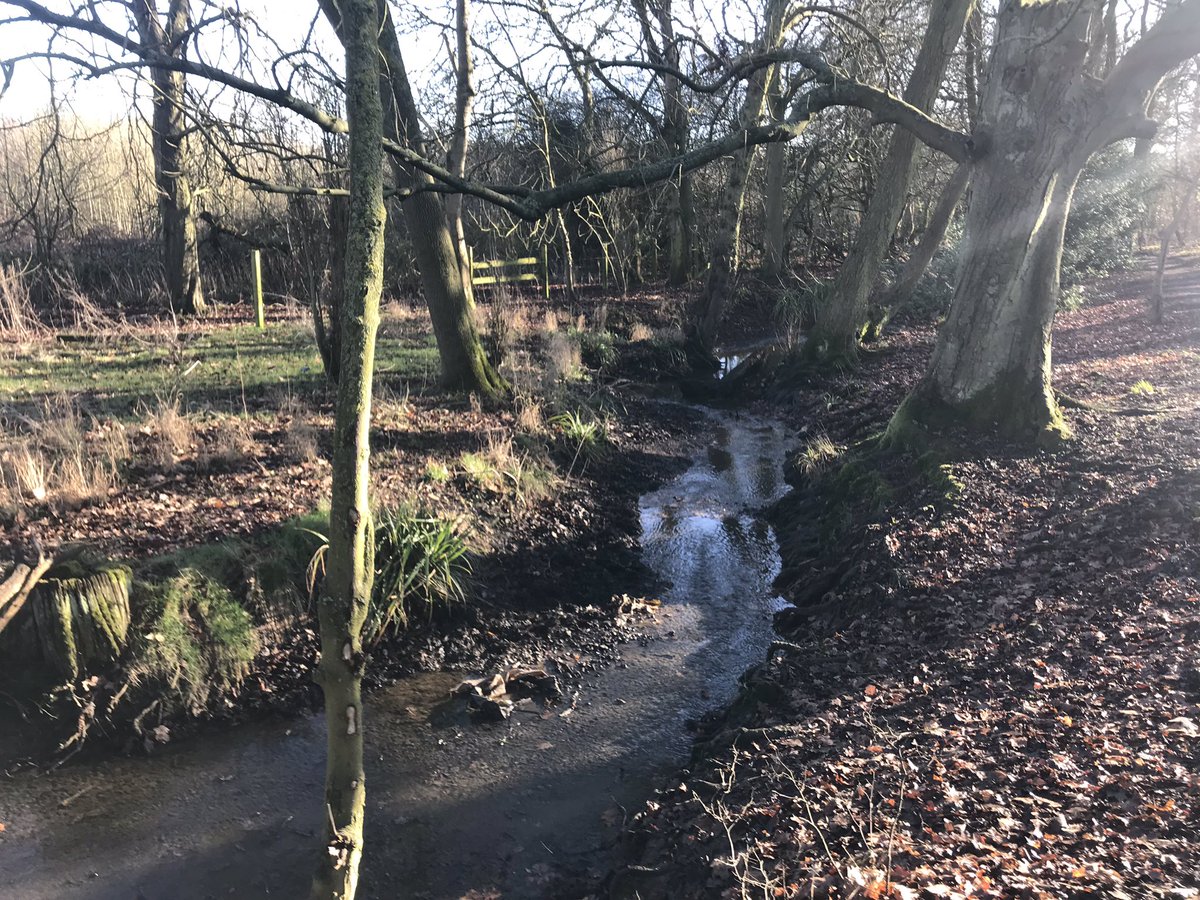
Folly Brook
Imagine my disappointment when we were ordered to line up and trudge down the footpath that was by our football field. How could there be anything of interest next to our horrible school. We were armed with notepads and jars to collect "samples". I felt we'd been had. We seemed to trudge for miles,behind the NIMR, through fields filled with mooing heffers, through woods, over streams. As my Dad would never walk anywhere, he'd even drive the 200 yards from home to church on a Sunday, I'd never been on such a walk in my life. At first, I was fed up, but as the rolling vale of the Totteridge Valley unfolded and we entered the woods, I got ever more excited. Eventually we arrived at Darlands Lake. How could I have not known such a place existed. There was an island with a Victorian boating lodge, ducks, swans, wading birds, tadpoles, reeds, dragonflies, and all manner of insects. Whilst my more studios classmates busily got to work, I simply stood taking in the wonder of the scene. How could I possibly not know of this magical place? When I got home, I quizzed my Dad why we'd not gone fishing there? He simply replied "It's a bit of a long walk". My brother Laurie took a different view. He promised to take me for a "big explore" at the weekend. He said he'd show me all the parts that "the teacher didn't know". On Saturday, he was true to his word. We packed some sandwiches and a flask full of a tea. We had one of the most magical days. We caught tadpoles and sticklebacks, found sloworms, he showed me all manner of birds and their nests. We hid in the bushes and saw several small mammals such as voles etc.

Over the years, I went off fishing. I realised that being caught was a bad experience for the fish and decided that unless I was fishing for dinner it was something I didn't want to do. I just enjoyed seeing them in their habitat. At Darlands lake there were many fine carp to be seen basking in the Autumn sun. You'd also see herons and other birds hunting for their dinner. Most of all, I loved the dragonflies though. These have always seemed the most alien and exotic of any species anywhere, and Darlands was full of them.

That is how I learned to love Darlands and The Totteridge valley. These days, we have dogs and we regularly walk that same walk. On a sunny day, it is simply the finest walk you will see anywhere with a London post code. I am always shocked when I speak to Mill Hill residents who have never walked Darlands. To me that would be like buying a television, only to never switch it on and simply to use it as a stand for your begonias. If you live in Mill Hill, your property costs more than if you bought a similar one in Colindale. The reason is that we have places like Darlands a short walk away.

But Darlands is no longer quite the idyllic paradise I first saw nearly 50 years ago. Despite its designation as an important site of natural importance, a resting site for migratory birds and sanctuary and watering hole for all manner of life from mammals, to reptiles and insects, the council has designated it a "low quality open space". The boat house has long gone.

Last summer, the lake dried out completely. All of the fine carp suffocated and died.


I urgently lobbied the council to do something, as it became clear what was going to happen. I asked for a specia meeting of the "urgency committee". I couldn't believe that any council could let such an ecological disaster strike such a site. The leader of the council never even bothered replying. Nearly seven months after that awful disaster struck, we now have the official response of the Barnet Council Tory administration. It is simply unbelievable. They are flogging the whole thing off. The reason is quite simple. When it is off the books, they won't have to answer difficult questions from people like me.

The official story is that they are selling it to a trust set up to administer it. This trust is a rather strange entity. Given the cherished nature of the site, you would think they would be seeking public membership, launching fundraising drives, working with local bloggers to make the whole thing work.

The Charity Commission details the trust on their website. The Trust has a website, but this is simply a picture of some wild flowers.  There are no details at all of the organisation that will be running Darlands.

The Charity Commission website also details the people involved.  It is a fine list of the great and good of Mill Hill and Totteridge. I have no doubt all are well intentioned and are trying to do their best for the community. I would in no way cast aspersions on their motives.


The Trusts objectives are as follows.

Charitable objects TO PROMOTE FOR THE BENEFIT OF THE PUBLIC THE CONSERVATION PROTECTION AND IMPROVEMENT OF THE PHYSICAL AND NATURAL ENVIRONMENT OF DARLANDS NATURE RESERVE.

The Totteridge Residents Association posted an update on their website in October 2018. This doesn't really say very much

Darlands Charitable Trust Update

Once the terms and conditions have been finalised, the serious work of raising funds for the urgent maintenance of the reserve will commence.
If you have registered your interest, the Trust will be contacting you.

The Barnet Eye has been aware of the fact that Barnet Council have wanted to get shot of Darlands Lake for at least two years. The hard right ideology of Barnet Council believes that the public sector should do nothing at all apart from commission other organisations to do things. They believe that anyone can run anything better than a public sector body. Whilst there are all manner of great  companies and third sector bodies managing all manner of things well in the UK, given that Darlands is in crisis, is this really the right time to hand it over to an organisation that has no experience of such a site. Whilst some of the Trustees are members of very well respected bodies, they have presented no plans to the public detailing how they will manage the site and no details of how they will handle the potential issues.

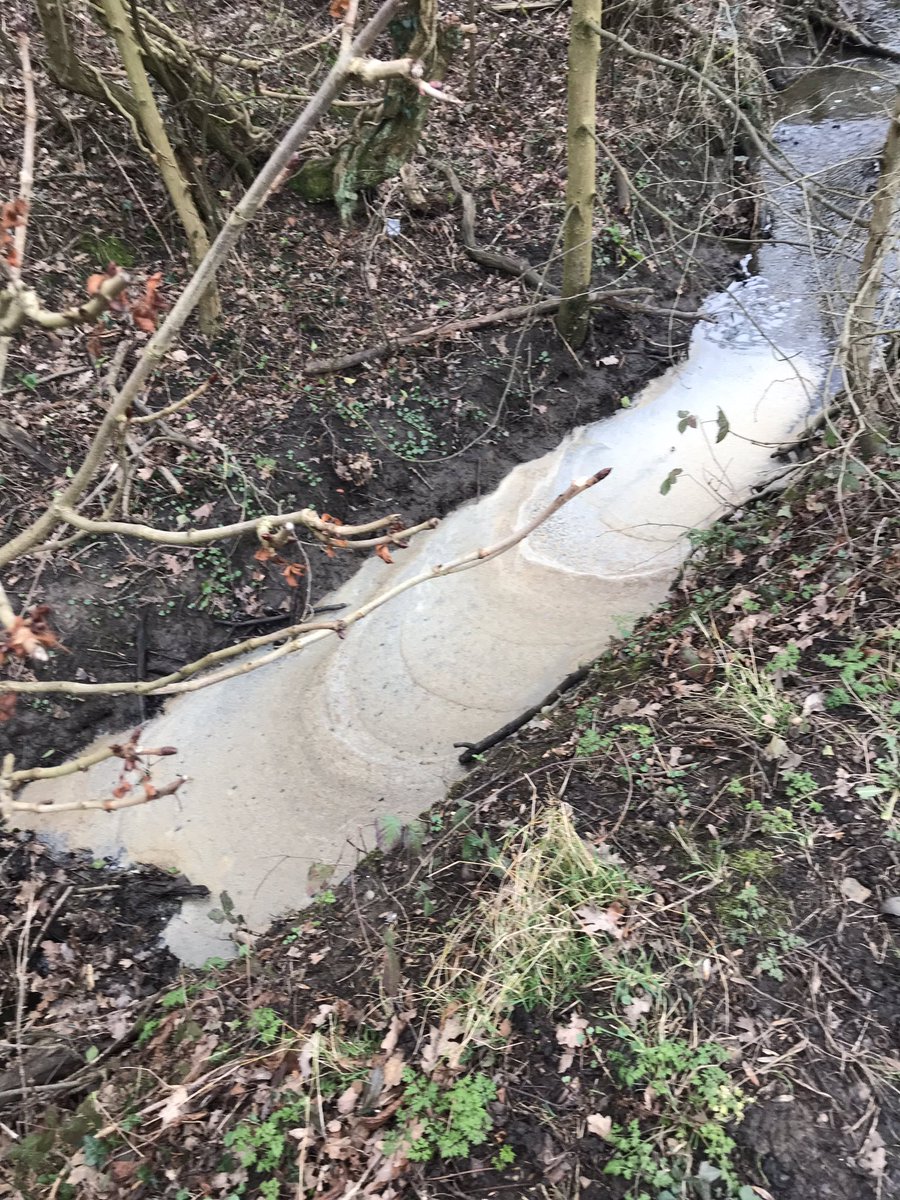
On Saturday, we were made aware of another major challenge they will face. It appears that Folly Brook, which feeds Darlands Lake has become contaminated. We are not sure whether this is raw sewage or something more sinister.


Former Undertones frontman Feargal Sharkey, who lives in Finchley,  and is an enthusiastic supporter of protection of Waterways, chipped into the debate offering support and help in how to identify the source.


Should this contamination have made its way into Darlands Lake, it could well be that there is a major cleanup operation required, just to make the area safe for people and animals. Clearly if the source of the contamination is identified, then they should be held responsible for the clear up costs, but this could take time to recover and may incur huge costs. As the Darlands Trust are looking to take over the site, they should be actively involved in helping to identify and resolve this issue.

It is vital that water samples are taken from Darlands and surrounding brooks to try and establish the scale of the problem. We really need to start taking the waterways in Barnet seriously. They are hidden gems, many locals being totally unaware of these amazing places. What many don't realise is that Folly Brook is just one small part of a network of waterways. After Darlands Lake, it branches off, and heads through Finchley, past the North Circular, becoming Dollis Brook and through Brent Cross and into The Welsh Harp, where many young people are involved in sailing and kayaking activities. This map shows the network around the lake. You can click on it and trace it through.

Darland Waterways

Water is the most precious resource we have. Well managed waterways are essential. When we let sewage and other contaminants get into the network, the streams and lakes become dangerous sites. Sewage will result in E-Coli that can seriouslly damage not only your dog but your health. When Birds, Rats and other animals use the water supply, they can spread bacteria far and wide. Although it is likely to be dogs, jumping in streams around Darlands that will come into contact with these and present the most risk in these areas, once the stream gets into the more urbanised areas, such as Brent Cross, there is a much greater risk of these bacteria being spread into areas where unsuspecting people may become contaminated.

Folly Brook Contamination
Any contamination of such water supplies is potentially disasterous. We must all be vigilant and report breaches and spillages. Why does this matter? As I entered the footpath next to the pollute Brook, I saw a young family with a soggy cocker spaniel being brought out. I've no idea if it had been in the stream, but if it had, there is a very real risk that the kids that were petting it had been exposed to something very nasty. I woud be a very irresponsible person if I didn't take this seriously.

I do hope that the Darlands Trust have the expertise to manage this area properly, will monitor water quality and draw up action plans to deal with such incidents. I worry that without a robust plan and suitable insurance in place, the well meaning people of the Trust may find that they are personally responsible for a very large bill, when all they wanted to do was make a difference.

My thanks to Laurence Bard at Pond Life Aquatic Centre, Finchley Nurseries, who came down, took water samples and reported the breach to the Environment agency on our behalf. He is a waterways expert, I am not. He explained all of these risks etc.


.


Tuesday, 17 July 2018

What is happening to the ponds and lakes of Mill Hill

One of the reasons I have always loved Mill Hill is the green belt, the peaceful areas and our ponds and lakes. Back in 2012, I made a list of the ten best waterways in the Borough of Barnet.  Number five on  the list was Darlands Lake. At the time I said

Image result for darlands lake
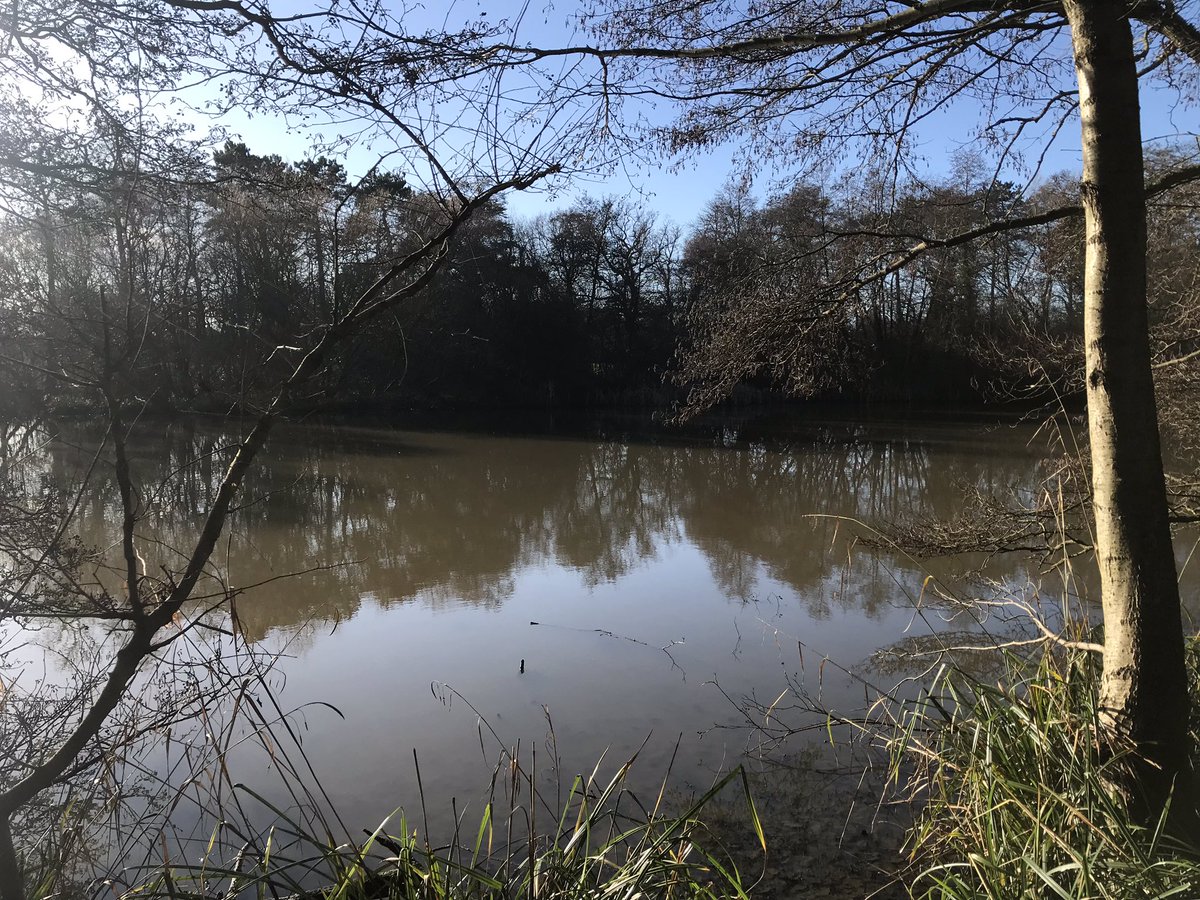
Darlands Lake as it was
 5. Darlands Lake. When I was at St Vincents school on the Ridgeway, we would occasionally do "nature surveys" at Darlands Lake. This is a large lake between Mill Hill and Totteridge. It is beautiful. It used to have a boating hut and pier, but this is long gone. Sadly few in Mill Hill even know of its existence. It is well worth a trip

At number 9, was the picturesque Angel Pond at the top of Milespit Hill. I said this of it


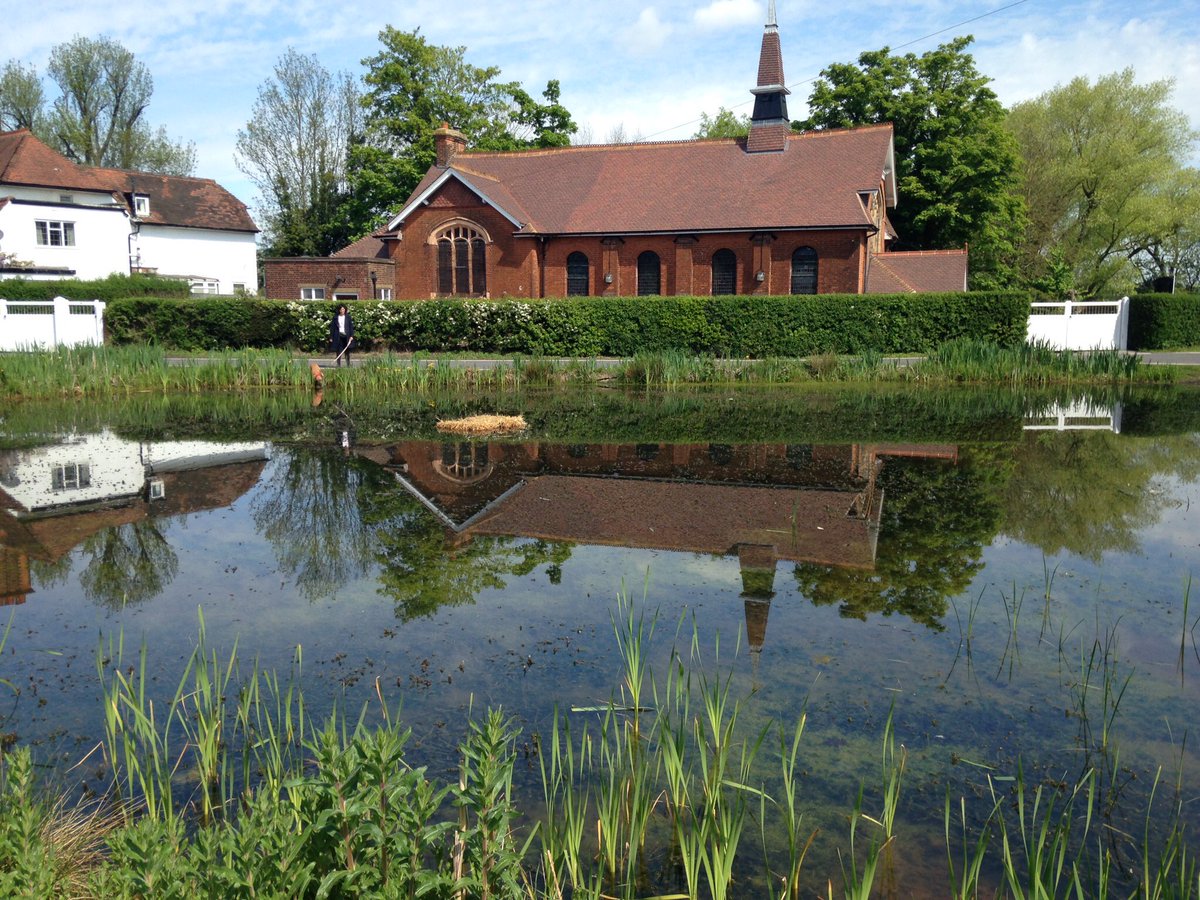
Angel Pond in 2016
9. Angel Pond. This is the most picturesque pond in Barnet, it is located at the top of Milespit Hill, with an old brick church as its backdrop. As a child, I'd walk past it on the way to and from St Vincents school. I was always fascinated by the tadpoles, sticklebacks and goldfish that lived there. 
.

Sadly if you took either of these pictures today, you'd be greeted with a totally different sight.

Yesterday the team at "A Better Mill Hill" tweeted this picture.


As you can see, Darlands lake is silted up and dried out. This lake is used as a summer watering hole for all manner of local animals. It used to have a population of carp of reasonable size. Last year I wrote a couple of blogs detailing a scheme to set up a trust to manage Darlands Lake.
Darlands Trust details

The papers around this admitted that the site had been left to go to rack and ruin over 20 years. The justification seemed to be that no one else could do a worse job than Barnet Council in protecting the nature reserve. It seems that since then, nothing has happened with the proposal to sort the situation out. Even more alarming, the lake has dried out so presumably the fish have died.  I walk around the site most days, I can only believe that our councillors do not visit this part of Mill Hill to allow this situation to reach such a point. The bottom line is that a site of significant importance for biodiversity in the Borough has deteriorated to the point where it is simply a large, smelly mudpit.

Then there is Angel Pond. This used to be the Jewel in the crown of Mill Hill. Any book, postcard or other image of Mill Hill would have a picture of Angel Pond, usually with the picturesque reflection of the former Methodist chapel (now the Brotherhood of the Cross and the Star)

This is how it looks today, as pictured by the team at A Better Mill Hill.

This is a slightly different issue to Darlands. The pond has been overrrun by an invasive weed. A guest blog by Aquatic expert Laurance Bard detailed the issues in October 2016. What is 100% clear is that we need urgent action to sort the issue out. We need the pond restoring to its former glory. Mr Bard suggested that an aquatic expert should build a plan to save the pond. It appears that his call was ignored. The time has come to sort this out. Barnet Council should get involved as the smell is becoming an issue for residents.

What is clear is that Barnet has no strategy for managing important wetland habitats in Mill Hill. Last week, the Council convened a meeting of the urgency committee to sort out issues with the licensing of the Town Hall for wedding ceremonies. I would like to see it reconvened as a matter of urgency (pardon the pun), to develop an urgent strategy to save our wetlands.

The issue is too important to become an exercise in blaming anyone. Lets just sort these issues out. I have written to Councillor Cornelius to request this.

Here is the text of my email
---
Dear Councillor Cornelius / Cllr Thomas,

I am not sure whether you are aware of the appalling state of two important wetland sites in Mill Hill? I am referring to Darlands Lake and Angel Pond in Mill Hill.

Darlands is a site of significant environmental importance. It is currently completely dried out. Presumably this has resulted in the death of all of the fish and also deprived local wildlife of and important watering hole.

Angel Pond is the jewel in the crown of the picturesque Mill Hill Village High Street. It has been overrun by an invasive plant species and is virtually completely dried out, again killing fish and depriving the ducks of their habitat.

I have detailed my views in the following blog - http://barneteye.blogspot.com/2018/07/what-is-happening-to-ponds-and-lakes-of.html - which details the demise.

I am not seeking anything other than an urgent plan to restore both important Barnet open water spaces, to preserve local wildlife and ecosystems.

I would suggest engagement with local organisations, Preservation society, Neighbourhood forum and Residents Association. I would be fully supportive of any crowdfunding initiative to carry out emergency works.

I have cc'd local individuals and stakeholders who I believe may have an interest in sorting this out. As a community we need to pull together to resolve this. 

I trust you will treat this request as a matter of utmost urgency (excuse the pun)

Regards
Roger Tichborne


.

Tuesday, 5 September 2017

Fiasco at Barnet Council - The Darlands Lake sell off

Lets start with a few documentable facts. Last week, I wrote a blog entitled Flog It! Live from Barnet Council - The Darlands Lake sell off -

in response to this, I received an email containing a statement from Cllr Stock, of the Totteridge concerning this blog, suggesting that it may allay my fears.


“For over 20 years there has been increasing concern by local community that the Darlands Nature Reserve was falling into disrepair under the care of the London Borough of Barnet (LBB). It is of paramount importance to protect both the fauna and flora as well as the lake totally silting up. There is also a fear that developers could one day encroach on this most treasured sanctuary.
In 2000 the Totteridge Residents’ Association, the Totteridge Manor Association, the Mill Hill Preservation Society together with other local community groups organised the Millennium May Fayre, with the objective of raising money for the future restoration and protection of the Darlands. The monies raised are still available. In 2016 the above named groups together with The London Wildlife Trust and Totteridge and Mill Hill councillors got together to form the Darlands Trust.
The sole purpose of setting up this new charity will be to preserve Darlands Nature Reserve for future generations to enjoy. The LBB is keen to find the right way of protecting important leisure and environmental assets whilst minimizing the burden on council tax payers. Granting a long lease to a charitable organisation under strict conditions would ensure the Darlands will continue as a valuable ecological and environmental asset, whilst the LBB will still remain the freeholders of the land.
The Darlands Trust is well aware of the need for adopting a sensitive approach to any works undertaken and will not alter any access or rights of way. Apart from employing relevant experts as required, any work will be under the oversight of a number of agencies including, particularly, the environment agency.
This is going to be a local community project and its success will depend on everyone coming together to raise the necessary money and offer their expertise and support to protect what is a real jewel in the crown of the Totteridge Green Belt.”

This was, as I understand it, in specific response to the question I asked to the Assets and Regeneration committee, chaired by Councillor Daniel Thomas.

"I note the proposal to outsource management of Darlands Lake to an unspecified third party. Given the abject failure of previous outsourcing. Excesses ( Your Choice Barnet multi million bailouts, parking fiasco enforcement problems as documented by D. Dishman, chaos in IT, multi million court cases with Care Homes, huge hidden charges exposed in the One Barnet contract by John Dix, the illegal operation of Metpro,etc), what possible confidence can the Barnet Tax payer have that this outsourcing of a vitally important nature reserve won't end in yet another expensive fiasco." 
The committee met today and prior to the 7pm meeting, I was emailed a response. This was sent at 14.42 today.
"As identified in the paper the lease of Darlands Nature Reserve will be accompanied by a separate agreement which will set out the maintenance requirements for the reserve and the requirement to ensure general public access is maintained. The site would be subject to monitoring, in order to ensure that both the agreement noted above and the lease are both adhered to."


(There were over 70 other questions submitted to the council in advance of the meeting) I turned up to the meeting, just as it was starting at 19.02. Sadly I hadn't seen the email with my answer on. I've actually been away over the last 2 weeks, on a cruise around the Caribbean (Cuba, Mexico, Jamaica, etc) and only got back  yesterday at 7pm after 22 hours travelling (I know, poor me). I had a series of meetings at the studio today, then I had a chat with a member of my staff, who has been off as his new born baby had a bout of viral meningitis. Thankfully all was well, but I prioritise some things above blogging about Barnet Council.   I hadn't looked at my email, as it would have been rude in the circumstances. I didn't anticipate this being a problem as the Council always print copies of responses and report packs for the public. My cunning plan was to read the response when I arrived (not an unreasonable plan).

I was actually quite surprised to see the meeting was packed. The council had published the agenda in the middle of the holiday period and so I wasn't sure if the public knew what was going on. This is a standard council tactic for anything remotely dodgy or unpopular. I always watch meeting agendas like a hawk (even when on holiday) during such periods. It is a classic Barnet Council tactic, when they don't want people to be too aware of what they are up to. I suspected that, other than the 1,000 or so people who read the specific blog post, not many would even know this was being proposed.

So anyway, back to the meeting. As I said above, I was a bit unprepared, I didn't even have my iPAD, which I usually use to make notes etc. Following the receipt of the email containing Cllr Stock's statement, I had been rather more relaxed about the proposal. It seemed maybe I was being over suspicious. It was clear to me that this was the result of a well meaning group of local residents, many of whom I know, wishng to protect the nature reserve. What is not to like about such public spirited behaviour? My main concern was the lack of transparency and whether the proposal may be a Trojan horse that opened the door to a less charitable and well meaning bunch.

The chariman of the committee, councillor Daniel Thomas, got things off by saying he'd like to extend the public questions section of the meeting but couldn't because of the council constitution. They've been saying this for the last nine years. Odd that no councillor has ever thought to propose amending the constitution at the AGM, giving the chairman the right to extend the meeting if large numbers of questions. But that might improve transparency and democratic oversight, so not going to happen in Barnet.

Councillor Thomas invited a nice chap from "the consortium bidding" (didn't catch his name) up to explain to all what they were proposing. Now I have no criticism of this chap. I admire such members of the community. Sadly, the public could't hear what he was saying, as for some reason, the microphone system mysteriously stopped working. There was much unrest from the public. Many had turned up to hear and most had no clue what was being said.  Councillor Thomas suggested that anyone who couldn't hear come to the front (as I'm 6'1 and a big fat slob, I thought it would be impolite to get in everyone elses way). Given that the meeting was packed, this wasn't really the most intelligent solution. Several members of the public suggested an adjournment. Cllr Thomas was having none of it. This was "important business" and it couldn't wait. Anyway, the public were simply there to watch. They have no role in democracy in Barnet. After the nice chap made his speech, several members of the committee questioned him. The most effective was Cllr Coakley-Webb. She had a string of questions. I heard some of them. Her chief concerns was that the plan seemed to be very sketchy. She asked about how the new committee could measurably improve things, when there had been no audit of what was there. She asked other questions about the democratic accountablity of the new set up. The nice chap explained that it was a "chicken and egg" stiuation and that they couldn't make a plan till they had the lease (I surmised). Councillor Langleben also asked a few questions about accountability. Again, I couldn't really discern the response. Given the follow ups from Councillor Langleben, I surmised that he was not satisfied by it. It was also established that "the committee" would not serve as members representing the organisations mentioned by Councillor Stock, but as private individuals (somewhat contradicting Cllr Stocks statement above).

The nice chap also said the committee would form an organisation and have members. In frustration at the whole thing, I shouted "will the members be able to sack the committee". His answer seemed to be "yes at the AGM". The nice chap seemed far more relaxed taking questions from the public than Councillor Thomas.

The Purpose of the meeting was to pass a resolution to allow the committee chairman (and a council officer) to decide what to do, once a consultation period of 4 weeks had passed. So this was the one chance to reign in this attack on democracy. It was clear that the public felt that this was entirely wrong. A longer consultation period was needed and the committee should then vote seemed to be what the good people of Barnet wanted. I was very frustrated. As I've stated before, I have a hearing impairment. I'd given up watching an England game to sit in a room full of people, most of whom  couldn't hear what was going on (me included). The council hadn't printed off enough copies of the answers, so I'd no idea what to respond to the council answer to my question above. In all a farce. If Barnet Council took democracy and transparency seriously, they'd have adjourned the meeting, sorted out the clear issues and used the time to have a better proposal.

A steady stream of speakers stood up to explain why Darlands was an important site. For example, one chap was from  birdwatching collective. Again I couldn't really hear him, I'm not a  twitcher, so I didn't really understand the significance of much of what he appeared to be saying, but he clearly was not happy at the threat. Another person, who sadly I couldn't really hear was Clive Cohen from the London Wildlife Trust. Clive is a sound man, but like most of the people in the room, I really couldn't tell whether he was for, against or neutral to the proposal. 

So I was then invited up to ask my "supplemental question". I stood up and thought I'd make a point. I started by saying I applauded the public spirited people who had made the proposal. Then I stated that as a hearing impared person, who had not seen the council response, as there were not enough copies printed, I felt the council should adjourn the meeting and allow me to formulate a proper follow up question, as was my democratic right under the constitution. Councillor Thomas rather rudely stated that I'd been emailed the answer earlier in the day. I pointed out that some of us have jobs and can't spend all day reading emails. He also suggested that as I was deaf I should have stood at the front, I didn't feel that warrented a response and I found this extremely insulting. It is clear that the council does not take special needs seriously. As a semi deaf dyslexic, I'ce spent my life putting up with being smugly patronised, but it doesn't make it less annoying. It seems that I am a second class citizen, disenfranchised by the council. He then said "have you actually got a question?" I said yes, started to ask it. I got as far as saying that a local waterways expert had told me that the dredging Darlands lake as proposed by "the committee"  would be as follows

"from what I know of the place/history, would cost from £250K- £2m + to dredge and restore/maintain."
This means the figure could be far higher than those quoted by the nice man from "the committee". My expert also stated that with the run off from the Medical NMRC, the lake could be contaminated, and this would need thorough investigation. As I raised this, Councillor Thomas started to interrupt and hector me. He said I wasn't asking a question. I pointed out that I couldn't as he was rudely talking over me, during my allotted three minutest. He continued to talk. I challenged him "Are you going to actually let me ask my question". He continued to argue (doing his best to run down my three minutes). Eventually he shut up. I said "can councillor Thomas confirm whether they would accept the bid from on the basis of the most financially lucrative or the best for the environment". Councillor Thomas stated that they would only accept the best for the nature reserve.I asked "so if you were offered £5 million, you'd still take the best for the environment". Councillor Thomas said "Yes". Time will tell

A stream of other people asked supplementary questions. Sadly most of these I could only make out snippets of. It was clear that the public gallery was none too impressed. I've been to a lot of such meetings, but this was by far the most chaotic. Many of the people I'd never seen before, most of then were people more concerned with the environment than politics. Many were attending a meeting for the first time.

When it came to the voting on resolutions, I thought for a moment we'd see some common sense at a meeting. Councillor Cornelius, the Council leader said "I think we should listen to some of the concerns. We've waited 20 years to do something, a bit longer won't harm if it calms the fears of the opposition". He then proposed lengthening the consultation period from four to six weeks. Labour suggested that as "the committee" hadn't developed their proposals and needed to do more work, the decision should come back to the committee rather than be decided by Councillor Thomas and a Council officer. Their logic being that the time to delegate was when a proper proposal had been put in front of the ARG committee and they'd properly considered it.

Sadly, as ever all voting was on party lines and the Tories simply used their majority to bludgeon through their proposals. The public were disgusted. There is a precedent for this type of ill thought out decision. It dates back to the days of the Labour led administration in the late 1990's. The council wanted to help secure the future of Barnet Football Club, so they sold Underhill Stadium to the club at a knock down price. They put in a clause that if the club sold the ground, they'd have to give the council a share of the profits. The idea was that this meant the club would stay in Barnet. They also put in a clause that this expired after ten years. Guess what happened? The club waited ten years, then moved to Harrow, cashing in a tidy profit, none of which went to Barnet. An inquiry cost nearly a million quid and decided nothing. Such things make me rather cynical.

What will happen with Darlands Lake? Well, the committee has decided that this is up to Councillor Thomas. A man so committed to the Borough that he stood as a Tory Candidate in Wales a few months ago, in the general election. I have no reason to doubt the intentions of  "The Committee". I believe they want the best for the nature reserve. I know people like John Living and Dr Michael Worms, who will be trustees and they are decent people. What I also know is that Barnet Council want no public scrutiny of the deal. They want no discussion of the deal. They are not prepared to respect the public, who pay the taxes that run the council.  I have issued an FoI request as follows.

---


Dear FoI Barnet,

1.       Please supply all correspondence between the council and the committee proposing to manage Darlands Lake as per tonights Assets and Regeneration committee for the last 18 months.
2.       Please supply all correspondence between council officers on same subject in same period

Please redact names etc for privacy if necessary

Regards
Roger Tichborne

---

Image may contain: 1 person, smiling, suit
Councillor Dan Thomas Accepting the nomination for Islwyn Constituency
. One may ask why I am so cynical about this? The reason is that I recall the closure of Friern Barnet Library in 2012. The council announced their intention to close the library. They also engaged local  groups to come up with a proposal to keep the library open. After the period for officially lodging legal objections expired, they terminated these discussions.The library was then closed and the groups who had worked in good faith were told that the period for objecting had expired. since then, nothing would surprise me from this Tory Council. I dearly hope that "the committee" isn't a Trojan horse. But ask yourself this. What happens now. If the committee finds they can't raise the funds to renovate the lake and keep open public access? Suppose the cost of dredging the lake is £2million and they walk away? What happens then when a developer offers to do the work in exchange of 10% of the land and a lakeside hotel/club/ wedding venue with a road in? What happens to the migratory birds, rare reptiles, plants and amphibians?

I hope none of this comes to pass. But the decision is now solely in the hands of Councillor Daniel Thomas, a man who has been actively trying to be an MP in Wales for the last few elections. A man who was not born and raised in the Borough and a man who has shown his ambitions lie elsewhere. The trouble with sites like Darlands Nature reserve is that unless you have a long term commitment and love of your neighbourhood, they do seem like "low grade open spaces". Councillor Thomas tried to give the public gallery a lecture in why they should refrain from shouting comments when councillors were discussing "important matter". Given that he'd continually interrupted me when I tried to ask a perfectly reasonable, valid question, which I'd been invited to make was just a small sign of his hypocrisy. For the record, I was one of the only questioners who finished within the 3 minutes allocated. I have a message for Councillor Thomas. Respect is earned. If you want people to behave in a respectful manner, treat them with respect. I am big boy and I can easily deal with a playground bully like him trying to intimidate me and make me fluff my lines. Sadly, some of the other people at the meeting were rather more upset at this display of breathtaking arrogance. May I remind Councillor Thomas that he's supposed to represent electors, not insult and belittle them.

The bottom line on all of this is that the administration running Barnet Council have no regard for transparency or public engagement. It was clear to all that there was huge public interest, yet the public was treated to a display of breathtaking arrogance.