Yesterday the Mayor of London approved the mega development at Pentavia retail park. I am sorry to say that this was not a surprise to me at all. There are many reasons why. Let me list a few of them.
1. A 'punishment beating'. Back in late 2017, the Barnet Conservatives, in an extremely stupid moment of political hubris, passed a motion calling Sadiq Khan an "enemy of the people of Barnet". Sane rational people reach out across party lines. This sort of grandstanding has ensured that Mayor Khan takes great pleasure in rubbing the nose of the Barnet Tories in the fact that he has the power and they don't. Why on earth would Khan do the Barnet Tories any favours if they are going to use the council chamber to call him names. Sensible politicians, such as former Tory Seb Coe, reached out to the then Labour Mayor, Ken Livingstone, to ensure that London won the Olympics. When Boris became Mayor, Labour's Tessa Jowell retained a key role in the planning of the Olympics, as it was recognised that she was a sensible, grown up politican. Boris actually made her a Deputy Mayor with responsibility for the Olympic Village. Sadly Barnet and the Mayor are stuck in a cycle of tit for tat actions and name calling.
2. Mayoral Elections next year. The Mayor's term is up in May next year. The Barnet Tories are nothing of not crafty. They know that the Mayor's approval of the scheme will go down like a lead balloon with many voters in Mill Hill. Our GLA rep Andrew Dismore, who spoke against the development has shown himself to be ineffective. Dismore is standing down and the Tories see this as an excellent way to capitalise on the Labour GLA reps inability to influence the Mayor. My sources at City Hall inform me that Barnet's team was not well prepared and were unable to provide key figures when quizzed by the Mayor and his team. in the murky world of Barnet politics, I suspect that there are many reasons this decision will suit Barnet. Good politically, will aid their target to increase house building and no political flack, because the Mayor passed it. Win, win, win for the Barnet Tories (not that I am cynical of course!).
3. Chaos at The Mill Hill Neighbourhood forum. The Mill Hill Neighbourhood forum was co-ordinating opposition to the scheme. Sadly this rather fell apart over the last six months. The chair of the forum did not get on with the Barnet Cycling Campaign, who had identified many valid objections to the scheme. The two organisations did not work together. The Mill Hill Preservation Society engaged a barrister to present their objections. As the Mill Hill Neighbourhood Forum had failed to draw up a Neighbourhood plan for Mill Hill during the five years of its remit, there was little input they could make. The fact that Barnet Council had withdrawn their franchise the night before simply added to the sense of despair.
4. Failure to Learn the lessons of the NIMR. After the Mayor of London approved Barratts application for the NIMR, I suggested that the Mill Hill Neighbourhood Forum work with other groups such as the Barnet Cycling Campaign, Residents Association and Preservation Society to perform a 'Route Cause analysis' on the failure to make the case properly for the NIMR, so that when the next development came along, we could ensure that a robust case, built on planning law was made. The Chair dismissed my suggestion stating 'That is already in hand'. It clearly wasn't and none of the lessons were learned.
In the Mayor's summing up, the only local organisation that seemed to have influenced his decision making was the Barnet Cycling Campaign. The Mayor took on board their well articulated and well reasoned case, based on planning law. The Mayor has ordered Barnet Council to work with the Campaign to address the issues raised. This is perhaps the only positive thing to come out of the whole sorry saga.
So what does the Mill Hill Community have to take away from all of this? Well the lessons are quite simple
1. Form a new organisation to work as an umbrella body representing all of the stakeholders in Mill Hill, with an urgent remit to finish the Neighbourhood plan.
2. Do a proper post mortem on both the NIMR and Pentavia decisons, so that local campaigns can be better informed in how to fight these sort of battles.
3. Start an active campaign to improve the public transportation around Pentavia. The West London Orbital railway, which has a proposal for a station at the RAF museum. The scheme should have included walkways and cycle paths to this. If I was Mayor, I would have made the developers pay for a Boris bike scheme at Colindale/Burnt Oak/Mill Hill Broadway/Mill Hill East/Saracens/RAF museum, with docks at Pentavia and free usage for residents. That is the sort of progressive policy which would make a real difference.
Do I think that Pentavia really will be a disaster for Mill Hill? The site has become an eyesore. The fact that it will become an even bigger eyesore, dominating the skyline and setting all sorts of unfortunate precedents in beyond doubt. I would have supported a six storey development on the site, that improved amenity for Mill Hill, with facilities such as a cinema, bowling alley or other such activities that could be enjoyed by all. My biggest problem with Khan's decision is that people have to live in this block. A soulless tower, overlooking the A1, the M1, and the Thameslink railway where you can't open the windows in summer because of the noise and pollution is hardly a great environment to live in. I shudder to think what it would have been like living in such a place yesterday if the aircon failed.
It will be interesting to see what mitigations the Barnet Cycling Campaign and Barnet Council can come up with to improve the transport links. I rather hope that the predictions of traffic chaos on Bunns Lane and the A1/A41 to Mill Hill Circus do not materialise, but I have little confidence in this. As someone who operates a business on Bunns Lane, I know all about the problems. We advise customers arriving by car not to start or end sessions between 5-6pm and we don't open until after the morning rush hour due to the problems. This works well for us and we organise our shift patterns around this, but not everyone has that luxury.
People often say "what can be done". I'veoutlined some steps above, which might help. The key is getting our act together as a community. The bottom line though is that we have to elect sensible grown up politicians who can work together, across party lines, to deliver the right thing for Mill Hill. There are such people in all parties, no one organisation has a monopoly on common sense. Sadly we've not really seen any community leadership on this from our current elected representatives.
Last night, the planning committee of Barnet Council withdrew official designation of the Mill Hill Neighbourhood Forum. The forum was set up five years ago to produce a Neighbourhood Plan for Mill Hill. As this has not been delivered by the Forum, and various local residents had raised concerns regarding safeguarding and governance, the council had no choice but to remove the designation. The Barnet Eye supported the creation of the forum and recognised the urgent need for a robust neighbourhood plan. Sadly it had become clear to us that the forum lacked the focus to deliver the plan. Too many other plans and schemes were developed and the primary objective of the organisation was continually put to one side whilst the chair pursued pet schemes that were good ideas, but should have been managed under a subcommittee, leaving the main committee to develop the plan. It also became clear to us that the whilst the committee had some excellent people involved, there was inadequate engagement and involvement with the wider community.
The Barnet Eye believes that a Neighbourhood plan is urgently needed and that a new committee needs to be formulated as a matter of urgency to put it together. The mistakes of the old Forum should not be repeated. The committee should have co-opted members from all of the main local organisations, including faith based organisations (Churches, Shul, etc), local schools, local organisations (Mill Hill Preservation Society, Mill Hill Residents Association, Mill Hill Services Club), local sports clubs (Saracens, Mill Hill Village, Mill Hill Rugby Club, Mill Hill Golf Club, Barnet Copthall Swimming and Diving club, Shaftesbury Harriers), Doctors surgeries, major local businesses and the local council. Local Councillors should also be represented.
A proper register of local community assets should be central to the plan. It was unfortunate that the Diving Pool at Copthall has not yet been funded. Such assets should be central to the plan. One of the reasons that it is vital that local schools are represented is that teachers need to be able to live in affordable housing, near to their place of employment. Schools are also at the sharp end of many of the social issues affecting society, so they should be at the forefront of drawing up the plan. Ensuring that sufficient affordable housing is a key to ensuring a successful community. Safeguarding and preserving sports facilities should also be a primary objective.
There is always a tendency for people to champion "Grand schemes" in plans. I happen to believe that there is plenty of scope for major improvements in Mill Hill without any such schemes. There are already major housing developments in Millbrook Park and the NIMR site. The Watchtower development will also soon be starting. There is some scope for better use of the space which is Mill Hill Broadway Station car park. Originally the council purchased this in the 1970's to build a multi storey car park, but this was never realised. We'd like to see more parking on the site and maybe a cinema or other such amenities, possibly with some housing. We believe that this should be no more than five storeys high and of a design in keeping with the best of Mill Hill. By digging down, the car parking elements could be underground.
Pentavia Scheme
We would also support an expansion of Saracens, so long as this continued to accommodate the Shaftesbury Harriers and I would insist that funding for the diving pool be part of the scheme. I believe that a world class, multi discipline, sports facility would be amazing for Mill Hill.
The Pentavia scheme is up before the Mayor of London today. We sincerely hope that he approves a scheme that is no more than six storeys high and has increased amenity for Mill Hill.
Old Railway from Mill Hill to Edgware
We also would like to see serious action taken to improve public transport in Mill Hill. An extension of The Northern Line to Saracens would seem to us to be a no brainer. This was a railway until 1964, so it would simply mean putting back into use a great amenity. We would also like to see the West London Orbital Railway extended to Mill Hill Broadway, with a stop at The Royal Air Force Museum. It would theoretically be possible to extend this to Edgware over the old disused railway. This would give all manner of interchange options.
Another objective should be to improve air quality, especially around the Mill Hill Bus station, which has high levels of pollution and I believe it is criminal that school children are exposed to this whilst waiting for buses. There are three contributing factors. The first is the buses running diesel engines whilst parked. The second is the fallout from the M1 and the Railway, where diesel particulates, which are heavier than air build up. The third is the lack of air movement, as the station is in a culvert that limits air movements. The obvious answer is to not have the bus stops in such a place.
Mill Hill has some very important green spaces, is designated green belt and has a conservation area. We need to make the protection for these spaces as robust as possible.
Any schemes for Mill Hill have to take into account the infrastructure in the area. That is why we need local NHS representation and feedback for the plan. In short, a joined up, holistic plan that all of Mill Hill can buy into. I rather hope that everyone agrees with me that we should learn the lessons of the last five years and get on with it. I have no wish to be the chair of any such committee, but I will give it my full support.
When I was at St Vincent's school, one of the old nuns used to regularly remind us "Today is the first day of the rest of your life", implore us to pray for forgiveness for our sins and to resolve to be "good little children today". She implored us to pray to Jesus for deliverance for our sins and would tell us to pray her favourite prayer. I normally publish a Wednesday poem, so I was originally going to publish this, with a commentary, I hadn't realised this would coincide with the arrival of Boris Johnson in No 10.
GENTLE Jesus, meek and mild,
Look upon a little child,
Pity my simplicity,
Suffer me to come to thee.
Sadly there were many days that were the first day of the rest of my life, where I was not a good little child. In fact, despite my daily recital of this prayer at assembly, I was a naughty little brat. I was always argumentative and enjoyed causing trouble. In my final report from St Vincents, Sister Gabriel the Headmistress, wrote with great disdain that I was argumentative and untrustworthy and the only career I was suited for was one as a politician. I thought this rather unfair. My father thought it was hilarious. Generally the way justice was administered at St Vincents was that the teachers/Head Mistress would decide who had been naughty and bash them with bats/rulers/blackboard dusters until such time as they 'confessed'. As my Catholic education had also taught me that it was a sin to tell lies and they blackened the soul and you would go to hell if you committed too many, I would refuse to confess. As a result I would get bashed quite a lot. I remember Sister Gabriel once complaining that I was irritating her arthritis as she had given me ten lashings with the Bat and I'd still not confessed. She told me that I'd have her bad arm on my conscience. I took such things seriously and went to confession on Saturday. I would ensure that I saw Father Andy Kavanagh, as he'd give you three hail Mary's regardless of whether you'd stolen your sisters porridge or murdered your next door neighbour (not that I had done that). When I told him that my sin was that "I'd made Sister Gabriels arm hurt because she'd had to give me the bat so many times" he laughed and then asked me to repeat it. When I did, he said "I thought you said that, what did you do?" I replied "She thought I'd written something about Susan Purdon on the toilet wall". He said "Why did she think that?". So I explained "The caretaker found the Graffiti and told Sister Gabriel. She came to the class and said 'Can anyone tell me which boy fancies Susan Purdon' at which Peter Conway put up his hand and said 'Roger Tichborne fancies her Sister' (a sure way to get a cheap laugh) at which I was taken to her office and she gave me the bat and insisted I confessed". Fr Kavanagh then said "What did the Graffiti say?". I said "I don't know, the caretaker scrubbed it off". At this Father Kavanagh laughed and said "I'll have to have a word with Sister Gabriel, she should offer her sufferings up to the Holy Souls". He then said "Have you committed any other sins this week?" As I thought no sin could compare to making a nun's arm hurt, I couldn't think of any. So I replied "I don't think so". Father Kavanagh replied "Well I'm sure you did something so go and say a Hail Mary". I was flabbergasted. I had expected excommunication, or at the very least three Hail Mary's. I later found out that the graffiti said "Susan Purdon is like a big jam donut" and I know the identity of the perpetrator, although I was sworn to secrecy about his identity.
You may be asking about what all of this has to do with Boris Johnson? Well I was think about Sister Gabriel's comment about the talents required to be a successful politician. In her assessment being "argumentative and untrustworthy" are key. As far as I know Boris is the first Prime minister to have been sacked for lying to reach the heady heights. Now Boris is top banana, only the Queen can sack him. I was having a drink with friends last night and they asked how I thought Boris would do. I said that I think there is a 20% chance that he will be the best Prime Minister we've ever had, or at least since Winston Churchill. He is a gambler and risk taker. He is also lazy, so if he appoints a good team, he will let them get on with it. The country desperately needs all manner of major reforms and it could well be that Boris is the maverick to deliver them. My friends were horrified that I could say such a heresy. How could I possibly think Boris would be a success? I said "I said there was a 20% chance that this would happen, it's not impossible, but I think there is an 80% chance that it will be shambolic, his administration will be faction ridden and that the race to succeed him has already begun as most of the Tories know that it is all likely to fall apart spectacularly.
Many people suggest to me that Boris is funny and affable. I don't really subscribe to the theory he is anything more than a good foil for a competent comedian (such as Ian Hislop on HIGNFY). Boris always reminds me of the Monty Python sketch where the comment about toilet wall Susan Purdon was hijacked from. I suspect that his first cabinet meeting will not be entirely dissimilar.
Can I make a suggestion. Go out. Do something I'd never ever suggest you do in any other circumstances. Buy a copy of the Daily Mail, The Daily Telegraph, The Sun and The Daily Express. Do not read them. Wrap them up safely and store them under your bed. In one years time, on the 24th July 2020, dig them out and read them. It will be fascinating to see how the unadulterated optimism they are spouting about the Boris premiership works out. I have already stored my copies. I can't read all of the waffle, I find it is rather insulting to my intelligence. I listened to the speech Boris made upon learning of his victory. It was vacuous and mindnumbingly banal. Generally new Prime Ministers make sure that they get some pithy soundbites in for such a momentous occasion. It seemed to me that Boris simply couldn't be bothered. That does not bode well. I suspect that we are in for an early general election. Back in June, I published a blog after speaking to one of team Boris that laid a potential road map for what we can expect. I suspect I will refer back to this many times over the next few months. Perhaps the most interesting thing of all is that all of the Conservatives that have read the blog and spoken to me have privately agreed that they think it is the most likely path he will tread.
1. Until the 1970's you could see an anti aircraft gun in Mill Hill. Where was this?
2. What was the name of the bicycle repair shop on the site of what is now Marks and Spencers?
3. Which 'James Bond' used to live in Mill Hill?
4. Where was the Express Dairy milk depot in Mill Hill?
5. What was the name of the butchers opposite the Three Hammers (either name will do)?
6. What was the restaurant on the site of the Good Earth called in the 1950's?
7. What was the factory on the site of what is now the IBSA press site called?
8. Which famous British formula one racing car driver has a blue plaque in his honour on Parkside?
9. Which tube station in Mill Hill could you only get a bus ticket to between 1939 and 1966?
10. Where could you find a boating lake in Mill Hill in the 1950's?
11. Which Mill Hill street can you see a wall still bearing the scars of major air crash in 1951?
12. Where was the London Slate and Tile Company in Mill Hill based in 1958?
13. If you visited H.A Blunts and sons and inserted a penny coin into a slot in the shop window, what would happen?
14. Which member of the early 1960's pop band "The Tornado's" brother was the owner of Kelly's corner garage?
15. Which Mill Hill Church was featured in the film "Personal Services" based on the life of Cynthia Payne?
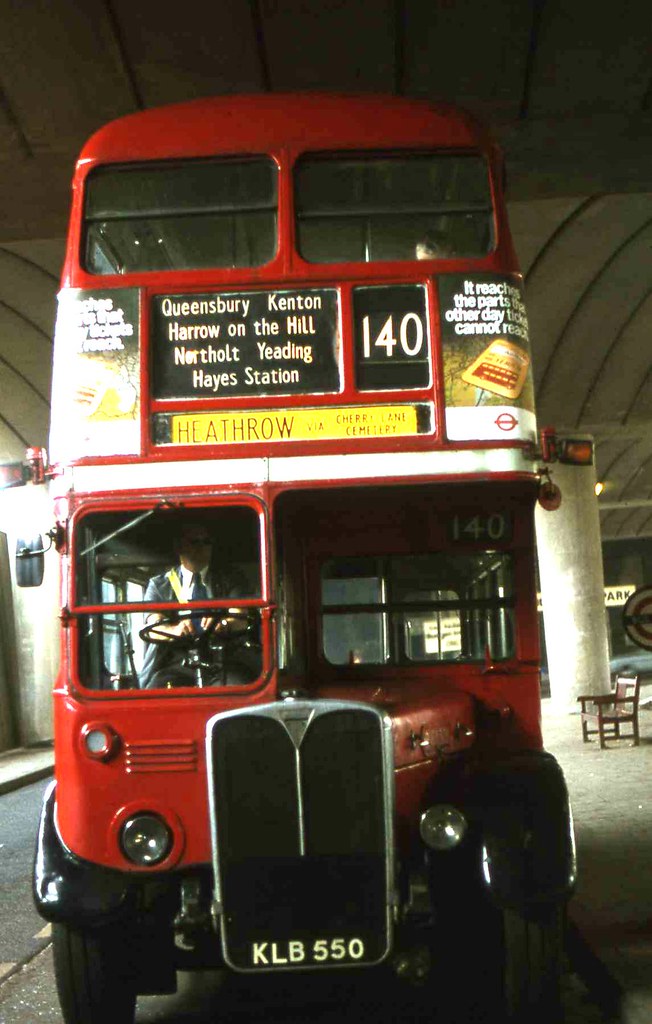
16. What bus would you take from Mill Hill Broadway direct to Heathrow Airport in 1975?
17. What was the name of the Cricket club, which had it's clubhouse in Mill Hill Park?
18. What was the name of the construction company that built the section of the M1 through Mill Hill Broadway and why was it's owner rather controversial?
19. Which star of the Harry Potter films was raised in Mill Hill and had Dr Who for his Granddad?
20. Why would your mum tell you not to go down Nan Clarke's lane on Halloween?
Watch this space.
--------------------------------------------------------------------------------------------------------------------------
The answers.
1. There was an anti aircraft gun behind the Sea Scouts (Big red brick building) on Daws Lane
9. You used to be a able to purchase a tube ticket to Mill Hill The Hale station and use
it on a 240 bus from Mill Hill East to Mill Hill Broadway.
10. There was a boating lake and boat shed on Darlands Lake.
11. You can see the damage to the wall on Marsh Lane where the plane crashed.
12. The London Slate and Tile Company in Mill Hill was based in the Mill Hill Goods Yard, which is now the M1.
13. If you visited H.A Blunts and sons and inserted a penny coin into a slot in the shop window, a model steam engine would do a circuit of the shop window.
14. The member of the early 1960's pop band "The Tornado's" who's brother was the owner of Kelly's corner garage was Lead guitarist Stuart Taylor.
15. The Mill Hill Church which was featured in the film "Personal Services" based on the life of Cynthia Payne was John Keble's. There is a wedding scene.
16. The bus you could take from Mill Hill Broadway direct to Heathrow Airport in 1975 was the 140.
17. The name of the Cricket club, which had it's clubhouse in Mill Hill Park was Hendon and Edgware Cricket Club.
18. The name of the construction company that built the section of the M1 through Mill Hill Broadway was Marples Ridgeway and the it's owner was Ernest Marples, rather controversially the minister for transport. Many people felt that he had a very pro road/anti rail bias. Ernest Marples appointed Dr Richard Beeching, who decimated the rural rail network in the UK
19. The star of the Harry Potter films raised in Mill Hill and had Dr Who for his Granddad is Harry Melling, who played Dudley Dursley in the Harry Potter films. His Grandfather was Patrick Troughton.
I can safely say that it will be the hottest summer breaking records yet again. Without even looking it up, because such is the pace of global heating. Our borough is no different. Mill Hill is no different.
The other day I was at a gardening customer, dealing with the moth that only eats box. Picking through, they can be manually squashed. Others might use insecticide. It’s a form of chemical warfare against insects. I don’t know if many people think about it, that these chemicals might effect the environment too. Glyphosate, whose trademark name goes as Roundup, is a weed killer available to garden amateur consumers and councils alike. Barnet Council passed a motion with a diluting amendment from the Conservatives, following a campaign by Pesticides Action Network. Though called pesticide-free, they’re not campaigning for their total elimination, just to stop the blanket spraying that might go on, the squirting of the herbicide weedkiller on our pavements. I see it as a political signal from the suburbs, that the countryside needs to be managed in a different way too: to end the chemical warfare. I have a friend who is seriously allergic to these chemicals and could die from a very dilute exposure a mile away, and gets very sick. By law, those spraying should notify her by calling her before doing so, so she can stay inside for that day. Barnet Council don’t bother. We heard all this at Barnet Council’s environment committee, who invited her to speak for 7 minutes. The Conservatives tabled a motion to further cut the speaking time at these meetings. It’s very difficult to speak because as ordinary people we have to read hundreds of pages of reports and agendas and meet the deadline and give them written notice what we’re going to say.
Anyway, the third environment issue I want to raise on this blog is the fact that many local residents get their food in plastic packaging. Food waste and plastic packaging all add to the stream of domestic waste and this is a problem. Many years ago I took a degree in chemistry. No matter how great the end of pipe filter, that they put on the North London Incinerator expansion, it’s not as good as producing less burnable rubbish in the first place. If indeed our rubbish goes into the incinerator, not all of it will disappear at the end. Any Bachelor of Science of Chemistry graduate with honours can tell you that rubble won’t burn, no matter what technology will use. You just take it in the truck half way across the North Circular Road, Up the A10, load it into the burner and set it on fire. The energy recovered from the rubbish then heats up the rubble, in stead of generating heat or power that can be of profit to the North London Waste Authority. What happens in reality is that there is an economic incentive built into the future operation of the burner, to send more recyclable stuff to not be recycled into useful materials. The plastic burns and additives sort of melt down and it all turns into a toxic ash. If I were to dump the rubble from my little home refurbishment in Summer’s Lane municipal recycling centre, they would probably recycle it for me, turning it into new aggregate, but charge me for doing the right thing. I’m not very pleased with the way the Government rewards me for trying my best to recycling properly. So my number one tip is buy less stuff.
Lately it’s at a meeting of Barnet Rebels – the local group of extinction rebellion – that Roger has suggested Barnet Rebels contribute a guest blog to Environment Monday. There may even be one coming up not about environment, from a retired teacher. Some of the local group were involved centrally in the protests for London Climate Week which we code-named Operation Mushroom. We pledged to go on tax strike until the GLA stopped putting money into un-sustainable projects: The Edmonton Incinerator, and the Silvertown Tunnel and associated concrete works. Actions Barnet Rebels propose to do locally to tackle the Earth Crisis. Something at Brent Cross?
A transport related bicycle swarm World Car-free day is September 22nd Guerilla, gardening group– to green our surroundings up and provide a habitat for natural creatures A packaging action – to give local shoppers in the supermarket to leave their unwanted packaging tobe sent backNorth London Uprising – We want our brown bin food waste recycling collection brought back! I hope to have more debate around the North London incinerator project, because there are a lot of complex options and arguments swirling around the internet!
------------------------------------------------------------------------------------------------------
Ben Samuel is a Barnet Resident, member of the Barnet Green Party and supporter of the Extinction Rebellion Campaign.
Do you know that feeling, when you are half awake and half asleep and you are not quite sure whether you are dreaming or not? Sometimes strange and inexplicable things happen, sometimes you wake up with a start and are not quite sure. Well last night, I got in rather late from having a drink with friends at the Mill Hill Services Club. The last job of the night is to take our two dogs out for a comfort break. Usually when we return, I'll have a cup of tea and sit down for ten minutes with them to settle them down. We have two dogs. Both are rescue dogs and have stress issues. Bruno is eight and resembles a large Labrador. He is fairly chilled out in the house and would love to be a lapdog, but he's a 40kg beast. He loves a cuddle and is very affectionate. When he gets in he just lollops on the couch. Kira is a white german shepherd. She's around 18 months old and is still very nervous. When we are on a walk, she is a model dog. She has great recall, she will fetch a ball and really enjoys it. She will placidly return to me to be put on the lead and is happy to be petted. As soon as we get in the house, she won't come near me. We assume that she was maltreated, which is why she ended up with the RSPCA. She is fine with my wife and daughter, but in the house, she gives me a wide berth, until its time for a walk, when she will be fine. She is an incredibly intelligent dog, unlike Bruno who is lovable but stupid. The first time I took her to Mill Hill Park, she slipped the lead and ran straight home, having only walked the path on the way up. Once she realised that I was a friend on a walk, she instantly developed recall and learned to fetch balls.
As she is nervous, she benefits from some time to chill, before we go to bed. So as I went through my routine, got a cup of tea and sat down, she settled into her bed, at the other end of the house. I started reading a magazine, had a few sips of tea and my mind started to wander. Then a very strange thing happened. Kira came up and nuzzled me. This does happen very, very occasionally when I am still and chilled. I gave her a stroke, then something very strange happened. I could hear her speaking to me. This was not vocally, but I could feel her thoughts and that she wanted to talk to me. I was intrigued, so I said "What's up Kira?". She replied "I really feel sorry for people". This surprised me. I've always thought humans were the ones who felt sorry for dogs. She then explained. Here are her reasons.
1. People don't know how to enjoy themselves. She said "When we are on a walk, it is amazing, you are outside, you can run, there are lots of smells and sights, there are other people on the way, but you ignore them. If I see a dog and it is friendly, I play with it, but if you see someone you like the look of, you still ignore them. I can tell because I can smell when humans like people".
2. People don't know how to show their emotions. She explained "When mum comes home, I am really pleased to see her, so I greet her and let her know. You just grunt. But then, when people you don't like visit, you are overly friendly to them, even though you don't trust them".
3. People don't know how to clean themselves. She explained "If a dog has something which is annoying it, we will clean it. Humans couldn't do this even if the wanted to." Replied "We have showers", she replied "Once a day, dogs clean themselves all the time, especially the bits that smell".
4. People don't enjoy their food. She explained "A dog knows the value of food. If I have a bone, it is precious and really good to eat. I don't want to share it with Bruno, even though I like it. You are always sharing your food. That is really stupid".
5. People don't know how to tell when other people wish them ill. She explained "A dog will instantly know if another dog doesn't like them. They give off strong body language. Humans do the same but they seem oblivious to it. When people who are ill meaning come to the door, you tell us to be quiet, even though we are protecting you. That is very stupid".
6. People get angry over nothing. She explained "Dogs get angry if you tread on their tail, steal their bone or mistreat them. We also get angry if we are treated unfairly. However people sit around doing nothing and all of a sudden are angry with each other, it is difficult to understand why and makes us nervous".
At that point I stirred with a start. Kira was sitting in her bed, looking at me in a rather strange fashion. Wheras normally I could remember nothing of such interstate moments, I could recall every word and quickly noted it. As with many things, I am not entirely sure whether it was my imagination or a moment of connection. This morning, she was back to her usual self. Good on the walk, now sitting in her bed. I've often wondered what dogs think about and whether they actually think about human behaviour. Oddly a former housemate of mine had a very similar experience with my old cat. He'd taken LSD at the time, which I thought offered a sensible explanation. Last night, I'd had a couple of pints of Carlsberg. The odd thing is that all of the observations make perfect sense from a dog's perspective, but I really don't see much prospect of people changing their behaviour.
I would suggest to all dog owners, that they give some consideration to the idea that maybe the reason their dog takes such good care of them is because the dog is feeling sorry for them. With that in mind, maybe we should give our dogs a bit more affection and appreciation than we sometimes do. Whether or not it was genuine bona-fide communication or a dream, I feel I have learned something.
Mel Brooks is probably my favourite film director. Anyone who heard the disgraceful chanting at the Trump rally this week, would probably draw a strong parallel with this scene from Blazing Saddles, you could almost imagine the Sheriff riding in!
I would love to see a Mel Brooks take on the Trump administration
Whilst we never need a reason to show a Mel Brooks clip, I think that this one occasion where there is certainly a good reason. Have a great weekend. If anyone is at the Heart of Wembley Festival, see you there.
Tonight, as I do every Thursday at around 8pm, I will make my way to Powerleague in Pursley Road to play five a side football. For nearly 20 years, this has been a ritual and one I am loathe to break. I've missed concerts, not asked important questions at Council meetings and upset family members by not attending parties and other celebrations because I've been playing football. When I started playing with the boys, I was 38. I had played eleven a side football until I was 33 with Hendon School old boys, stopping when my eldest daughter was born. I felt that it would be unfair to my wife to miss every Saturday afternoon. It also gave her a break from childcare. As I put on a couple of stone, she was quite supportive when I suggested I might start playing again. The group were roughly my age, including several old school mates from Orange Hill. It was a good standard, but friendly. We'd also have a beer in the Three Hammers after the match. As time went by, most of the original group retired, moved away or got injured. Now there are just three originals, who were there when I joined the gang. Some of us bring our sons to join in. They are faster, more skillful and better players than me, but it keeps an edge. Around five years ago, the original organiser, Tony retired. I stepped up and added the organisation to the long list of things I do. Unlike most of the other things, there is a big payback. For me, it is a highlight of the week. It helps me deal with the stresses of life. You can't take your cares onto a football pitch, so you are forced to chill.
Over the weekend, I was thinking about my father. Watching the Cricket world cup reminded me of his love of Cricket. He was a very good cricketer in his youth, playing at a good level in Australia before the second world war. When he left the RAF in 1946 and settled in England, he played for several seasons for Finchley Cricket club. I once asked him why he stopped and his reply was that when he realised that he was not able to physically perform to the level he wanted, he saw no point in playing. He switched his allegiance to snooker at The Mill Hill Services club. He could have a pint while he played and that became his Thursday night ritual. In the mid 1960's his snooker partner was film star Patrick McGoohan, a club member famous for the Prisoner and Ice Station Zebra. As he loved cricket, I never really understood his decision to stop. He was fiercely competitive and I suspect that he didn't like the idea that sooner or later he'd lose his place in the team to someone he considered an inferior player. As I pondered these thoughts, celebrating Englands victory, I realised that as I've never been a particularly good footballer, I've probably enjoyed it far more than if I'd been someone who actually had a chance of success. On Tuesday night, I went to Borehamwood to watch the team play QPR. I went with my old music mate, Boz Boorer, his daughter and my son. We bumped into Boz's mate, QPR legend Kevin Gallen and had a few beers with him, before watching the match.
Much fun was had, but on the way back Boz commented that, given the dire quality of football and the lack of first team players, for Kev it must have been like when Boz, as a musician watches a duff tribute act. Kev was there to check out a few players, he now works for Crystal Palace. I am not sure that his trip was worth the effort, as the Wood won 2-1 in a poor game. The QPR goal looked to me rather like a dodgy penalty.
Although I'd love to have scored the winning goal for England in a World Cup final or for Manchester City FC in the FA Cup final, the fact I was always quite rubbish meant that I've always been able to enjoy my football. I enjoy the camaraderie of playing in a team.
Powerleague in Mill Hill is a wonderful place. It gives a fat, unfit 56 year old like me the opportunity to kick a ball about, long after the age when I should be. Having a 4G Astroturf pitch and floodlights, means we can play at 8.30pm, come rain or shine. It has given me the chance to play football with my 19 year old son, which is something I'd guess most blokes would love to do. It means that I see my group of friends on a regular basis and I've made many new ones over the 20 years with the team. We organise curry nights and have been to comedy clubs etc as a group.
So when you hear that Mill Hill isn't the place that it was 40 years ago, just remember that people in my Dad's generation didn't have Powerleague. For me, Powerleague is the best new business to arrive in Mill Hill in the last 25 years. Ironically, it is on the site of my old clubs clubhouse. I was quite upset when it was knocked down, but have to admit, Powerleague is actually a huge improvement. It is great to see all of the young people playing sport there. Powerleague is a jewel in Mill Hill. I haven't been paid for this article, but if they want to give us a few beers in the clubhouse next Thursday, I won't say no!
There is a bit of a back story to this. When I was about seven years old in 1969, I asked my Dad where the Mill was. I assumed there was a big Mill somewhere. He suggested that we jump in his car and have a look for it. We spent a joyous half an hour zooming around the streets of Mill Hill, looking for it. Then we got to the junction of Highwood Hill and Lawrence Street. There was a group of people gathered outside the 'Old Forge tearooms' on the small green. Dad suggested we stopped an had a look. To my great delight, the Old Forge was having a strawberry fair. So we had tea, with strawberries and cream. It was delightful. I completely forgot about our mission to find the Mill. As a parent, I now realise that Dad had probably planned going for strawberries all along, as bunch of his mates were there. A couple of weeks after, I said to him that surely they should change the name of Mill Hill, as there was no Mill. He said if I could think of a better name, he'd have a word with Mayor and get it changed. Sadly, to this day, I've been unable to come up with a better one.
A couple of weeks ago, I took my grandchildren to see The Flying Scotsman hurtle through Mill Hill at around half past eight on a Saturday morning. It was a sight to behold. I am pretty sure it was the first time I went to Mill Hill to watch trains since the late 1950's. I mentioned this to my grandchildren, who were fascinated to hear that all of the trains were steam engines back then. I explained that there was no M1 Motorway and that there was another railway line that used to pass under the Thameslink line.This line carried goods to Mill Hill East, a depot in Flower Lane and a depot in Edgware, based where the Broadwalk Centre has been built. There is an excellent write up about this service by Eric Stuart, with some nice pictures of the Northern Line freight services. In the 1950's, Mill Hill East gasworks was still producing Town Gas, and the area always had a rather unpleasant aroma!
The tweet below has a link to an excellent video of the event
This morning I had the pleasure of seeing 60103 Flying Scotsman on a different route for a change, at the head of @railwaytouring's "The Yorkshireman" from Ealing Broadway to York, seen here at Mill Hill Broadway accelerating away on the fast line!https://t.co/JjTUrXzEPopic.twitter.com/ob3xTFMwfs
Watching the Flying Scotsman gave me a great feeling of nostalgia. At the end of the 1950's I was around 14 years old, my childhood was drawing to a close. By the end of the next decade, not only had I changed beyond recognition, so had Mill Hill. The M1 had been built, the Mill Hill East to Edgware railway line had disappeared, along with the coal depots and builders yards associated with it. The station at Mill Hill had been knocked down and rebuilt. Double decker buses could pass under the railway bridge, reshaping all of the local bus routes. Many other changes had taken place. The famous London smogs of my youth had disappeared as people stopped using coal to heat their homes. Ordinary working people had televisions and telephones. But what was it like growing up in Mill Hill in the 1950's?
There were a few notable moments that stick in my mind. When I was around seven, rationing ended. I was born with rationing and so it was just normal life. One day, out of the blue, we were told that rationing had ended. We were excited to learn that banana's and sweets could be bought, as many as you liked, so long as you had the money. In practice, this was usually when you'd had a birthday or just seen your granny!
Mill Hill had a cinema and our family would often visit. As well as the features of the day, the programme would feature Pathe News. This was our link with the world. As a boy, I loved the features on the latest RAF jets, the UK's rocket program in Australia and anything featuring developments in cars and trains. I loved the war films, which were jingoistic and highly entertaining. Britain seemed a very important country in the 1950's. We were ahead of the game. Frank Whittle had invented the jet engine, Fleming had invented penicillin and we had our own nuclear weapons and rocket program. News of these developments made us proud to be British. My scariest cinema moment was watching a Pathe News film about the effects of Polio. Polio was always a fear in the early 1950's and the shot of an iron lung was perhaps the scariest thing I could imagine, as we had seen classmates affected by the disease.
Cinemas in the 1950's were a very different experience. It seemed everyone smoked and people would seemingly enter and leave at random times, as no one had a clue when the programme actually started. People would talk about catching fleas at the cinema and people generally had no idea if the films were any good before going. Often you'd hear people walking out half way through saying "what a load of rubbish', having turned up on spec and gotten bored after a few minutes, realising the film was of a genre not to their taste. Local cinema's were cheap, cheerful and generally good fun.
Cinema was popular as most people did not have televisions, our family certainly didn't and none of our friends had one either. Radio was the most popular mass media method of communication, We loved the radio drama's such as Journey into Space. You would learn about such gems in the playground through word of mouth. As I recall, their was only one channel and the broadcasts were of a most eclectic nature. You would listen to things you had no interest in, as there was no choice. As such often you learned all manner of information that normally you'd have no exposure to at all. This was especially true in winter when there was literally nothing else to do.
In the milder months, we found other ways to have fun. Groups of boys would congregate in the park to play football. We'd go to Angel and Sheepwash ponds armed with fishing nets and jam jars to collect tadpoles. We'd make our way to Mill Hill Broadway to watch trains. We used to love standing on the footbridge that passed over the railway lines, as steam engines passed, to be completely enveloped in steam as the engines passed. Children would play football in the road. Go karts would be built from discarded prams. These would be used in frantic races up and down the pavements. Everyone seemed to have nicknames and small gangs of children would form, not to deal drugs, but to organise trips to collect conkers and collect tadpoles. Occasionally we'd take a trip to a local Fair in Burnt Oak or the Finchley Carnival to partake in the fun. Any fair with Dodgems was something that would be well worth the trip.
Our homes were freezing cold in winter, as they were heated by coal. As a boy, my job was to go to the coal bunker for a refill in the night, as the snow fell, the wind whistled and the frost bit. I useed to feel like Scott of the Antarctic. On winter evenings night we didn't have milkshakes, we preferred Bovril, as it warmed you up. The lack of central heating and TV meant that the four seasons loomed large. Winters were cold and bleak. Home was cold, your classroom was cold and the walk home was miserable. The one saving grace was the football season. As Mill Hill had no team, we'd make our way to Edgware to watch Edgware Town FC. There's an excellent article about the old ground by Peter Miles.
The Old White Lion ground
1956 Edgware Town programme
Groups of boys would make their way, drink Bovril and enjoy real, grass roots, old school footie. The big game of the seasons was the FA Cup, but the 50's was a very dry time for 'The Town'. The team invariably went out in the first qualifying round. In my memory, it was always raining and freezing cold, but there was also an amazing atmosphere. There was no violence and little bad language on the terrace. Each season had smells we associated with the season. The overriding smell of winter was the coal fires that kept us warm. Coal gave a very warm, pleasant, reassuring smell off and returning from a cold walk back from school, this was perhaps the finest smell of all. The smell of my fathers cigarettes was also an abiding memory, for reasons I can't quite fathom, tobacco smoke smelled far better in the 1950's, especially from Grandpa's pipe. There was also the smell of turkey at Christmas. The tradition was to cook these overnight. You would awake at 4am on Christmas morning, to a glorious smell. Although they say it is not the best way to cook turkey, the smell was glorious and worth the effort. The Christmas turkey was the only time of the year we had more meat than we could eat. Perhaps thats why we found it so special
Spring was a time of fun. Catching tadpoles in Sheepwash and Angel pond, slow worms in Arrendene, and enjoying the experience as the days got longer and warmer. Easter was more about hot cross buns than Easter eggs and church attendance was compulsory. Grand Victorian hymns were sung to the blaring background of a zealously played organ, with only a few bum notes. The air always smelled fresher in the spring. Lawns were mown, hedges were trimmed, each had their own special smell. The smell of hot cross buns at easter was another favourite. Another smell at this time of the year was when the farms did their muckspreading. This involved dumping tons of slurry from the cow and pig sheds on the fields, to fertilise the grass. The whole of Mill Hill ponged for a week!
Summers were glorious, the day that school broke up was a liberation, We'd spend our days in the park, the smell of freshly mowed lawns is perhaps my favourite smell. The parks in Mill Hill were spotless, ferociously guarded by the park keepers of the Hendon Borough Council. They kept a beady eye on the kids. They had a great sense of civic pride. They would always refer to "my park" and "my flowerbed", We loved the swings, made with steel and large chains. We loved the large slide. Most of all we loved the roundabout, the game was to spin it as fast as possible and try and hang on. Failure meant a grazed leg if you were lucky and a trip to Edgware general if you were unlucky. Cricket in the park was a must. I developed an interest in Cricket via the Mill Hill Village Cricket club, It had a clubhouse and is set in the idyllic Totteridge Valley. Perhaps the best of all was the glorious Mill Hill Swimming Pool. This was the social centre of Mill Hill youth in the summer. On a sunny day in the holidays, there was not a square inch of space. The pool had fountains and diving boards (a slide was added in the late 1960's). All of your friends would be there as well, we would buy ice creams from the ice cream van outside on the way home, which announced its arrival with happy chimes and Perhaps my happiest memories from the time were at the pool. Mind you, we all hated the place when we went there for swimming lessons when it was freezing cold in April. The smells of summer were mown lawns, the smell of Mill Hill swimming pool and the woods, where we whiled away the long days.
Autumn was perhaps the most interesting time. Much as we all hated the return to school, it was the season of scrumping apples, picking blackberries and the football started again, it always seemed that the season started in glorious sunshine. Playing for the school team was a joy. As the autumn drew in and the coal fires were lit, the smogs began. Conkers were collected around the time we entered the season for proper London smogs. The smogs seemed to me like the end of the world, you couldn't see your hand in front of your face. Adults would stay in and insist you did the same. Doors and windows kept firmly closed. Stories of lost buses would be told on the radio. How could we have beaten the Germans when we couldn't even get a bus from Edgware to Golders Green? The smells of autumn were bonfires and fireworks. November the 5th was a big event. We made guys and collected money to buy fireworks. There were no restrictions on children buying them, so we'd have great fun with bangers, many of which would horrify modern parents. Garden rubbish was burned and it seemed every weekend was filled with the acrid smell. You also noticed the smell of coal, which had been largely absent for the summer, as fires were lit as the chill set in.
As for food, eating out was an alien concept, although once in a while, Dad would take us to Sids Cafe in the Broadway for a bacon Sandwich. Dad didn't cook, so when Mum wasn't around, this was a rare treat. Mum used to grow vegetables and rhubarb in the garden of our small council house, mostly tomatoes, potatoes and rhubarb. She also planted an apple and pear tree. These would bulge with fruit in the autumn and we'd have a season of apple pies and pear tarts. Before she passed away, I asked mum why we grew so much rhubarb. She explained that it meant we could have pudding on a Sunday nearly all year around. In terms of volume, it was the most economical of the possible fruits to grow. Cash was tight, so a small plot meant a big difference in household budgets.
In 1959, I got a job working assisting a local milkman. I loved this, at Christmas there were generous tips and there was always the opportunity to earn a few bob extra. This was where I first learned about the British love of an innuendo. The new milk boy was always the victim of bawdy banter between the milkman and the various ladies on the round. At first, this was a complete shock to me, but I soon embraced it. As I started to take notice of their daughters, having a few bob in my pocket was a wonderful thing. I'd see many of them at the swimming pool in the summer and it was great fun, at that age all very innocent. I still hadn't decided that holding hands with girls was more fun than collecting conkers with my mates!
In the summer, old ladies needed lawns mowed and fences painting. It gave me a real work ethic. In hindsight, the milk round was an a very green concept. Everything was geared up to minimise waste. The milk was delivered to the depot by train, the milk floats were electric and the bottles were recycled. Best of all though, the round gave me money, which I used to save up for a bicycle. Bicycles meant liberation. Cash was scarce, but with a bicycle, you could go fishing in Totteridge, the Welsh Harp and Stanmore Common pond. Having a bicycle gave me a practical outlet for my interest in engineering. Like many 1950's boys, I had a mecano set and built crystal sets. The bike had a far more practical purpose and being able to fix it myself saved cash and kept me mobile.
There were various youth groups in Mill Hill. I was involved in the ssea cadet and the boys brigade. I recall one trip, to Scotland. This was planned with military precision. All of the equipment was loaded onto a rail wagon at Mill Hill and the wagon was attached to the train. When we eventually arrived in Scotland our equipment was with us. The wagon sat in a siding for a week and was re-attached for the journey back. I also loved the Boys Brigade, with its band parades through Mill Hill. A huge amount of work went into the preparations for the parade. Our expectation was that this would be a good grounding for National Service in the armed forces, but this was abolished in 1960. I had been fascinated by the army and the air force. Although now there is a touch of derision about 'square bashing' and National Service, we thought the idea exciting as 14 year olds. We dreamed of glamorous postings. Fortunately, I never got to learn the truth!
By the mid 1950's, the world was changing and the safe, old ways seemed to be being eroded. When "Rock Around The Clock" was screened at Hendon Odeon in 1956, it made the front page of the Daily Mirror as Teddy boys rioted. My Dad was disgusted and told me I'd be kicked out if I ever behaved in such manner. As a ten year old, I didn't understand why anyone would smash up a cinema.
By the age of 14, a group of us had furtively cycled down to the Ace Cafe, an infamous Rockers haunt on the North Circular. The purpose? purely to see the Juekbox. We were fascinated. The place seemed scary and the Rockers on their BSA's and Triumph bikes seemed impossibly cool. The jukebox was a wonder to behold. As I recall, I plucked up the courage to put on a Lonnie Donegan track. One of the Rockers asked if I liked Skiffle. I lied and said 'Yes'. He suggested that I check out "Only sixteen" by Craig Douglas. It was number one, I put my penny in the machine and the track started. As a fourteen year old, sixteen sounded very grown up and the idea of falling in love seemed a very strange concept, We were all rather naive. The friendly rocker told me that if I wanted to get the girls I should do three things, get a bike, get a guitar and join a band. As a fourteen year old from a working class background, none seemed very feasible, however a subsequent trip down to Edgware to Rex Judds and Edgware Music on the bicycle convinced me that if I saved up my milk round money, I would be able to afford one or the other in about a year's time. As my father would not approve of either, this would be a rather difficult decision. I figured if it was my own money, he would have less grounds to complain. I then read an article explaining how musicians could make good money playing at dances. It seemed to me that this was a way around the problem and swung me towards saving for a guitar. This was a very big difference between the 1950's and today. If we wanted things, we had to save up. Parents would not help, especially if they disapproved.
Family news came via letters. we didn't have telephones. That was a luxury and as your friends didn't have one, why would you spend all of that money. Letters would turn up from far flung relatives announcing that an auntie had died or someone was getting married. Letters from aunties required lengthy, perfectly written responses, in excellent handwriting. To not bother would lead to family rifts, especially if the letter contained a sixpence (2.5p) for your birthday. The coinage was different then. In 1960, to our horror, the farthing was abolished. Although worth almost nothing, to children they were a great coin, you could collect a few and buy sweets. Adults would often give you one or two, especially for your November 5th guy. Pocket money was a thruppeny bit if you were lucky. This would buy a decent bag of sweets.
Communications was different and by todays standards seemed very tricky. Often a letter about family business would have the telephone number of a phone box with an invitation to ring at a set time. Queues would form at the phone box and people would be viewed as anti social if they chatted too long. As a child, phone boxes seemed strange and glamorous, I couldn't imagine wanting to phone anyone. As for photography, Pictures were taken at school, at weddings and at the seaside. Very few working people had cameras and those that did were enthusiasts, needing light meters and all manner of other gadgets to get a picture from a camera the size of a box of strawberries. The idea that we'd be buying mobile phones with camera's built in for our children at age 3 would be totally beyond belief. There was no concept of junk mail.
The world seemed to move a lot more slowly. As the 1960's approached, we were excited by the new decade. In 1957, Harold MacMillan had said "You've never had it so good". In ten years we'd gone from rationing to Rock and Roll. The USSR had launched a Sputnik in 1957 and the USA had responded in 1958 with Explorer. In Mill Hill, we could cycle down the road to Hendon Aerodrome and watch the annual Hendon Air Show at the RAF base. It seemed as if we were on the dawn of a very exciting era, however Mill Hill was in many ways one of the sleepiest parts of London. Built by the Quakers, there was a bye law forbidding a pub within a mile of the town centre. Wednesday was early closing day, when the Broadway closed after lunch. You would see nuns in strange habits from the convent on the Ridgeway and priests with red sashes from St Josephs College. The roads were quiet after rush hour and the Broadway deserted after 5pm, save from commuters catching buses. There were no convenience stores, ATM's or late night takeaways. If you wanted a pound of sugar, you bought it when the shops were open. If you forgot, you'd knock on a neighbours door.
The world changes all of the time. Mill Hill has probably changed far less than many places in London, but the it is a different world. By and large, the smells are gone, the innocence has gone. Children don't play in the street, take themselves off to Edgware, The Ace Cafe or anywhere else in gangs on bicycles. 13 year olds do not work on Milk rounds. Steam trains do not chug through, spewing out smoke that causes smogs, except for very special trips with celebrity engines such as The Flying Scotsman. The Broadway has a small pub called the Bridge and you can get a pint of milk from 6am til the early hours. The Hendon Aerodrome is now the Grahame Park Estate, the railway from Mill Hill East to Edgware is long gone and all of the freight is moved by road. But we have just about hung onto the Green Belt, we still have Cricket at Mill Hill Village and we still have Angel and Sheepwash pond. Luckily, the best parts of where we live are still recognisably Mill Hill.
On my Mill Hill website, I have put some links to some amazing libraries of historical pictures. If you are interested in such things, check these out, they are fascinating. I've lived in Mill Hill for a very long time and loved every minute of it and it is a pleasure to share this with you.
------------------------------------------------------------------------------------------------------------------
Richard Wilkinson is a local resident. He's put together a helpful website for visitors and local residents who want to know more about the area - https://millhillbroadway.org/