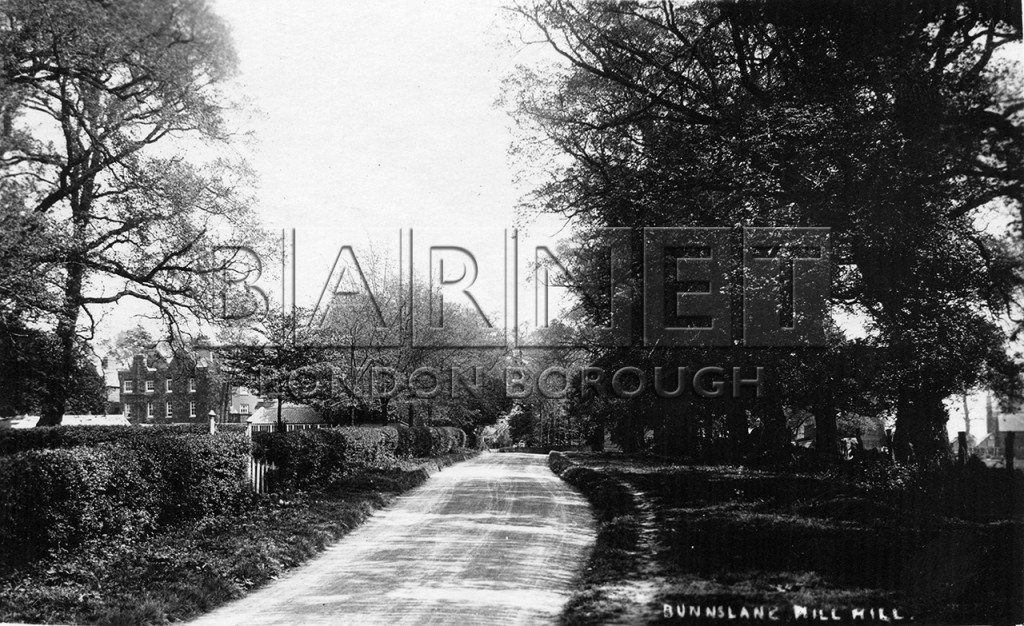
Over the past couple of years, I have thoroughly enjoyed sharing my recollections of the 1950's and 1960's in the Barnet Eye. I recently had a beer at the Mill Hill Services Club with Roger and a few other friends. It was the first time I'd been for a proper pint of beer for a very long time. It was most enjoyable. Although I have been double jabbed for a while now, I've felt safer avoiding crowded places. As the club on a Monday night is not too busy, it seemed like a good time to emerge from my shell.
I always enjoy the ambience of the club, the pictures of Joe Davis performing snooker tricks on the wall, the clink of snooker balls in the background as the beers go down. Roger commented that the club was perhaps the last bastion of the pre Beatles era in Mill Hill. The panelled walls and the Union flag proudly flying have not changed over the years. Having said that, a time traveller from Mill Hill in 1957 would find the club to be a very different place. The first difference they would notice when they opened the door would be the absence of tobacco smoke. Just about every chap in the club would smoke back in the day. The cigarettes were Players and Capstans, usually without filters. There would also be the fragrent smell of pipes. Mill Hill had it's own pipe shop, The Elite, at no 51 the Broadway.
The second thing a time traveller would notice is the clothing is verydifferent today. No one seems to wear a jacket, hat or cap when they go out. People wear trainers rather than shoes. I don't know if it rains less now, but I also observe far fewer raincoats on the coat rack.
I can't recall the date when I first went into the club, sometime in the early 1960's. My father warned me to be on my very best behaviour. To become a member, you needed to meet the very strict requirements of the membership panel. You had to wear a tie and shine your shoes. The club was run by people such as Robin Elliot, who was a former Royal Naval Submarine commander. He took a dim view of people who turned up for interviews without shining their shoes. These were serious men who had paid their dues, some in two world wars. As far as they were concerned, being a member of the club was a privelige. It was a place where you could relax and enjoy yourself over a beer or a short, in the company of men. For entertainment, as well as snooker, there was darts, billiards, dominos and various card games. All of these were taken rather seriously, there was much kudos for the winners of the various club competitions and even more for teams beating rival clubs in the various leagues and tournaments that were part of the club calendar. Of course these still take place, but back then, that was the only evening entertainment to be had in Mill Hill and they were hugely popular events. Crowds would form to watch the darts team compete. I am sure our visitor would be amazed to see huge screens showing racing and football. Back in the day, this would only be on the radio, if at all.
Our time traveller may also be surprised to see ladies in the club. Back then, it was a strictly male environment. There was a small, uncomfortable room where ladies could take a drink whilst their husbands enjoyed the lusher inner sanctum. It is fair to say that this wasn't particularly popular with the ladies. My mother once commented that the only time she'd been in was when she was caught in a cloudburst on Hartley Avenue, whilst walking to the bus stop with my father after church. It was the first and last time, not least as my father played snooker for a couple of hours, leaving her on her own.
We forget the downside of the era. As we emerge from a deadly pandemic, one that has seen me lose a couple of friends, my mind returned to the polio epidemic of the 1950's. Roger's elder brother Laurie, who is a contempory of mine, was a victim of the epidemic. Several children at the school we were at were stricken down. It was truly terrifying. We knew of deaths, of people in iron lungs, people being crippled. Laurie was lucky as he had a relatively mild case, which only affected his walking for a couple of years. When the government started a vaccination program, their was nothing but joy. We had seen the effects of ths awful disease first hand. There was no scepticism about the NHS or the scientists who developed these medicines. As residents of Mill Hill, there was nothing but pride that we had the National Institute for Medical Research in our locality. The eminent professors and researchers who were developing these were integral parts of our community. We knew they were serious people and we knew that their work was of immeasurable benefit not just to Mill Hill, but to the whole world.
The work of these fine people meant that polio was eradicated from the United Kingdom. It has nearly been eradicated from the whole planet. I must confess I get quite angry when I hear people making ludicrous claims about the scientists developing vaccines. I believe that it is the height of selfishness and stupidity to refuse vaccination. I would hate to think I'd transmitted a deadly disease on to someone else and harmed them. When my children were vaccinated, I thanked the Good Lord that I lived in an age where polio, diptheria, measles, scarlett fever, rubella etc, were things of the past. I've hated the enforced isolation, not being able to see my children and grandchildren. I've missed the simple pleasures of a pint of real ale with friends. In the UK over 46 million people have been vaccinated as I write this. If it wasn't safe, we'd be seeing hospitals fill up. Instead, we are seeing hospitals starting to empty, as the vaccines do their job.
I'm proud that Mill Hill was the centre of developing vaccines. There are many things about the 1950's I miss. It was an era when we felt proud to be British. Frank Whittle invented the Jet Engine and we'd see the jets land and take off at Hendon Aerodrome. Fleming discovered penecillin and we saw previously fatal infections banished. Mill Hill has changed beyond recognition, the services club being perhaps the last recognisable bastion of that bygone age, even if it has changed in many ways. Whatever we may or may not think of these changes, I for one, don't miss diseases like polio. I hope and pray that the lessons we've learned during this covid crisis mean that we have the tools to deal with the next pandemic before a million people die.
Have you ever considered how much life has changed over the last 60 odd years? I thought it might be fun to list how things have changed. I hope you enjoy this. If you don't know what the item in the first column is, ask your great grandma. It is amusing to think that none of the 2021 list would have meant anything
1957. The Milkman2021. Ocado
1957. Warm Bitter in the pub 2021. Chilled wine at home
1957. A Telegram 2021. Whatsapp
1957. Encyclopedia 2021. Alexa
1957. 78 rpm record2021. Spotify
1957. Mug of Tea 2021. Skinny Latte
1957. Lighting the fire 2021. Smart House
1957. The Chippy 2021. Deliveroo
1957. Brylcream 2021. Texturizing hair putty
1957. Steam Trains to work 2021. Work from home
1957. Polio Jab 2021. Covid vaccine
1957. Church fair2021. Go fund me page
1957. The Radio 2021. Netflix
1957. Germs 2021. Mutant variant virus
1957. The local dancehall2021. Tinder (other services are available)
1957. Smog2021. Global warming
1957. Car Key2021. Fob
1957. Woolworths 2021. Amazon
1957. Bacon and Eggs 2021 Kale shake
1957. Malnutrition2021. Diabetes
1957. PE 2021. Gym class
1957. Movie Star 2021. Celebrity
1957. Fun fair 2021. Theme park
1957. Arthur Askey 2021. Alan Carr
1957. Hose pipe and domestos 2021. Mobile dog groomer
1957. Life and soul of the party 2021. Customer of the Priory
1957. Meeting mates in the pub 2020. Zoom call with friends
1957 Showing off 2021. Posting selfies
1957. Exaggerating 2021. Bigging it up
1957. Conman 2021. Internet scammer
1957. Dirty old man in the park 2021. Internet groomer
Richard Wilkinson is a Mill Hill Resident. Richard runs the Mill Hill directory, a completely free guide to life in Mill Hill for both uses and businesses, a useful bookmark, if you need to get in touch with local traders, delivery services or need transport information https://millhillbroadway.org/services.php
There are many of us who have time on our hands during the current period of lockdown. I should imagine that I am not alone in finding myself going for a stroll to pass the time, we are lucky that Mill Hill still has many nice open spaces. I happened to bump into Roger in Lyndhurst Park the other day, whilst he was walking his dog. We had a brief chat and looking at the old bridge over the disused rail line, I commented that I remembered the joy of standing on the bridge on Bunns Lane as a child, watching as the steam engines went under. My father would lift me up onto the wall and as the engine passed underneath, I'd be engulfed in the steam. It seemed very exciting at the time. It always seems very sad to me that the railway line is abandoned and that Bridge is now bricked up. Roger suggested that as I have some time on their hands, I might like to put together another blog of my reminiscences.
Mill Hill was a lovely place to grow up in the 1940's and 50's. There was a real sense of local community, people didn't lock doors. Children would play in the street. There were no cars and few other vehicles on the roads, apart from buses and the occasional coal delivery lorry and the such like. What we now call Arrendene was more widely known as 'The Donkey fields" as the army had used the space for grazing animals used in transportation during the war. It would be hard for anyone born more recently to understand just how important and significant the military was locally. Hendon Aerodrome (now Grahame Park) was an active RAF base and the Inglis Barracks (now Millbrook Park) was the home of the Middlesex Regiment and later the Royal Engineers.
As a boy, Mill Hill seemed full of people in uniforms, both army and airmen. Having an RAF base nearby was magical, watching planes land and take off was always a good way to while away the time. Sunny Hill Park was a great venue for this. Even more exciting was to watch the annula Hendon Air Show and then see it at the cinema on the Pathe News!
I think every young boy in the area was fascinated by the airfield and the show. Nowadays I'd love to see the first world war biplanes in the air, but back then all we wanted to see were the fast jets. It really was a very spectacular event. Another constant source of fascination was the anti aircraft guns at the back of the Sea Scouts centre on Daws Lane. These lasted well into the 1970's.
Mill Hill smelled very different in that bygone era, especially in Winter. Coal was king. These days, if we are cold, we simply turn up the heating. My memories of growing up are memories of being cold and gathering around coal fires to warm up in the living room, or around the stove in the kitchen. One of the lessons of the day was that there is a cost to being warm. As kids, we'd be despatched to collect coal from the merchant at Mill Hill East. We had an old pram that we'd load up. You could get the coalman to deliver, but this cost money, so when times were hard, you'd collect it from the depot, for us this was by the gas works in Mill Hill East. If there was a sudden cold spell and you ran out of coal, then you faced a long walk, usually in the rain or snow to get a top up. Coal cost money, so it was only burned when it needed to be burned. Newspapers were used to get the fire going, I am sure that for many, this was the reason that they were bought. Often we'd head out to collect twigs and wood to use as firelighters, sometimes neighbours would pay us a few pennies for this. The fire lighters and coal would be stored in the coal bunker in the garden. When the weather turned cold (and I do mean cold), we'd light the fire. You could tell that it was frosty as the air would smell of coal fires. For me this was one of my favourite smells, it meant you miay actually get to warm up when you got in.
I don't think people really understand the dynamics of being cold and warm anymore. When it was really cold, if we were lucky, mum would make a hot water bottle. This was perhaps the best treat, apart from being given sweets, that we could have. We only had one, so it would be put in your bed for five minutes before you got in, to take off the chill. If you had a cold or the flu, you'd get it for a bit longer with it. Most of the time, when you were cold, you'd simply put on a coat or jumper. There was no TV, we'd listen to the radio or read books. Just as coal cost money and its use was strictly rationed, so was electricity. It was metered. As a small boy, it was a treat to be allowed to put a shilling in the meter. Lights were only to be turned on and off when they were needed. We had a small electric fire 'just in case', but I don't recall it ever being switched on.
If you had got cold on the way home from school and mum was feeling generous, you'd get a drink of Oxo or Bovril. It wasn't so much the taste that you loved, it was the fact that it warmed you up. Bovril was on sale at football grounds long after it had disappeared from our pantries, as we all know it is the only way to warm up. The smell of Bovril when you are frozen is perhaps one of the most reassuring of all.
Another smell that reminds me of those days are autumnal bonfires. As soon as leaves started falling, everyone would light bonfires. As children, we'd be fascinated by these. There were no green bins back then. The down side of all of this buring was the smog. London was notorious for this. Late Autumn/early winter was smog season. I can remember being sent out to get some coal from the bunker in 1952 and getting lost in the garden, unable to see more than a foot in any direction, I can remember being completely disorientated and terrified. The rest of the family thought it was hilarious. For years, when I was sent for coal, there would be a joke about sending the search party out if I wasn't back in five minutes. People really did get lost in the fog. One local, making his way back from the Royal Engineer pub after a swift pint after work, got lost for three hours, found himself back at the pub for last orders. That was his story anyway and it was one my dad would often tell with a twinkle in his eye.
Another thing we loved was fishing. Young boys knew every piece of water in the locality. You would start off with a small net and a jam jar catching tiddlers and tadpoles in Angel Pond at the top of Milespit Hill. The tadpoles would be taken home and kept in bowls, where we'd watch with fascination as they grew arms and legs and the tails disappeared. When I was eight or nine, after much nagging, I persuaded my mum to let me make a small pond out of some tarpaulin. This was at the bottom of the garden, as far from the house as possible. I filled it with water and collected a fine array of tadpoles. I was horrified to see that the local bird population found that it was a very tasty array of snacks. In those days, we'd see Sparrows, Blackbirds, Starlings and Tits in the garden. If we were lucky, we'd see a Thrush. There was lovely Irish lady next door who would put bread out and get very cross as the Starlings guzzled it all.
We graduated from Angel Pond to Moat Mount (there's some great images of Scratch Wood, Moat Mount and Mill Hill here here). My mum didn't like me going up there, as there had been a murder there during the war and she thought it dangerous. There was also spots on Scratchwoods and Mill Hill Golf course that had water with fish in, although you would get chased off the golf course straight away. We always resented the fact that we were never allowed to go fishing anywhere that there was actually something decent to catch.
As we grew up, and we got more serious about the fishing. There were some lovely carp in Darlands lake. Another place we loved was the big pond on Stanmore common, that reputedly had a large Pike, although we never saw sight nor sound of it. We'd also sneak in to the grounds of Mill Hill School and try and fish their lake, but invariably get caught and turfed out.
One of the things we didn't really do at all was holidays. I have vivid memories of mum and dad telling us we were going on a holiday to the seaside. Sandwiches were made, possibly even flasks of tea. We made our way to Mill Hill Broadway Station and boarded a train heading south. This was the first time I'd ever been on a train. I must have been about six. It was exciting. The train was packed, we found a compartment with a couple of seats. Chidlren were expected to sit on adults knees or on the floor. We were told that it was a very special train and it was going to the seaside. The journey seemed to take hours. Eventually we arrived at Southend on sea. I was given a shilling to enjoy myself. It seemed like a lot of money. We went to the pier, we played on the machines, where you could put a farthing in and if you were lucky a few coins would fall down. I soon learned to watch for people who had put all their cash in and where there were farthings overhanging. I loved Southend. The sun shined and everyone seemed so happy. As a treat, we had a bag of chips. All too quickly, we had to make our way back to the train and return to Mill Hill. Whilst the journey there had taken hours, I fell asleep on the way back and we seemed to arrive back in Mill Hill in a jiffy. The sun was just going down as we made our way home. Back then, there were no shops open in Mill Hill Broadway after 5pm and none at all on a Sunday. At the time it was the latest I'd ever been out and about in Mill Hill Broadway. I'd only seen it when the shops were open. It was like a ghost town. You just don't see Mill Hill Broadway like that ever these days. I think that day had been the happiest of my life and to this day, I've always had a love of Southend. I took my grandchildren there when they were smaller and they too loved the pier and the slot machines, much to my daughter in law's horror!
My final reminiscence is about something that has gone terribly out of fashion. That is smoking. When I was growing up, everyone smoked. When people visited, the first thing they would do would be to light up. This fascinated me. When I was about five I acquired a set of Players cigarette cards at a jumble sale. These were in an old battered tobacco tin and were my pride and joy.
There was an eclectic selection. Oneof my favourite was the Hereford bull card. This magnificent fellow seemed far more impressive than any of the local bulls we'd see in the various farms around Mill Hill. To this day, if I hear the word Hereford, I think Bull. It just shows what an impression such things can make. Sadly such cards were banned by the Govt in 1940, as they were seen as wasteful. After rationing was lifted, we could by sweet cigarettes. I guess these are what we now call gateway drugs.
Smoking had its own hierarchy. Posh ladies would smoke with cigarette holders, to stop their fingers going yellow. The less well off favoured hand rolled tobacco, the flashy fellow who lived in the posh house in Parkside owned a Jag and smoked cigars. My dad always called him 'the spiv'. Old men smoked pipes, which fascinated me. Ted down the road who'd been in the Navy smoked Capstan full strength. Having bought my tin of cards, I became fascinated with tobacco tins and started to acquire a collection of such things. In 1958, I suddenly fell out of love with smoking. I was too young to smoke, but had had a few puffs with the older boys in the park, they would egg on the younger kids and snigger as we choked on the smoke. I would probably have started, but my uncle became ill and died of lung cancer. Mum told me that it was caused by his heavy smoking. At the time, there was little talk of the risks of smoking, so I have often wondered whether she'd just said that to put me off. It certainly worked. He'd been a war hero and was a great man. Seeing him stricken and laid low, gasping for breath made a huge impression on me. I vowed never to smoke. I later swapped the cigarette cards for a bicycle pump. A truly awful investment, as they would now be worth several hundred pounds. Perhaps the saddest aspect of his passing was that he was a keen allotment holder, with a plot at Lawrence Street. I used to help him out with digging and pruning. When food was scarce, he would have rhubarb, loganberries, raspeberries and gooseberries. He grew vegetables as well, but I remember the fruits as they were always a proper treat, especially when there was still rationing. He taught me much about nature, how ladybirds eat greenfly, how you
plough sideways, not up and down, so the topsoil isn't washed away. How
you save your potato peelings and make compost. How you plant flowers to
attract bees.
Mum always said that my Uncle kept the allotments going and having recently read up on the history, this may well be true. Sadly, we lived on the other side of Mill Hill, so we couldn't keep the plot. Clearing out his small shed was one of the saddest days of my life. We found all manner of strange things, he would often sit in the shed and read. One of the things which stuck with me was a pile of half read books with page markers. I can remember him telling me that if he thought a book was heading for a sad ending, he'd put it down, he'd seen enough heartbreak in the war. He once told me about how, when he'd been in France in the second world war, he'd found himself in a recenltly liberated barn, exhausted, having been separated from his unit. Falling asleep on a haystack, he was awoken by a French farmer. The farmer thought he was a German and was keeping him at bay with a pitchfork. Realising that the farmer didn't like Germans, he used his schoolboy french to say "Anglais Monsieur" and showing his badge. The farmer put down the pitchfork and signalled for him to follow him. He was taken to the farmhouse and given a slap up meal, with a glass of the finest cognac. The farmer told him that he'd buried the cognac when the Germans had invaded and was saving it for the first soldier to liberate him. He gave the bottle to my Uncle, which was most welcome. He'd kept it safe until VE day, telling me he wanted to savour it properly. He kept the empty bottle in the shed. Mum told me to throw it away, but I've still got it.
When I was growing up, Mill Hill was full of people who had served in the forces, such stories were ten a penny in Mill Hills pubs and clubs. That generation is now all gone. Perhaps that is what I miss most.
Richard Wilkinson is a long time Mill Hill resident. Guest blogs are always welcome at The Barnet Eye. Richard also runs the https://millhillbroadway.org/ website which provides information about Mill Hill's shops and services for locals and visitors to the area.
When you have spent your whole life in the same part of London, you see a lot of changes. When I was growing up in Mill Hill in the 1940's and 50's, it was a very different place. The trains were pulled by steam engines. If you wanted to be warm in winter, you bought coal. When you went to school you walked, and met your friends on the way. Once you were six your mum would no longer walk you to school, you would make your own way, walking with friends. When you joined the school, you started in the baby class. In the morning, you got a carton of milk to drink. This was compulsory. In warm summer months it tasted of cheese. Maybe it is the sands of time, but no one was lactose intolerant or vegan in our class. What we now call breaks were thencalled playtime. For us boys, this was invariably a game of football on a rough tarmac playground, that would take the top of your knee and give you a hole in your trousers. We wore caps, we wore shorts. School meals were called school dinners. Mum would give you your dinner money and woe betide you if you lost it.
We all had our favourites in the school dinner reportoire. Fish and chips and beef pie was always my favourite along with apple pie and custard. At the other end of the scale was boiled fish and cabbage, with tapioca pudding. Whatever happened to Tapioca? You were expected to eat all of your dinner, even when it was completely unpalatable. The end of rationing meant that for the first time,sweets and fruit were readily available. Parents had become used to being frugal, and viewed such things with suspicion.At home there were no ready meals. The times when Dad was doing well would see Lamb or beef on Sunday. Mum would make Yorkshire puddings and roast potatoes. When cash was tighter, it might be an omelette with chips.
The detritus of war was everywhere. There were pill boxes by the railway line from Mill Hill East to Edgware, gardens still had Anderson shelters and there were bomb sites, some fenced off, some not. However these weren't the biggest danger for us kids. We were scared of getting locked in fridges, we were scared of polio, we were scared of strangers with sweeties. Whereas these days we have deadly viruses, then we had something far worse, we had germs! At school, we'd be inspected by burly nurses for nits and then have the dreaded request to cough.
These days we worry about air quality. Then we had smogs. Dad would get lost returning from the pub. Talking of the pub, ladies would never be seen in the pub back in the 1950's, apart from the snug, where they would drink sherry and be charged a few pennies more for the privilege, children were never allowed in. Occasionally in the summer, Dad would relent and buy us a lemonade in the garden of the Mill or the Railway at lunchtime. This was a rare treat.
Mill Hill had a cinema. As no one had TV's this was the centre of the community. You would buy tickets and it didn't matter if the film had started, you'd watch it until the end, then stay for the next showing to see the bit you missed. For boys, action films were the order of the day. The childrens films were not like the fantasy we have today. They were gritty and seemed to push theme of resilience. The Davy Crockett films, 20,000 Leagues under the sea and Robin Hood were all films that made a strong impression. We'd watch these, then fight each other in the playground the next day for the right to be Robin Hood or Davy Crockett in the playtime games. Mum's would give the kids a 'few bob' and we'd troop en masse down to the Broadway. It was truly blissful drinking a carton of lukewarm orange squash whilst watching a dodgy film in Black and White.
The Railway Tavern, The Hale, Edgware/Mill Hill, (I never know which), in the early 1900s and a few days ago.
The other thing we loved was street games. Wherever you went in Mill Hill, there were groups of boys playing football in the street, on the greens, in the park. Then there were the go-karts. These would be made using wooden boxes and disused pram wheels. Races would take place and often these would end with a visit to Edgware General and a plaster cast on your arm or leg.
We would be fascinated by road works. The smell of hot tar was something we all loved. The red and white canvass tents that GPO workers would put over the inspection points were mysterious. I recall seeing a couple of engineers drinking tea in one during a thunderstorm on the way home from school. I thought that was the perfect job, being paid to sit in a tent and drink tea.
Being brought up as a Roman Catholic with a church going mum (Dad always had an excuse not to go), Church was a strange place. Masses were conducted by Irishmen in Latin. The smell of incense added a touch of drama. None of us really had a clue what was going on, we'd be itching to get out and play. Sea cadets and cadets provided some outlet and gave me a love of the outdoors that I retain to this day. Our Scout leader would organise camps in the woods. We even went to Scotland on a train! As we had no mobile phones, we'd walk out of the door with our bags, and that would be the last our parents saw or heard from us until we came back. On return mum would say "Did you have a nice time", I'd reply "It was great" full of excitement. She'd say "That's nice, you must want your supper" and that was that.
Whilst looking for pictures of Station Road, Mill Hill, I realised these two showed perfectly the devastating effect the M1 had when it went through.
Sex education was non existent. Every so often, you'd hear that someones elder sister was 'in the club'. For most families, this was a matter of shame. For some, the sister would simply disappear for a few months then return. Dodgy excuses were made, but gossip would start. It was quite brutal. The fear was that these girls were somehow sullied and would not be able to find themselves a husband. Some of the more snobby families would not even let their children play with the offspring of such families, as if it would be contagious.
Mill Hill East was a white working class area at this time. The most exotic family was the offspring of a German Luftwaffe man, who settled in Mill Hill. As he had rather lovely daughters and was a nice chap, the family were generally well liked. Everyone knew everyone and everyone knew everyones business. Curtains would twitch. Old Ladies would gossip. The milkman would deliver the milk in bottles, often his cart would be the only vehicle on the road. Before the mini hit the streets, cars seemed to be lavish, with walnut interiors. When well off relatives visited, boys would gather round for a peek inside. Often they would beg to be taken for a little drive. Cars would have impressive metal badges, depicting whether the owner belonged to the RAC or AA. Cars at the time really were a luxury item, beyond the budgets of most. Boys dreamed of driving trains and owning cars.
It was rare for families to move away from the area. Council housing was cheap and good quality. The estates had gardens and the areas had a real sense of community. Burglaries and muggings were almost unheard of. There were jobs a plenty locally. Mill Hill had all manner of industries, many small, some big such as Laings and The UK Optical Company. There were a few local villains, that everyone knew were wrong 'uns, but they kept their activities well away from their own doorsteps. They would sometimes appear flush with money, buying all and sundry drinks, then disappear for a while. Some were well liked as they were colourful characters, full of stories. Some were people you'd seek to avoid.
It is easy to remember these times through rose tinted spectacles. There were many aspects that I don't miss. Homes would often be freezing in the morning. Medicine was far more primitive. People would die of TB (usually called consumption), polio and all manner of half forgotten diseases such as scarlet fever. On Sundays, there was nothing to do, everywhere seemed to be shut. Park keepers would tend the parks, but not let you on the grass. I had no expectation that I'd ever go on an airplane. I though the trip to Scotland would be the extent of my foreign travels, unless there was a war or I got a posting during National Service (which thankfully was abolished before I was at an age to do it). The food was bland and stodgy, although in truth we didn't mind because this was what we were used to. Things like being bought a comic were a rare treat. In the winter, we'd often have a trip to the library. I used to enjoy the children s section at Mill Hill Library, but disliked having to be still and quiet. I only realised after that mum would take us when it was cold and she was short of cash, so didn't want to waste coal.
These days, few of the friends I grew up with still live in Mill Hill. There seemed to be waves when they disappeared. The first in the 1960's when some moved to Australia on the assisted passage scheme. When they came back, many years later, for nostalgic holidays, they would not have a good word to say about the area. Then there were a few who got jobs after school in other parts of London or other parts of the country. They would turn up from time to time to see family and would always have a little nostalgia for the old times. The really big change happened when Margaret Thatcher brought in the right to buy. The old estates gave the working class a chance to cash in and move out. Many bought their homes at a discount and then cashed in, moving to places such as Borehamwood and Essex. This changed the whole complexion of the the area. It only seemed to be the older generation who stayed, and when they passed away, the last links were severed. Many of the landmark businesses, such as Featherstone Garage on Bunns Lane were sold and turned into flats. The gasworks went, the Barracks went, more recently, the medical research went. St Josephs college was turned into luxury flats. The Mill Pub was redeveloped. Recently we lost our greengrocer on Holders Hill Roundabout, who sadly passed away. Many locals mourn the loss of the bike shop, but things change and at least you can get your hair and nails done (as my lady wife keeps telling me when I get too morose). Whereas the cafe's would make their cash on bacon butties and builders tea, served to men in overalls checking their watches, now it is cappuccinos and humus wraps for fragrant yummie mummies with time on their hands. I do wonder what the mummies did when we were little. I guess they talked over the garden fence as they hung out the washing?
@time_nw Richard from Reelstreets asked me to pass this on to you .. a presentation from the Mill Hill Rotary Club to Mr Callis, who I think ran a cycle shop, when he and others were forced to close their business due to the M1 Viaduct installation. 1/2 pic.twitter.com/XrOdyUP70J
An old friend visited recently, he asked if I still saw anyone I knew in Mill Hill. I joked "Dozens of people, especially when I visit the cemetery!". But that isn't really true. There are still plenty of the old faces around. The Mill Hill Services club carries on, a bastion of old Mill Hill. The brother of Roger, who writes the Barnet Eye, Laurie still has his welding business in Bunns Lane if you want to experience a real old school workshop. I often visit him to mend my old petrol lawn mower. Mill Hill School is unchanged by the passage of time and we have the Donkey Fields (which you may know as Arrendene), for a walk in the summer. Mill Hill is still a lovely place to live.
Stephanie Weisbloom shared this
41 Daws Lane, Mill Hill
My grandmother would tell me on Christmas Eve,local men would turn up with their Turkey and a bottle of Ale. Once the baking for the day was done, everyone would put their Turkeys in the big coal oven and sit around drinking pic.twitter.com/P6yUF9oqHM
I met Roger on my daily walk on Saturday and he asked me to write a piece about how I've been coping with lockdown and what I am looking forward to. As you've probably guessed, I've been doing a lot of thinking about times gone by, people who've moved away, people who passed away. I hope you forgive me the nostalgia. As to what I am looking forward to, I am looking forward to a walk along the Ridgeway on Saturday for a pint in the Hammers and the Adam and Eve. I just wish that I could finish with a pint at The Royal Engineer (or the Railway Engineer as the younger generation may recall it). Nothing stays the same for ever, but I just hope that Mill Hill manages to retain its character as we pass through this period of change. People have said that this lockdown period is unlike any other. I'm not entirely sure that this is true for us old timers. There was more going on in the Broadway at the height of lockdown than there was on a Sunday night in Mill Hill for the whole of the 1940's, 50's and 60's. But then again, all of us old timers who remember that are a dying breed!
-------------------------------------------------------------------------------------
Richard Wilkinson is a long time Mill Hill resident. Guest blogs are always welcome.
Like many of you, I've been a tad bored in isolation. I found an old copy of an A-Z map of Mill Hill and had a look at some of the street names. They tell an interesting story. I then looked at some more up to date developments. These too are interesting. I thought I'd collate a list of those that caught my eye and where I knew some of the history. I do hope you find this list interesting and informative.
1. Lawrence Street.
This street runs from Mill Hill Circus to Highwood Hill. It used to run the full length of the Broadway. It takes its name from the Lawrence farm. The Lawrence family lived in Lawrence farmhouse, now on Goodwyn Avenue and an office block. It was a dwelling well into the 1970's.
Hiding behind Mill Hill Circus in Goodwyn Avenue is Lawrence Farmhouse, which in years gone by stood at the foot of Lawrence Street. For years this 17th century building was unloved and derelict. Eventually it was bought, sympathetically restored and now it used as offices pic.twitter.com/BLXyQYesf8
Picture London Borough of Barnet Archive - click for source
Bunns Lane runs from the intersection of Mill Hill Broadway and Hale Lane, to the junction with Page Street. Again the road is name after Bunns Farm, another Mill Hill farming family. Like Lawrence Street, the route of the road has changed, as a bridge over the Mill Hill East to Edgware LNER line was removed in 1974.
3. Inglis Way.
This road runs from Bittacy Hill from Frith Lane. It is named after Sir William Inglis. The road used to lead into the Inglis Barracks, home of the Royal Engineers. Many of the roads in the Millbrook Park estate have army references. At some point I hope to write a full guide to the history of the site and how it has changed.
4. Victoria Road and Albert Road.
Albert Road runs from Daws Lane to Victoria Road and Victoria Road is off Lawrence Street. The Streets were named in commemoration of Queen Victoria and her consort Prince Albert. Reputedly there was a hunting lodge used by Tudor kings on the site, hence the possible Royal connection.
5. Goodwyn Avenue.
Like many road names in Mill Hill, Goodwyn Avenue is named after the family that originally owned the land. There is a small private school on Goodwyn Avenue called St Martins School. This used to be the site of Goodwyn School that moved to larger premises on Hammers Lane. There is an interesting history page on the Goodwyn School website that tells the story.
6. Abbey View.
Abbey View is a small cull-de-sac off Marsh Lane. The name refers to the view of what was formerly St Marys Abbey convent and school by the intersection of Holcombe Hill and The Ridgeway.
7. Nan Clarks Lane.
Nan Clarks Lane is a cul de sac off Holcombe Hill. It is reputedly haunted by the ghost of Nan Clark. The full story of the haunting is told on the rather good Mill Hill Preservation Society website (click on the Nan Clark tab).
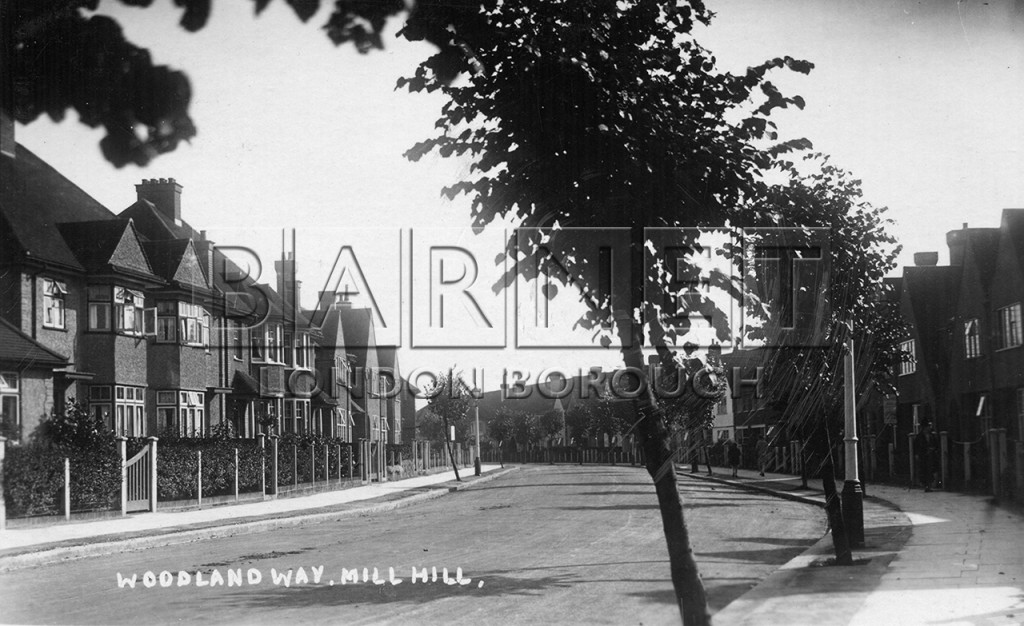
8. Sylvan Avenue and Woodland Way.
Picture London Borough of Barnet Archive - click for source
Sylvan Avenue is a turning off Flower Lane, and intersects with Station Road and Woodland Way at its other end. Woodland Way is also a turning off Flower Lane. Woodland Way is the route from Station Road to Mill Hill Park. The area was originally woodland. Sylvan means shaded area. The close proximity to the Railway meant that the Woodlands was soon developed once the railways arrived.
This map shows how it was starting to be developed in 1910.
9. Cornforth Lane.
This is one of Mill Hill's newest roads, so new it is not open to the public. It is on the NIMR site, currently being redeveloped by Barratts. It is named after Sir John Warcup Cornforth, who was a leading scientist at the NIMR. He won a Nobel prize for chemistry in 1979.
10. Langstone Way.
This road is off Bittacy Hill by the entrance to Waitrose. The road is named after former veteran Finchley Conservative Councillor Barbara Langstone, who was also a tireless campaigner for various charities. This article from the Archer details her achievements.
When I was putting this together, several things struck me. Very few of our new streets are named after Mill Hill people who have made a contribution to our society. Maybe we should make this a condition of major new planning applications. I'd love to see a Graham Hill Way or a Mcgoughan Street.
There were also some streets with intriguing names that I couldn't track down the origin of. Perhaps top of the list is Engel Park. Which runs off Bittacy Hill and is on the 221 bus route. Engel is German for Angel. I somehow doubt it was named after the famous communist Fredrich Engels. If your street has an interesting name and you know the story, please share it with me by adding a comment.
------------------------------------------------
Richard Wilkinson is a local historian and a regular contributor. Guest blogs are always welcome.
4. Which famous radio presenter opened Budgens in Mill Hill? Terry Wogan opened Budgens in 1971
It's 1973, and Mill Hill Broadway gets its first purpose built supermarket, in the form of Budgens. Radio and TV personality Terry Wogan was there to open it. (1/4) @DiscoverBudgens
5. Which iconic 60's TV star was a member of the Mill Hill Services club in the 1960's and had a gypsy caravan in his back garden, that you could see from the Ridgeway? Patrick McGoohan (Dangerman, The Prisoner)
Great article about former Mill Hill superstar Patrick McGoohan in the latest issue of The Rake pic.twitter.com/mA3kGrZccO
— Roger Tichborne/RogT #CTID 🏴☠️🇬🇧 (@Barneteye) April 10, 2020
6. Which band, which were the first UK band to have a US number one, had a member who's brother ran Kellys Corner garage in Mill Hill East? (The Tornadoes - Guitarist Stuart Taylors brother Keith ran Kellys Corner Garage)
7. Which member of the House of Lords, lives in Mill Hill and ran the record label that signed Bad Manners? Lord Levy - Owned magnet records
8. Which famous comedian, who famously called Prince Charles a Grovelling Bastard, sent his daughters to a private school in Mill Hill and regularly opened the Christmas fete. - Spike Milligan, his Daughter attended St Marys Abbey on the Ridgewary
9. Which Dads Army cast Member regularly opened St Josephs College Garden Fete in the 1970's - Frank Williams (the vicar) (he opened many local events)
10. Which Formula one racing driver is commemorated with a blue plaque on Parkside in Mill Hill? Graham Hill
Local Knowledge
11. What was the previous name of the pub that changed its name to The Railway Engineer after security concerns regarding the IRA? The Royal Engineer
12. What tube station in Mill Hill could you buy a ticket to, but you couldn't catch a train from in the 1960's? Mill Hill the Hale on the abandoned Norther Line Extension.
13. What nationality was the owner of 'The Scotch Tea Rooms' on Station Road in Mill Hill in the 1960's? Austrian
14. Why was the 240 bus from Mill Hill to Edgware a single decker until the mid 1960's? Because the Rail Bridge in Mill Hill Broadway was too low.
15.What would you see at the back of the big red brick public health building in Daws Lane ( was the home of the sea scouts) that was a leftover from the second world war in the 1960's and fascinated many young boys playing on the swings in Mill Hill Park? There was a large anti aircraft gun (allegedly decommissioned ) that the Sea Scouts would use for 'training'.
16. How much was a single ticket from Mill Hill Broadway to Borehamwood in January 1971? 8p
17. Why would you visit Rex Godwin on the Broadway in 1970? (an extra point if you can say the service that wasn't advertised in the window)? Rex was a cobbler. He was also the local Littlewoods Pools agent
18. What would you buy from the back section of Mill Hill Television in the mid 1970's, which was very popular with teenagers? They had a records section and listening booths.
19. Where was the 'New China Garden' in Mill Hill? This was the chinese restaurant that became the Moon House, then Hees. Now a beauty salon
20. What was the name of the Cricket Club that had a clubhouse in the middle of Mill Hill Park? Hendon and Edgware Cricket Club
1974... Hendon Edgware Cricket team1st 11
Notable Buildings and Landmarks
21. What did the initials NIMR stand for? National Institute for Medical Research
22. Who owns the Observatory on the Watford Way Mill Hill? University College London
23. Who were the former owners of St Josephs College on Lawrence Street? The Mill Hill Missionary Society
24. Where is a blue plaque on the side of a Mill Hill building that marks the site of Quaker Meeting House? On the side of the house on the Ridgeway opposite Wills Grove
25. What was the name of the pub that stood on the site of what is now the Kentucky Fried Chicken? The Royal Scot
(2/4) A fine portrait of The Royal Scot pub, in 1960, by @francisfrith.
The pub was named after a famous railway locomotive, due to the proximity of the LMS line thst ran nearby. If you know this spot now, youll be struck by the difference today.... pic.twitter.com/MfF6U835dI
(4/4) To finish with, something rather perculiar, Morris Dancing outside The Royal Scot, at night, sometime in the late 1950s, early 1960s. Anyone know what this was about? @Barneteye
26. Why was the Railway Tavern in Mill Hill a mile from the Railway Station? Because the builders of the Broadway were religious absteemious and passed a byelaw preventing a pub within one Mile of the Broadway
27. What was the building at the bottom of what is now St Vincents Lane in the 1950's (the large yellow brick building on the left as you go down, which is now luxury flats)? In the 1950's this was an orphanage. It was originally a workhouse
28. What was Athene House before it was an office block? A cinema
31. Where was there a plague of terrapins in Mill Hill, that made national news? Sheepwash pond 2004 32. What word would you put after the words Angel and Sheepwash to describe well known locations in Mill Hill.? 'Pond'
33. What large animal would you be most likely to see if you are heading away from Mill Hill Broadway on Lawrence Street and you look right? horses
https://en.wikipedia.org/wiki/List_of_nature_reserves_in_the_London_Borough_of_Barnet
34. What animal will you see in a cage in A&Y locksmiths in Mill Hill? A Parrot
35. What bright green exotic species of bird will you see if you are lucky on a walk over Arrandene? Green Parakeets
36. Name three species of reptile native to Mill Hill? There are four Adders, Grass snakes, Slow Worms and Common Lizards - any three
37. What is the name of the largest nature reserve in Mill Hill? There is some disagreement on this. The largest is Darlands/ Totteridge Valley/Burtonhole Lane area, but this is not all in Mill Hill. Moat Mount is the largest single area in Mill Hill.
38. What species of Deer might you see in Arrandene open space? Muntjack (there has recently been a sighting of a red deer and foal, but this is unconfirmed)
39. What is the name of the green space between the A41 in Mill Hill and Lawrence Street? Simmonds Mead
40. What tree, native to Australia, which reputedly has aromatic healing properties, would you find in the middle of the green space referred to in question 39? A Eucalyptus Tree
Guest blogger Richard Wilkinson sent us a Mill Hill General Knowledge quiz for your enjoyment. He been in lockdown for a while and so he has been amusing himself by brushing up on his local knowledge. After a quick chat on the phone yesterday, he sent me this.
He thought one or two of you might find this to be an amusing distraction. No prizes, just for fun!
3. Which 50's Rock and Roller is buried in Mill Hill?
4. Which famous radio presenter opened Budgens in Mill Hill?
5. Which iconic 60's TV star was a member of the Mill Hill Services club in the 1960's and had a gypsy caravan in his back garden, that you could see from the Ridgeway?
6. Which band, which were the first UK band to have a US number one, had a member who's brother ran Kellys Corner garage in Mill Hill East?
7. Which member of the House of Lords, lives in Mill Hill and ran the record label that signed Bad Manners?
8. Which famous comedian, who famously called Prince Charles a Grovelling Bastard, sent his daughters to a private school in Mill Hill and regularly opened the Christmas fete.
9. Which member of the Dad's Army cast regularly opened the St Joseph's college garden fete in the 1970's?
10. Which Formula one racing driver is commemorated with a blue plaque on Parkside in Mill Hill?
Local Knowledge
11. What was the previous name of the pub that changed its name to The Railway Engineer after security concerns regarding the IRA?
12. What tube station in Mill Hill could you buy a ticket to, but you couldn't catch a train from in the 1960's?
13. What nationality was the owner of 'The Scotch Tea Rooms' on Station Road in Mill Hill in the 1960's?
14. Why was the 240 bus from Mill Hill to Edgware a single decker until the mid 1960's?
15.What would you see at the back of the big red brick public health building in Daws Lane ( was the home of the sea scouts) that was a leftover from the second world war in the 1960's and fascinated many young boys playing on the swings in Mill Hill Park?
16. How much was a single ticket from Mill Hill Broadway to Borehamwood in January 1971?
17. Why would you visit Rex Godwin on the Broadway in 1970? (an extra point if you can say the service that wasn't advertised in the window)?
18. What would you buy from the back section of Mill Hill Television in the mid 1970's, which was very popular with teenagers?
19. Where was the 'New China Garden' in Mill Hill?
20. What was the name of the Cricket Club that had a clubhouse in the middle of Mill Hill Park?
Notable Buildings and Landmarks
21. What did the initials NIMR stand for?
22. Who owns the Observatory on the Watford Way Mill Hill?
23. Who were the former owners of St Josephs College on Lawrence Street?
24. Where is a blue plaque on the side of a Mill Hill building that marks the site of Quaker Meeting House?
25. What was the name of the pub that stood on the site of what is now the Kentucky Fried Chicken?
26. Why was the Railway Tavern in Mill Hill a mile from the Railway Station?
27. What was the building at the bottom of what is now St Vincents Lane in the 1950's (the large yellow brick building on the left as you go down, which is now luxury flats)?
28. What was Athene House before it was an office block?
29. Where is the 'Old Mill' in Mill Hill?
30. Where is the 'Old Post Office' in Mill Hill?
Mill Hill Nature.
31. Where was there a plague of terrapins in Mill Hill, that made national news?
32. What word would you put after the words Angel and Sheepwash to describe well known locations in Mill Hill.
33. What large animal would you be most likely to see if you are heading away from Mill Hill Broadway on Lawrence Street and you look right?
34. What animal will you see in a cage in A&Y locksmiths in Mill Hill?
35. What bright green exotic species of bird will you see if you are lucky on a walk over Arrandene?
36. Name three species of reptile native to Mill Hill?
37. What is the name of the largest nature reserve in Mill Hill?
38. What species of Deer might you see in Arrandene open space?
39. What is the name of the green space between the A41 in Mill Hill and Lawrence Street
40. What tree, native to Australia, which reputedly has aromatic healing properties, would you find in the middle of the green space referred to in question 39?
------------------------------------------------
Does anyone have a quiz for any of the other parts of Barnet?