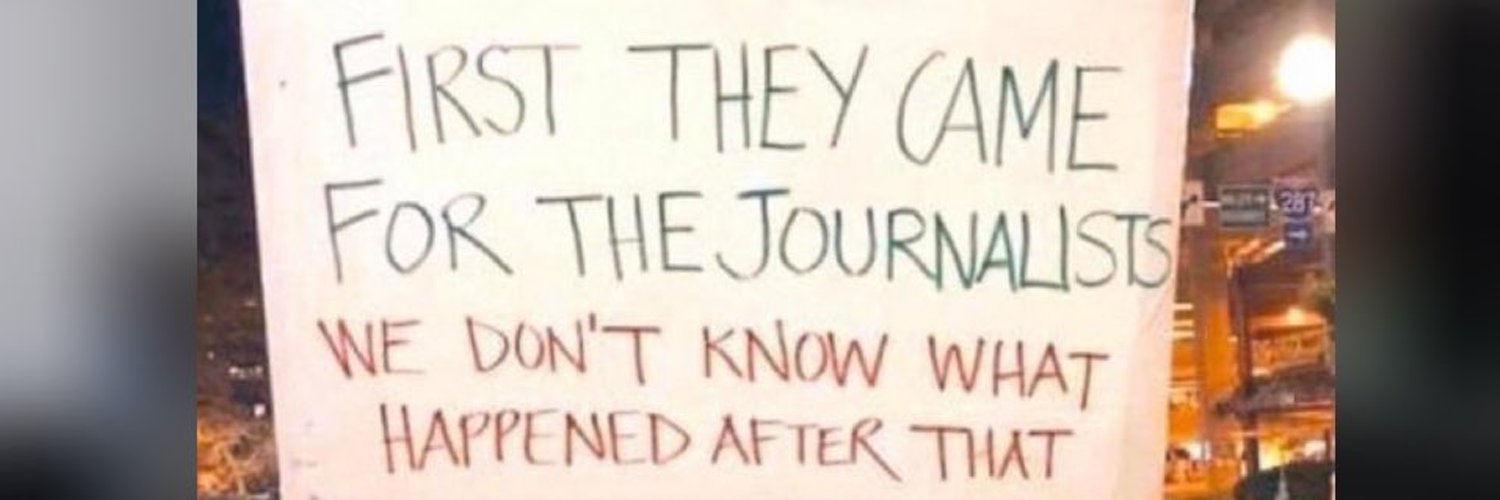
Anyone who has followed the trials and tribulations of Carole Cadwalla and her battles with the rich and powerful will wish them every success. This week, I've been binge watching The Hack on ITV. If you've not seen it, I recommend it. A brilliant series. I followed the story in the Guardian and I also worked with a member of Hacked Off at The Passage, so I was more than familiar with the story. Even so, it was shocking. Perhaps the thing which I found most upsetting was the huge effort the Murdoch empire put into getting stories that were largely tittle tattle. Scoops on celebrities private lives was of no interest to me. It might have been excusable had they been exposing scandals that truly were of public interest, but the NOTW seemed more interested in ruining the lives of people, rather than improving them. Another story in the news this week was the fact that Her Ladyship Michelle Mone's dodgy dealing will require a repayment over a hundred million pounds. I doubt this will happen as the company that supplied the dodgy kit to the NHS has gone bust and needless to say, having pocketed the profits in dividends, she is under no personal liability to pay the money back. I have a deep interest in the story. A whistleblower approached me with the story before any news outlet had picked it up. They were deeply sceptical of the mainstream media, not least becuase of the hacking story. We met and the evidence was truly shocking. I started writing a blog partly to expose such shenanigans. However, I also have become painfully aware of the limitations of a personal blog. Occasionally, people have given me tip offs of things that have become larger stories, the Barnet Freedom pass scandal being one such story. But none of these are national scandals, concerning hundreds of millions of pounds. Such stories are well beyond the resources of a blog such as this one to manage. I am not poor, but I am not in a position to face down the legal teams of multi millionaires. My advice was to approach the Guardian. Through my contacts with Hacked Off, I am of the opinion that the newspaper is the one most likely to run with such a story. The person I spoke to was an intermediary for the actual whistle blower. Like me, they were aware of the pitfalls of facing down the rich and powerful.
I was pleased to see the Guardian take and develop the story. I deleted the emails and the trail, as a precaution and suggested my contact do the same thing. Their main concern was the consequences of taking on the rich and powerful. I explained that The Guardian has a legal team and understand the protocols of anonymity. The editor will not lose their house if the story goes pear shaped, although they may get the sack. The people who are always most at risk are the actual Whistleblowers, who get no proper legal protection. About six months after our conversation, odd things started to happen. It became clear that I was being followed. To this day, I have no idea why. My assumption was that it was related to my opposition to various local developments and that they were looking for dirt to lean on me to shut up. It was all a bit strange. Nothing really happened. One dodgy character, who I saw repeatedly lurking around started to get on my nerves. As I know the local geography pretty well. I was able to sneak around the back and sneak up on him. I invited him in for a cup of tea and suggested that he just told me what he was looking for, as it would save us all a lot of bother. I also took a few pictures. I suggested that if he didn't bugger off, I'd put them on my socials and blog. That sort of ended that. More recently, I wondered if it was related to the Mone scandal. I have no idea. I have rattled a fair few cages over the years. If ever you think someone is following you, it is pretty easy to spot, especially if you walk a dog! I took great delight in putting on wellies and doing the waterlogged Darlands trail. If you are ever planning to meet someone and you don't want to be seen, arrange to meet someone on a super long dog walk in muddy fields in February.
Yesterday, I mentioned my old blog sparring partner Brian Coleman. Mr Coleman took great delight in tainting me about my prostate cancer, when I announced it. Many people told me stories of Coleman that I have never been able to publish due to the fact that I'd get sued. I believe the sources implictly, but don't have the requisite level of proof to defend a legal challenge, if he decided to sue. I always said that if I discovered I had terminal cancer, I'd leave a forward dated blog, with all the worst stories on, change all of my blog passwords, and let that be my deathbed present to him, to pay him back for his gloating. When he got ejected from public life, following his criminal conviction for assaulting Helen Michael, I lost interest in him. Brian will be pleased to know that he is such a non entity now that I really wouldn't want that to be blogging legacy anymore.
My experiences made me reflect on one of the key themes in the Gospels. Jesus said that someone can only really be a follower if they give up all of their possessions and follow him. I used to think this was to show their commitment to the cause. I now realise that it was something entirely different. If you follow a difficult and dangerous path, the less you own and the less people you love, the less people can lean on you. If I really wanted to publish all of the terrible stories that I've been told and would love to publish, I'd get divorced, give my wife and kids every and live under a tree in Mill Hill Park, writing the blog on the computer in the library.
That is why I salute Carole Cadwalla and her colleagues. She's braver than I am!
For the last few weeks, I've been giving it large. I have been promising you the 500th Saturday list! I promisted that I would give a list of all 500 blogs. I started complining the list in the week. To my horror, I found that, rather annoyingly in October 2022, I went from blog #361 to #382leaving a gap of 20 blogs. There is no excuse for such slipshod blogging. There is no excuse (other than dyslexia, alcohol, short sightedness and getting constantly nagged for breakfast by the missus and the dogs). On making this discovery, I realised that I couldn't have the big celebration planned. Even more pressing though, what should I do? I could either renumber all blogs or simply add blogs #362 to #381, albiet out of sequence.
After giving it much thought, I have decided to simply add the blogs, albiet out of sequence. The will appear in sequence in the #500 blog list. I have another 200 or so to check and it is always possible there are more gaps. I have also found a couple of duplicate numbers. These I have amended. It is all rather annoying. I will restart the series next week with blog #362, which will be my top ten biggest blogging cock ups.
I had a lunchtime meeting with a journalist from the Camden New Journal yesterday. Itw as nothing to do with blogs or journalism, but the subject of our old blog friend Brian Coleman came up. It made me realise just how boring the GLA constituency of Barnet and Camden has become since Labour won the seat in 2012. Brian was manna from heaven for bloggers and journalists. He also was a major force in me making sure everything I wrote was accurate. When he was GLA rep, I got several snotty emails threatening legal action if I didn't correct a blog. Generally, the errors were highly pedantic. As I recall one was along the lines "In your blog, you claimed a figure of £336,000 had been paid, when in fact it was £363,000, Mr Coleman demands an apology and a retraction". In actual fact the figure made the story reflect even more badly on him, so I was happy to thank the lackey for his diligence. I asked him to pass on my fulsome apologies to Coleman for any offence caused. And of course, I updated the blog. Of course, the reason Brian Coleman asked for the apology was so he could say "Roger Tichborne is always getting things wrong and making things up, I have the apology to prove it!". His Trumpesque relationship with honesty and the truth was always fascinating.
But it did make me more careful. It seems that the lack of a Brian Coleman has made my standards slip. So there you are. I apologise and will try and do better in future. Here is a song that seems appropriate for this moment, given my abject failure to count properly!
What do you do when the world has gone mad? I could talk about all of the terrible things that make me ask this, but even thinking about them is disturbing and depressing. Is it me, or has the influence of Donald Trump rubbed off in people we know in our own circles of friends? People who I previously thought of as calm, sane and rational, seem to have developed Trumpesque personality traits, that I had previously not noticed. When you've known someone for 50 years and suddenly they start spouting complete rubbish, it is shocking. When you watch the news and it's horrible, go to the pub for some solace and you get a mini Trump spouting nonsense, what do you do? This is how I was feeling today. I had a really important business meeting for a very exciting project which my business is getting involved in, I can't say too much at this stage, but it could be brilliant. However, I was approaching the meeting in a foul mood, which is not helpful.
Many years ago, I did a positive thinking course. I was too cynical to really appreciate the whole thing. However, I did learn some useful techniques. One was that if you are approaching things in the wrong state of mind, there were some exercises to reset your mindset. Of course, your mindset has to be stable enough to remember to do the exercise. So I set off in the wrong frame of mind. As I boarded a crowded Thameslink train, I was not cheered. As I usually set off ridiculously early when things are important, I had time. I arrived to find it raining in Camden Town. As I had a free voucher for a coffee at Cafe Nero, I made my way there. I sat down, realising I had half an hour to spare. I then thought "I am not in the right frame of mind for any of this". So I sat down in the corner with my double espresso (I rarely drink coffee but I felt I needed a caffeine boost). I shut my eyes and started to visualise something I like, that is a guilty pleasure. What did I choose? I visualised myself eating a nice tin of pineapple chunks with custard. When I was single, I'd always keep a tin of pineapple chunks and a tin of custard in the cupboard for just such moments. As my missus is not a fan, I have got out of the habit. But it is a mental exercise I do and it works. One of the interesting things that I learned on the course was that the most successful visualisation exercises involve all of the senses. In this one, you mentally feel the tins, sniff them when opened, smell the custard when heated, then taste them, as well as looking at them. What is a really good thing to do, is to actually do the real thing and memorise every step of it. As I finished, I thought to myself "Can you still get Libbys pineapple chunks?". The exercise had worked, I'd mentally moved on.
This may all seem remarkably trivial in a world of madness and chaos. But getting your thought processes in line for important business and shifting yourself on from negative thoughts is a super power. You can't wish away all of the problems in the world, but you can change your mood and build your defences against the stresses of life. The human brain is an incredibly powerful thing. I have long despaired that our schools don't teach us how to use it properly. Being dyslexic, I grew up thinking my brain was seriously defective. I struggled with reading, writing, long division, balancing and speaking. Certain things are still difficult, I particularly struggle with people's name. At times, when I was in my early teens, I really struggled to cope with the stress this caused. I didn't realise it at the time, but these things started to improve when I started playing guitar. I didn't realise it, but playing and instrument opened up pathways in my brain, and a lot of things that had been impossible became quite easy.
On several occasions, I've done other courses and as I've got older, I've realised the benefits. When I worked for TSB Bank in the late 1980's, they paid for me to do a 'relaxation course'. They also had a wine tasting club and this had guided tastings. Such things taught me different aspects of the brain's immense power. There has been a lot of talk about AI (not least on my blog). On the way back from my meeting, which went well, I was thinking about writing this blog. It got me thinking about AI. I got to thinking about wine tasting and AI. I asked Google AI what Vinha Do Fava tasted of. The answer
Vinha do Fava wine typically tastes of rich, dark fruits like black cherry, plum, and cassis, often accompanied by spicy notes of clove and sweet pepper, with a long and dense finish. It has a velvety texture and firm but well-controlled tannins, offering intense flavor and richness.
A pretty good description. But to the AI it is just words. Even if an AI could actually be developed to taste, it would not appreciate it. An AI cannot chill out by imagining pineapple chunks. Anyway, what I am trying to say is that maybe we are looking on the wrong place for the answers.
Have a great weekend. Here's a song to cheer you up.
Blimey, I never thought I'd write those words. But if you can't be honest, what are you? This morning, I read an article in the Guardian, which explored the claims that as a a teenager, Nigel Farage flirted with full blown fascism and admired the Hitler youth. I read the article and was fascinated reading the memories of teachers and fellow pupils of Nigel Farage. Some of them were, shall we say, worrying. Here is one of the worse “Yet another colleague described how, at a [combined cadet force] camp organised by the college, Farage and others had marched through a quiet Sussex village very late at night shouting Hitler Youth songs"
Farage is a couple of years younger than me, so we were at school in the same era. My Dad was a former RAF pilot and despised Nazi's and I would have been battered half to death, had I even squeaked such a thing. It was drummed into me that Nazisim and Fascism was despicable. We had a Jewish family living over the road from us. I was in and out of their house all of the time. To this day, the older of the boys, Frank is a mate and lives up the road still. Through such people, I knew the real price of Fascism, so reading the article, I was horrified. Then I got to Farage's explanation.
“Let’s get one thing straight, I joined the Conservative party in 1978 and thought all of the far-right parties/movements to be ludicrous/barmy/dangerous. There were some hard left class-of-1968 masters [who] joined the college and several of us thoroughly enjoyed winding them up. Terms of abuse thrown around between 15-year-olds were limitless; there were no boundaries. I think red-haired boys fared especially badly.”
Now reading this, I found myself having a bit of a moral dilemma and feeling sorry for Farage. I recall being a schoolboy at Finchley Catholic High School in 1978. Political correctness had not been invented. The school banter was racist, sexist, homophobic and by todays standards completely unacceptible. I absolutely recognise Farage's sentiments about winding up teachers. For a moment, I felt myself to be a complete hypocrite for judging Farage. It is quite reasonable for him to point out that the standards of the time were very different. No one enjoyed winding up teachers more than I did.
But then I thought, hang on a second. Lets read his statement again. When I think of my behaviour I am horrified now. I do think that being a fifteen year old in 1978, clearly without a Dad like mine who instilled a sense of right and wrong in the way my Dad did, is a perfectly reasonable excuse. If Nigel Farage was now the Archbishop of Canterbury and there was another paragraph, explaining how life had taght him the error of his ways, I would be the first in the line defending him.
But Farage is not the Achbishop of Canterbury. He is the leader of a hard right party, which wants to deport perfectly law abiding citizens, who have spent their working lives in the UK, contributing to the UK with indefinite right to remain. People like the bassplayer in my band, for the last 25 years, who also happens to be the chief recording engineer at my studio. Farage is a man who wants to withdraw the UK from the European Court of Human rights. He doesn't want to reform the organisation, he wants to remove the protection of the court for all of us. The court is far from perfect, but once you remove legal protection for people from human rights abuses, we are all game. Just suppose Reform got a big majority, it all went wrong and then, rather than a Labour government, the UK electorate chose a hard left government. Farage and all his hard right fans would find themselves fair game. If Reform ever were to win a majority, I would expect the UK's politics to descend into chaos, which would open up an opportunity for a leftist government. Farage has a unique talent for falling out with people who agree with him, such as Rupert Lowe. God help the rest of us who don't. If a Reform government collapsed, then a hard leftist party could make a reasonable argument that Tories, Labour and Reform don't work, so they would become the new hope for the dissaffected millions of voters, who always get let down.
As I said, for a moment I felt sorry for Nigel Farage. It is clear, though, that he thinks his behaviour as a schoolboy was just fine. It is clear that he is on the hard right of British politics. It is clear that millions of hard working people would have their lives upeneded if he was elected and enacted his policies. I doubt that Farage is a Nazi, who would send Jews to gas chambers. I doubt he's a fascist, who would shoot train drivers when the trains ran late. But I have no doubt at all that he is a beast of the Hard Right, a man who despises immigrants and doesn't conceal this.
The Guardian article was a follow up to David Lammy's charge that Farage was a man who admired the Hitler youth. I really think that Lammy showed extreme naivity in this attack. He even made me feel sorry for Farage for a millisecond. If you are going to mount an effective attack on Farage and the polices that Reform spout, you have all the material you need in what he is saying right now. I am sure my former Headmaster at FCHS would have been more than happy to slag me off, if he were still alive and I was the leader of a party. There was plenty of material in my school file, which demonstrated that when I was 15 I was not fit to run a whelk stall, let alone a country. I would hope that anyone who judges me, does so on the basis of what I do now, not as a schoolboy. Likewise, I judge Farage on his statements now, not then. Sadly for Nigel, I think any reasonable person will conclude he's a racist and a charaltan.
Have you ever wondered why tech zillionaires set up new IT services, AI search engines, mega databases? The answer is very simple. They want to earn zillions more. When Elon Musk bought Twitter and renamed it to X, he did so to make money. He has announced that he is launching a competitor to wikipedia called Grokopedia (with a slightly bizarre and disturbing text).
Join @xAI and help build Grokipedia, an open source knowledge repository that is vastly better than Wikipedia!
I have no particular allegiance to Wikipedia, it is a uselful resource and has been very useful as a blogger. Whilst it provides the information I require, I will continue to use it. Mr Musk appears to be suggesting that his Grok alternative will be 'vastly better'. This is quite an interesting proposition. Wikipedia is maintained by its users. They manage and correct it. It is free to use. Will an AI with a similar functionality be better as Musk claims? Well the first thing an AI does is trawl the web. So I suspect that it's first stop will be to see what Wikipedia has to say, and then trawl the web to find extra information. So on that basis, he might have a point. If you assume that everything you read on the net is true, it would certainly be so. The problem is that it is only as good as the source information. The people who write wikipedia entries, generally are experts on the given subject and work hard to ensure it is accurate. They are not always right, but when they are wrong, it gets corrected. Musk's alternative will simply trawl the internet and try and use algorythms to effectively 'improve' on the output of wikipedia.
The big question here is how effective will this be? The way AI works, it improves over time. If it gets things wrong and people challenge its output, it will add new rules to its processing algorythms and improve. My view is that, at least in the short term, I would not use it as a primary source and I'd check anything that diverges from information on wikipedia and other sites. By its very nature, Wikipedia has its limitations and these are a strength as much as a weakness. I am not entirely sure that Elon Musk gets this. It is not interactive. It is based on constant peer review. The people who update it are invested in it and generally want to ensure it is correct. My assumption is that Musk's tool will be fully interactive. Let me give an example. Just suppose I want to write a blog about West Coast Rock legend Steve Miller. I will usually start by reading the entire wikipedia page, then the discography. Wikipedia lists its sources, I will then look at a few of these. I will then sketch out a blog and add my own observations and opinions. As I've seen the band a few times in both the UK and USA, I will also source in my recollections. This should ensure that the blog is factually correct, but also contains a unique slant. The fact that I thought Gerald Johnsons bass solo on Macho city, when I saw them at Hammersmith Odeon in 1983, was the best bass solo I've ever seen is an opinion you probably won't read anywhere else.
However. When Mr Musk's new Grokipedia comes into operation and my mate Pete decides to write his own blog on the Steve Miller Band a year later, if we assume for a second that no one else anywhere on the planet has written anything else about the band. and Pete asks Grokipedia about Steve Miller, it will not only see the information I saw on wikipedia. It may well see my blog. It may well tell him that the performance at the Hammersmith Odeon included the best bass solo in the history of the world. It may or may not give him the source of the information. But my blog will be recycled. The only thing that made it better than wikipedia, was itr ead my blog and added my content. Mr Musk, if he has his business plan correct, will make money because his interactive AI wiki product read my blog.
And what do I get for helping him? Nothing. Now just suppose for a second, in two years time, I am to be interviewed on the BBC Local news about the result of the general election in Barnet. The researcher wants to give the reporter a briefing paper on my views. What will they do? Will they read my blogs? Most likely, if Mr Musks AI works, they will simply say "what is the position of Roger Tichborne on issues in the constituency of Hendon". My guess is that they will subscribe for cash to Musks system, so that he can tell them what I think. Now without the content I've written, his service has no value, but with it, it is a valuable resource for the reporter. In short, my efforts are lining Musks pocket.
And then, I am a musician. I write and release songs. I've spent tens of thousands of hours honing my talents, practicing, composing, writing songs. Now AI tools are generating music. A big user of this music is TV and Radio. Actual composers like me are losing work and cash. Let me suggest a scenario. A friend of mine, Laurence Lynch wrote a brilliant play called Burnt Oak, that had two runs at the Leicester Square theatre. Just suppose a Hollywood director wisely decides to make a blockbuster movie based on the script. He needs a theme tune. What does he do? Historically, he'd hire a composer to write a score. Just suppose, he wants to save a few quid and so he asks AI to write him a song about Burnt Oak, which captures the essence of Burnt Oak. The AI goes off and does a trawl. It comes across The False Dots song "The Burnt Oak Boogie", which was a minor hits a couple of years ago. We wrote this to sum up the demographics of the area, using a Ska beat (as Ska was the theme tune of Burnt Oak boot boys in the 1960's and 1970's), we then overlayed an afrobeat style guitar riff over the top, as the area has a large afro-carribean community, so we felt it also reflected the vibes of Burnt Oak now. My lyrics are based on my own experiences of the growing up and going to school in the area. The AI would, presumably, do a trawl of songs with Burnt Oak references as a basis. If the AI is any good, this would be a primary source. It will then come up with a piece of music with a similar vibe and style.
In short, it will plaigerise my song and I won't get a penny. I think AI is an amazing concept. It can spot cancers, develop drugs, cut the time new medicines take to come to market, help people like me write blogs, clean up the sound on ancient cassettes, making them suitable for release (a massive boon for people like me with old music featuring dead friends). However, I have a massive objection to the fact that the only financial beneficiaries will be tech billionaires. Content creators of source material should get a BIG slice of the profit. Now in my case, if an AI trawls my blog and comes up with an answer about a hyper local Barnet issue for a bloke in Finchley, I don't expect a million pounds. But Mr Musk has earned a tangible amount of money, if his system is used. Lets assume he earns 1/1,000 of a penny every time his apps use someone elses work. I would contend that a proportion, Lets say 75% should go to the people who actually answered the query with the source data. I would suggest that creators have accounts set up, which they can claim. When there is more than £30 in the account, they can claim it. Cash unclaimed after two years, should be donated to educational charities, not linked to the platform owners.
Now, for me personally, given my blog stats, I'd estimate, I'd earn between £20-£100 per year. It wouldn't change my life but may cover the cost of being connected to the internet for a month or two. For Mr Musk. If he's going to earn a billion dollars from his new platform, but only owns a quarter of that, it won't ruin his life or pauperise him. What might make a massive difference though, would be if the unclaimed money helping to address the issues of poor education and digital exclusion.
I've never written a blog to make money. It was never part of the equation, however I do not see why the richest man in the world should make even more from my efforts, whilst I don't get a penny. There are plenty of creators who do it far better than I do and who should get proper renumeration. When people say "Grok answered a question" it didn't. Someone who has had no recognition has had their work plaigerised. Historically Google gave links, so you'd see who did teh work. Now you get an 'AI Summary' and no one knows. If you've ever wondered why the likes of Musk try and snuggle up to the likes of Donald Trump, the reason is pretty obvious. They want to ensure they keep all the csh for themselves.
I suppose I had to end this blog with this song, don't I?
Why did I start this food feature? Let me tell you a little story. Back in January 1987, my Dad passed away suddenly. The family was in bits. My Mum was devastated. They had been married for 43 years and it had never really occurred to my mother that she'd be alone. Years later she told me she'd believed they'd both die in a horrific car crash, as the result of my Dad's maniacally reckless driving. Neither did.
Later that year, I bought the family home from my mum. She had a small flat up the road. In 1989, she was still in a very depressed and down state. The Easter weather looked fine. I decided to do something to try and 'snap her out of it'. She had chronic back problems caused by osteoperosis and was in constant pain. She was angry with me for all sorts of reasons, none of which I thought were particularly rational. I'd nip in to see her and have a Guinness and it would always end up in an massive argument. I now see that we were quite similar and not particularly good at conceding ground in arguments. But I realised that something had to change. So I came up with a cunning plan. Have an Easter barbeque in the garden and ask all of the family. I told Mum and she was not impressed "I don't like barbeques". I said "Well come down and just have a Guinness, all of the family are coming". She said "I'll see how I feel". I took this to be a no. My plan was to despatch my sisters on the day and drag her down. The next time I saw her, she said "Who is coming to the barbeque?". I told her I'd just asked family, brothers, sisters and their kids, and they'd all said they were coming, even my sister Val, who lived in Florida. She snarled, well I suppose I'll have to make an appearance. For the next week, she didn;t mention it. The Thursday, two days before, to my surprise, she said "I am looking forward to the barbeque, what shall I bring?". I was gobsmacked. I said "Surprise me, bring something nice". She said "What about a salad?". I said "A salad would be lovely".
On the appointed day, she appeared, proudly clutching a bean salad. I've never eaten anything, before or since with so much garlic. To my amazement, she was on sparkling form, was the last to go, scoffing down sausages and burgers and getting rather bladdered. Everyone complimented her on her bean salad, which we all agreed was the highlight. After that, she made a bean salad for every barbeque. It made me realise the power of communal eating. It is no coincidence that the central point of christian worship, is a ceremonial meal of bread and wine. Sharing a meal is a great way to build bridges.
Mum passed away in 2008. About six months ago, I was discussing Mum's bean salad with my sister Caroline. She said "Oh, you mean Rabbi Blue's bean salad. Mum got the recipe from The Universe". For those of you who don't know it, the Universe is a Roman Catholic weekly publication. I've never read it. I always assumed it was full of ecclesiastical appointments and nuns visiting the Pope. Not the sort of stuff that interests me. I was surprised it had a cooking column. I assumed that they simply syndicated a column to fill space, as a sop to all of the old Irish ladies who read it out of religious duty. But I wanted to get hold of the recipe for Mums bean salad, so I googled Rabbi Blue.
I found one of his cookery books on Amazon and bought it. Ironically, it didn't have the recipe in it. In the forward, I was shocked to read this line after his lsy of thanks "I have to put my friend Rowanne at the head of the list because it was she who 'discovered' me. When Rowanne came to The Universe she asked me to fill in for the family page for a couple of weeks. Well I've been filling in for years now."
I started reading the book. It is a recipe book with a difference. Every recipe has a story and a little bit of a reflection that, if you bother to read it, will impart a deeper wisdom. As I found with the barbeque, food brings us together. In one chapter, Rabbi Blue asks "How do you learn to love? You can't take an evening course in lovong or get a BSc in tolerance. It is something which has to grow in you like a seed and tact is a good way to begin." This is part of the pre-amble to a recipe for vegetarian Yorkshire pudding!
Some thoughts from Rabbi Blue
Rabbi Blue passed away years ago. Had it not been for that chance conversation, I wouldn't have even known of him. His book is brilliant and I am already starting to use and adapt some of his recipes and ideas. Reading his book has solidified a feeling that I've had for a long time that most cookery programmes fail to miss the central point of food. Up until my generation was born, food was something that families shared. The dining table was a place where we got together, ate, drank and shared our lives. Now we get a plate of slop and sit in front of the telly, too distracted to enjoy the flavours and the tastes or even to listen to those with us. It is no surprise that so many of us have mental health issues. Rabbi Blue, in a quiet, gentle way showed us the path. It may seem odd that a Rabbi was the star cookery writer of a Roman Catholic publication. In truth, it shows a deeper more important truth. Food is something that can bring us together. When I used to volunteer at The Passage day centre for homeless people, I'd often share a cup of tea and a chat with one of the clients, often over a bacon sandwich, in our short break. When you share a meal and a conversation with someone, you develop a bond, often only for that short moment, but you are both doing something essential to the human existence.
I do not believe we can medicate ourselves out of the mental health crisis that faces us. I do not believe that we can fix it through therapy. I believe that the seeds of the answer is to communicate with each other and this is best done over a shared meal. I bought Rabbi Blue's book to find out how to make a bean salad. I didn't find that, but I think I may well have stumbled on a deeper truth. And the good news is that delicious food is at the heart of it. It reminds me that we are long overdue a family barbeque as well. If you have Rabbi Blue's recipe for Bean Salad, please let me know!
What is the difference between opinions and facts? My mate's Dad used to say "If you don't like pickled onions, you have not been brought up properly". For years, I believed that this was the absolute truth. If someone didn't like pickled onions, then I simply thought "the poor soul has not been brought up properly". I was disabused of this, when I started going out with a certain ex girlfriend. She hated pickled onions, but she clearly had been brought up properly. I realised that this was an opinion. I had believed it to be a fact, because I had implicitly trusted my mates Dad. By the time I was 21, I realised that he was more often than not wrong about everything. He shared such information as "Marc Bolan has fleas", "the Archbishop of Canturbury is going to hell because he is not a Roman Catholic" and some other things that were too racist to evn mention in 2025. All he held to be absolute facts. As I was a child and knew no better, I was impressed by this man, because unlike many adults, he was more than happy to share his opinions with us, rather than telling us to play in the other room and not disturb him.
The more I see of Donald Trump, the more I am reminded of him. I listen to Donald Trump speak and his manner is in many ways similar. He speaks as if he is writing the Gospel and his 'wisdom' is handed straight to him from God. In the 1960's and early 1970's, people like me, who were having a Catholic upbringing were taught absolutes. We were taught that subjects such as contraception and abortion were not up for discussion, because the Pope had decreed they were wrong and the Pope is infallible. The problem with claiming infallability is like people who deny the existence of aliens, you only have to be wrong once and you are wrong. When I read about the position of the Catholic Church in relation to Galileo, I realised that the church was being silly claiming the Pope was infallible.
Which brings us to the claims of Donald Trump, such as that he's personally stopped seven wars. These things are things that it is easy to verify. Trump hasn't. Now it may well be that Trump has spoken to leaders in countries where there are tensions and border disputes. It may well even be that the leaders of the countries, on hearing Trumps claims, have gone along with his idiocy, to curry favour with a man who can wreak huge damage on their economy on a whim. But it doesn't make it right. Until I met my ex girlfriend, who was well brought up and disliked pickled onions, it seemed like a perfectly reasonable 'fact', but once I realised it was complete nonsense, the scales fell from my eyes and I started to assume that everything else he ever told us was just his opinion, and more often than not, it was ignorant and ill informed. As he was a mates Dad, I had believed that he was deserving of respect. I liked pickled onions and I liked to think I was well brought up and I was taught to respect my "elders and betters". Then I realised that racist, sexist, misogynists are not my betters. They are blinkered fools.
Which brings us back to Donald Trump. When I watched him berating the United Nations, I couldn't help thinking this is a man who's dating advice was "grab them by the pussy". This is a man who said John McCain wasn't much of a war hero, as proper war hero's don't get captured. Here is a man who has a string of convictions for crimes which in normal times would see him become a pariah. Here is a man who has countless pictures with a former friend who was a sex trafficker and a paedophile. Here is a man who has had multiple businesses go bankrupt, which means that he's left people who trusted him out of pocket.
It is my opinion that Donald Trump is not fit to be President of the United States of America. It is just an opinion, but is based upon the facts I stated in the last paragraph. All of which are verifyable. Whether or not you like pickled onions, facts are facts.
Life often deals us a curveball. We see life in the context of our own experiences. Sometimes things seem inexplicable, cruel, just strange, only for it to all become clear years later. Let me give you a random example. When I was just a wee nipper, all of my mates joined a local youth organisation. With this, they did all manner of exciting activities. They even went away camping. I desperately wanted to join, but my Dad said no and made it clear it wasn't up for discussion. With my Dad, the one thing I learned was no was no. Decades later, long after Dad had passed, the leader of the group was arrested. It came out that he'd been up to all sorts of despicable things. I never got the chance to ask Dad if he had an inkling of what was going on or a it was a more general distrust of such group. I suspect my Dad just had a general dislike of the leader of the group. He often took seemingly irrational dislikes to people, who invariably turn out to be wrong uns.
Dad had several tests of a mans character. He never trusted anyone who didn't drink too much on occasion. He always reckoned they had something to hide. He never trusted anyone who spoke ill of their wife. He figured that if your wife wasn't your best friend, then you were an idiot and if you did speak ill of your best friend, you were a fool and you shouldn't go around slagging her off to the world. He disliked people who didn't stand their round in the pub, people who sat on committees, spouted opinions on everything but were always busy when their was work to be done. I recall on one occasion, a member of one charity committee Dad was on made a disparaging comment about my aunties husband, who was also on the committee, but didn't have a fancy job. Dad said "Well at least he gets off his backside and actually does some work, rather than just telling the rest of us what we are doing wrong". Dad found the indignation of the said chap hilarious. Dad recounted the story. After he said it, he added "I can't stand these pompous types, you can just imagine how they treat the people who work for them". Explained that such people were highly untrustworthy, as they thought they were better than everyone else and so felt a God given right to take liberties with people.
I have always born these tests in mind when dealing with people. What I didn't realise at the time, was that my Father was as much telling me the sort of behaviours I should not exhibit, as telling me how to be cautious with other people. If I am in a large round and we all go home before it gets to me, I feel guilty. If I get cross with the guys who work for me and express my displeasure, I feel bad. But I see other people doing these things and thinking they are clever and it really puts me off them. My wife is far less judging of people and often castigates me for not liking people for what she considers the most trivial of reasons (not buying their round being the main one). When I am proven right, as almost invariably happens with such shady characters, she will inform me that she never liked them either.
Sadly though, some people pass all the tests and still turn out to be snakes. I have concluded that they are crafty enough to have figured out how to beat the snake test. There is one character who was a friend for many years, only to show his true character in the most upsetting of fashion. The most horrifying thing was that the signs were there all along and I'd just missed them. The one that is easiest to miss is the way that people treat the people that they don't have to treat nicely, such as employees, waiters, etc.
Another thing Dad said to me is that "the more stones you lift, the more snakes you find". Dodgy characters lurk everywhere. The worst people are those that glory in having power over other people and use the opportunity to make the people who rely on them miserable. Why am I writing this blog today? Well actually there is a good reason. Today is the first day of the first Labour party conference since they won power last year. We look at the party leaders. Labour - Sir Keir Starmer. Conservatives - Kemi Badenoch, Lib Dems - Sir Ed Davey and Reform Nigel Farage. Would you trust any of them? What do you think they would be like as your boss? Do you think they'd stand their round in the pub? How do they treat and do they respect their wives/husbands/partners. Do they actually get stuck in and do work, or do they just spout opinions?
Here are a few facts about each. Draw your own conclusions.
Sir Keir Starmer worked as a lawyer. He is married. He supports Arsenal. He's a pescitarian, who doesn't eat meat. In the 1980's he edited a Trotskyite magazine called Socialist Alternatives and he ownes a cat.
Kemi Badenoch, worked in Software for Logica and RBS before becoming involved in politics (I used to work for SPL who viewed Logica as the opposition, so I have an irrational dislike of her). I couldn't find out a football team who she supports. She was born in Wimbledon of Nigerian heritage, but has given up her Nigerian passport and claims she no longer identifies as Nigerian. Wikipedia claims she doesn't like people from the North of Nigeria. She is married.
Sir Ed Davey. Supports Notts County. Worked as an anylist and researcher before becoming an MP, married to his wife since 2005, has two kids, one of whom who is severely disabled and who Davey acts as a carer for.
Nigel Farage has been married twice, once to an Irishwoman and once to a German. He worked as a commodities trader, and
Farage eas a commodities trader, a former Tory member as well as a Green voter. likes cricket and supports Crystal Palace. He claims to be both a Christian and a lapsed member of the Church of England. He claims to be a big beer fan, but I once saw him dining at the Rising Sun pub in Mill Hill and he seemed keener on expensive red wines from what I saw. He also, if my eyes were not deceiving me, did not pay the bill. Having said that, we've all had mates buy us expensive dinners haven't we?
In my life I've worked in music, IT and also been active in politics locally. The most alarming thing I've learned is that politics is full of snakes. A PhD in backstabbing and shafting your mates seems to be a pre-requistite. If I was choosing a politician based on character, I'd choose Ed Davey. If I was choosing a politician to lead the country and do trade deals with the likes of Donald Trump, or negotiate peace deals with the likes of Putin, etc, I'd choose Sir Keir Starmer every day. His former job as a lawyer, involved dealing with criminals, shady characters, murderers and not getting too upset about their behaviour. The world is full of snakes. If I want to get to heaven, I ask the vicar what to do. If I find an adder in the garden I ask a snake specialist what to do. Of the four, Starmer seems to me to be the only one who is a career snake charmer.
I actually have a theory about Nigel Farage. I think he is an establishment stooge, who's job was to shaft the far right. His brief is to spout the most ridiculous rubbish to attract the most fringe members of the right to him, so that when his career crashes and burns, which will inevitably happen before the next election, he will take down the dreams of his supporters with them. The more I see of Stephen Yaxley-Lennon (AKA Tommy Robinson), the more I think he is another one. Never underestimate the ability of the British Establishment to some up with cunning plans to maintain its supremecy.
The phrase "Perfidious Albion" originates from a 1793 poem by the French playwright Augustin Louis de Ximénès, who used the term "la perfide Albion" to describe Britain as treacherous and untrustworthy. "Albion" is an ancient name for the British Isles, and the term "perfidious" means deceitful or disloyal. The phrase became popular in the late 18th and early 19th centuries to criticize British diplomacy and international dealings, which were often seen as self-serving and a betrayal of agreements. A quick Google search will give you a whole list of fine examples.
Mind you, however bad we are, we haven't found ourselves a Donald Trump (yeT)
The next episode in this feature will be list #500. It has taken nearly fourteen years to compile. At this rate, should I make it to episode 1,000, I will be 77 years old in 2039. A daunting thought, if ever there was one!
Next week, the list will be all 500 episodes listed with the odd sardonic comment. But this week, I thought I'd post a list of the principles by which I live my life. Until I was around 50 years old, I had no real core beliefs or principles. I was not a bad person, but I just drifted. I would see things that were wrong and react, this blog started as a reaction to bad things. I did not however, have a philosphy or set of values which I felt I had to conform to. When I was diagnosed with cancer in 2011, I did a stocktake of my life and I realised that although I was doing a lot, there was no focus or purpose to much of it. It was just existing for the sake of existing. There is nothing at all wrong with that, but I realised that there are things I do want to do and if I was to do them, I had to have goals, values aims and a purpose in life. I spent an indecently long period of time mulling over this. Eventually I realised that I was on a journey. I had boarded the train, but not bothered to ask where it was going. I was just sitting there looking out of the window, enjying the ride.
If I ever wanted to reach the places I wanted to get to I had to know what I wanted when I got there. The trouble was, I didn't really know what I wanted in life. I had labelled myself as many things. We all do. Some of these things, I was happy with. Some less so. So I thought "If I want to find out where I want to go in life, I need to start by defining my ten core beliefs" and then frame my plan around them. If I had a plan and things I wanted to do, I had to be happy in how I got there. So here are my ten core beliefs.
1. God made the universe because being lonely is the very worst thing imaginable, whatever you are. The cruellest thing anyone can do, be it a government, a carer, a family member, is to isolate people and force them to be lonely and cut off from love.
2. No possessession is worth hurting someone to acquire. Probably 95% of the woes of the world are caused by people getting just a little greedy and breaking this rule. We all sometimes want stuff we can't afford, land we are not entitled to, partners who are not available to us and plaudits we haven't earned. When we start hurting other people get it, we become the problem
3. All life is sacred and we should treat it as such. As individuals, we need to survive, which requires food, but we should never cause unneccessary pain and hurt to anything in the process of filling our bellies. I didn't eat meat for fourteen years, but I came to realise that it is perfectly natural for humans to eat meat and for some of us very beneficial to our health. We can however make the choice to avoid foods that are produced in a cruel manner. That, to me is the right thing to do. If you eat meat, but struggle with your conscience about it, eat less meat and when you do, eat good meat that is humanely produced. Generally it is higher quality and tastes better. Of all the points on the list, this is perhaps the one which has caused me most angst.
4. I only know what is going through my own mind, I have not lived your experience, so I have no idea why you have made the choices you have made, whether I agree with them or not. I do not have your perspective, and I have no right to judge you. However I do have the right, if necessary to defend myself and the people I love if you pose a threat to any of us. I will always try and choose a non violent route, but when this is not possible I will do what I have to do.
5. As a musician, my role on planet earth is to try and make people's life just a little bit better and make them just a little bit happier, if only for a short time. When people see my band I want them to leave feeling better and happier than when the arrived. It is a little known fact that when you sing, you acquire more oxygen in your lungs than you would normally have and this gives you a feeling of mild euphoria, which is why we try and get the audience to join in (if ever you see a band, give yourself permission to have fun). Aside from my family and personal life, I realised that this was where I wanted to be and what I wanted to do with my life. I am enjoying my music more than ever at the moment. Life has taught me that the wind can change direction very suddenly, but as a musician and as a band, the wind is in our sails and I am loving it.
6. God put the people in my life I need at the time I need them. Some are only in my life for far too short a time, so I try and appreciate them and make time for them.
7. Some people are evil and wish you ill intent. Sometimes you don't recognise this until it is too late. Always watch how people treat other people. If they are rude or aggressive towards people who are not in a position to respond in kind, they are probably not good people to be around. That is usually the first warning sign.
8. Winter follows summer, summer follows winter. Enjoy the Sun when it shines, play in the snow when it snows. When it rains and the wind blows, always remind yourself that this, like everything else will pass.
9. You will lose people you love in life and the hurt will be too much at times. Just tell yourself that the reason it hurts so much, is because you were lucky to have their friendship and love. They would not want tou to mourn, they would want you to celebrate the good times.
10. None of us can see the future and none of us can change the past. Whether we believe in God or not, whether we are evil or virtuous, we will all end up the same way. Whatever contributions we make are transient. Even the pyramids will disappear in the blink of an eyelid in the grander timescale of the universe. The universe is 14 billion years old. Civilisation is around 4-5,000 years old. Only our generation has had the ability to see friends on the other side of the world on our phones and chat to them. How amazing is that. Appreciate the fact that we live in a time where we can do such things, where we don't have to worry about smallpox, where every day new treatments for diseases emerge and new technology that makes life easier is developed. Be grateful and celebrate this and next time you are moaning because you can't get a phone signal, just remember,that wasn't even an option for every other generation of humanity. We are lucky. It's just a shame that we find it so hard to realise it and share the spoils of it with our brothers and sisters in the world who are less well off. We are where we are on the timeline of the Universe and we are the luckiest generation, unless we are stupid enough to spoil it!
I will share a little secret with you. When I first wrote this blog, I only included the first sentence of points 1-10. I then thought about point four and realised that as you haven't got a clue what is going through my head, it will probably seem meaningless. I thought this illustrates the point quite well. Here is the raw list
1. God made the universe because being lonely is the very worst thing imaginable, whatever you are.
2. No possessession is worth hurting someone to acquire.
3. All life is sacred and we should treat it as such.
4. I only know what is going through my own mind.
5. As a musician, my role on planet earth is to try and make people's life just a little bit better.
6. God put the people in my life I need at the time I need them.
7. Some people are evil and wish you ill intent.
8. Winter follows summer, summer follows winter.
9. You will lose people you love in life and the hurt will be too much at times.
10. None of us can see the future and none of us can change the past.
The Ten Commandments, it ain't, but it serves me well. And as per point five, I will leave you with a tune from The False Dots to put a smile on your face. There is an old saying "eat, drink and be merry, for tomorrow we die".
In future, we will be starting this feature with the Local gig guide, provided by Mill Hill Music Complex. A full list of local gigs can also be found at the Barnet Music facebook page.